
TL;DR

Get your wardrobe favorites delivered free with Prime
- Fast, free delivery on millions of items
- Prime Video, Amazon Music and more included
- Member-only deals all year
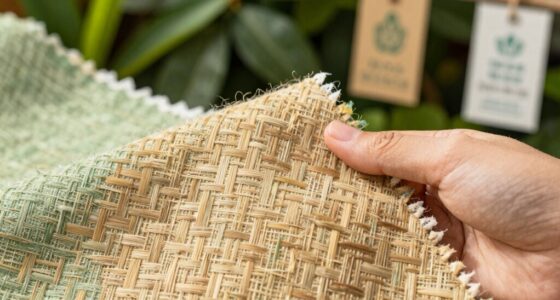
Beni Rugs has incorporated a rare Moroccan weaving technique, once generally reserved for palace interiors and nobility, into its Chelsea rug collection. The company says an 8-by-10-foot rug made with the method takes about six months and more than one million handwoven knots; prices for the collection range from $2,400 to $28,800.
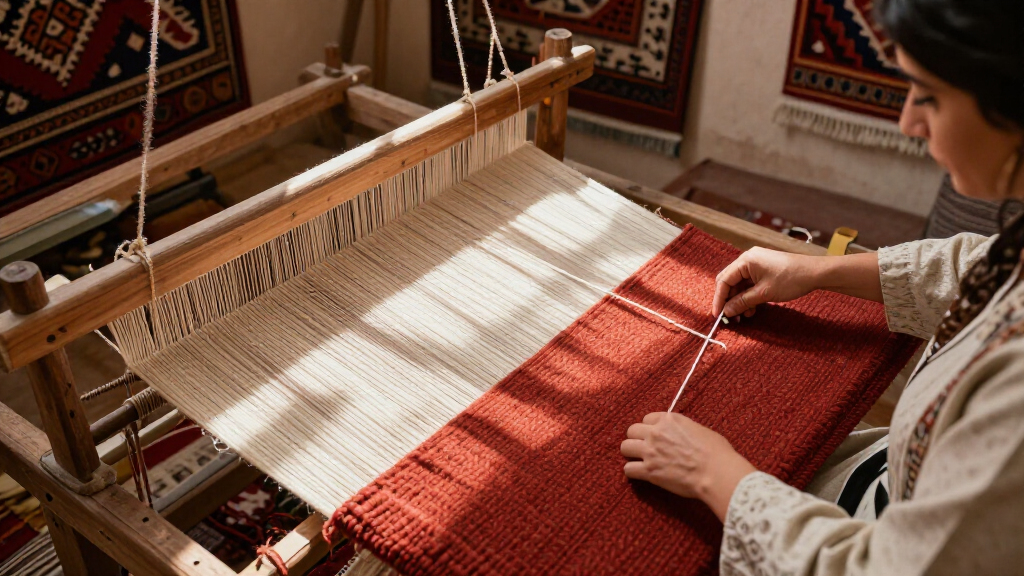
Beni Rugs has brought a nearly extinct Moroccan weaving technique into its Chelsea collection, using a method that the company’s operations director found in a small Rabat atelier and that had generally been reserved for palace interiors and Moroccan nobility. The work is far more time-intensive than the company’s more common rugs: Beni co-founder Robert Wright told WWD that an 8-by-10-foot piece takes about six months and more than one million handwoven knots.
Operations director Afaf Chouhaid came across the technique while visiting the Rabat atelier, according to WWD’s report from Milan. Beni founders Robert Wright and Tiberio Lobo-Navia decided to incorporate it into Chelsea, a collection that the report describes as drawing on the company’s Moroccan craft heritage through a contemporary design approach. The technique is more demanding than other methods Beni uses.
For comparison, WWD reported that more commonplace rugs traditionally made by women in Morocco’s Atlas Mountains contain about 172,000 knots. The figures describe rugs made using different techniques and should not be treated as a direct measure of quality. Wright said Chelsea also marks the company’s first experiment with dense colors such as black.
The collection is named for designer Colin King’s Chelsea apartment. King, Beni’s artistic director at large, developed designs drawing on references including ironwork, mosaic geometry, ceremonial tray medallions and the movement of a leaf. The rugs are priced from $2,400 for a 3-by-5-foot piece to $28,800 for a 12-by-15-foot rug, and are offered on Beni Rugs’ website and in its Marrakech and TriBeCa showrooms, WWD reported.
A Long Timeline Behind Each Rug
The collection makes a rare, highly labor-intensive technique part of a contemporary commercial offering. Its reported production time—six months for one 8-by-10-foot rug—gives shoppers a concrete sense of the labor behind the pieces, while also distinguishing this method from the more common Atlas Mountains rugs described in the report. That distinction matters when interpreting the collection’s price range and production claims: the rugs are not made on the same timeline or with the same knot count as the comparison rugs.
King also connected the project to how craft labor is organized. He told WWD that Beni’s approach puts women at the front of its supply chain and said the company provides childcare, meals, transportation and healthcare for the women doing the work. Those are statements attributed to King; the report does not provide details about the number of workers involved, pay levels or how the benefits are structured. The company’s claims point to a broader question for buyers: how a luxury product’s production story relates to the working conditions behind it.
As an affiliate, we earn on qualifying purchases.
From Rabat Atelier to Chelsea
The development began when Chouhaid encountered a small atelier in Rabat where the technique had been preserved across generations, according to WWD. The report characterizes the method as almost extinct and says its use had generally been associated with palace interiors and Moroccan nobility. It does not identify the technique by a formal name or provide a detailed account of its history, so those descriptions should be understood as the report’s account rather than a full historical survey.
Beni’s founders chose to adapt the method for Chelsea, with King supplying the design direction. The collection was photographed at Casa Franca in Marrakech, the riad of the late editor Franca Sozzani, which WWD said offered a rare view inside her once-private home. The setting and design references establish the collection’s presentation, but the central development is the use of the Rabat technique in the rugs themselves.
“Few things in a home are made this slowly, or by so few hands.”
— Robert Wright, Beni Rugs co-founder, speaking to WWD
Details Behind the Craft Remain Limited
WWD’s report does not name the weaving technique, document its historical origins in detail or explain how many craftspeople currently use it. It also does not say how many rugs in the Chelsea collection have been or will be made with the method, whether all listed sizes use it, or how production capacity may change if demand grows.
The company’s reported provisions for workers are described by King, but the article gives no figures for wages, employment arrangements or the number of women receiving childcare, meals, transportation and healthcare. The report also does not independently detail how the technique was verified as nearly extinct or how its preservation is being supported beyond its inclusion in the collection.
Availability and Production Ahead
The collection is available through Beni Rugs’ website and its showrooms in Marrakech and New York’s TriBeCa, according to WWD. The company has not provided, in the supplied report, a production schedule, expected inventory or further information about whether the technique will be used in future collections. Buyers seeking a particular size or design may need to ask Beni directly about availability and production time, especially given the reported six-month process for an 8-by-10-foot rug.
Further information about the technique’s name, the artisans involved and the scale of production would clarify how Beni plans to sustain the craft beyond this collection. For now, the confirmed development is its inclusion in Chelsea, with the company positioning the work around traditional skill, contemporary design and a slower production process.
Key Questions
What has Beni Rugs announced?
Beni Rugs has incorporated a nearly extinct Moroccan weaving technique into its Chelsea collection. The method was found by operations director Afaf Chouhaid in a small Rabat atelier, according to WWD.
How long does one of these rugs take to make?
Co-founder Robert Wright told WWD that an 8-by-10-foot rug takes about six months and involves more than one million handwoven knots.
How much do Chelsea rugs cost?
WWD reported prices from $2,400 for a 3-by-5-foot rug to $28,800 for a 12-by-15-foot rug. The report does not specify whether every size is made using the revived technique.
Where can customers buy the collection?
The rugs are available through Beni Rugs’ website and its showrooms in Marrakech and New York City’s TriBeCa, according to WWD.
What is still unknown about the technique?
The report does not give the method’s formal name, the number of artisans using it, the collection’s production volume or detailed information about wages and working arrangements. Beni has not provided those details in the supplied source material.
Source: rss
Columbus Day / Indigenous Peoples' Day Picks
long weekend sales
As an affiliate, we earn on qualifying purchases.