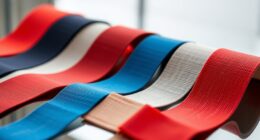
Twill fabric is a durable and versatile material recognized by its distinctive diagonal weave pattern, which gives it a textured appearance. It’s strong, resistant to tears and wrinkles, making it ideal for everyday clothing like pants, jackets, as well as home décor such as curtains and upholstery. Its ability to retain dye well also guarantees vibrant colors over time. If you want to discover more about twill’s unique qualities and uses, keep exploring.

Get your wardrobe favorites delivered free — and shop member deals
- Fast, free delivery on millions of items
- Access to Prime Big Deal Days deals on October 6–7
- Prime Video, Amazon Music and more included
Key Takeaways
- Twill fabric has a diagonal weave pattern that makes it textured and durable, suitable for everyday clothing and accessories.
- Its strong weaving technique resists wrinkles, tears, and wear, ensuring long-lasting performance.
- Twill offers a versatile, stylish look that works for both casual and formal outfits, maintaining vibrant colors over time.
- Easy to care for, twill resists stains and retains shape and color after multiple washes.
- Beyond clothing, twill is used in home décor like upholstery and curtains for a durable, sophisticated touch.
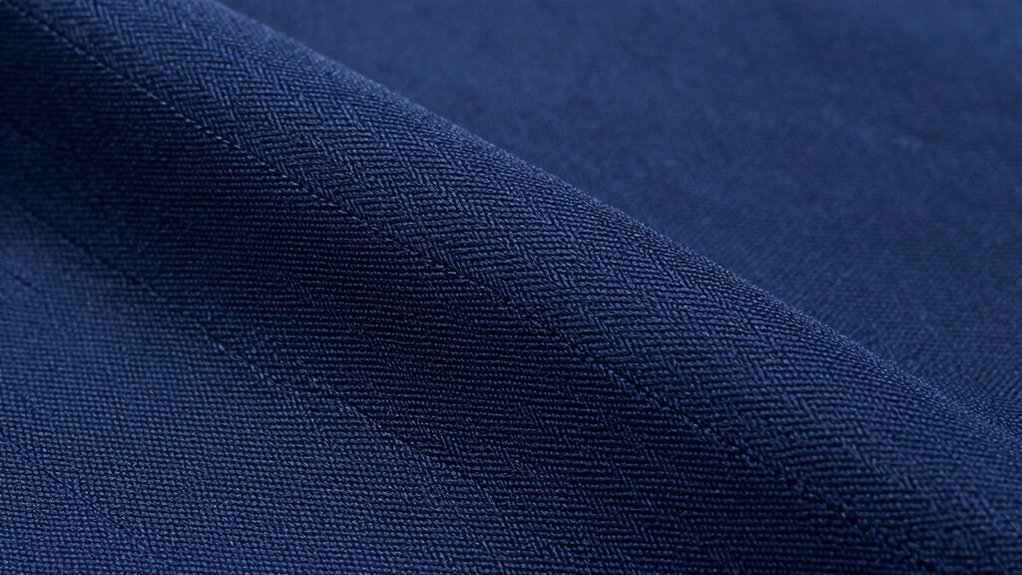
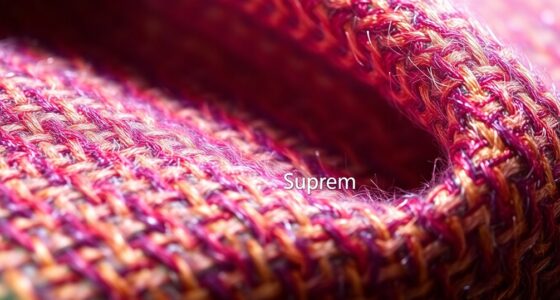
Have you ever wondered what makes twill fabric so durable and distinctive? It’s the unique diagonal weave pattern that sets it apart from other fabrics, giving it a textured appearance that’s instantly recognizable. This pattern isn’t just about looks; it plays a significant role in the fabric’s strength. Because of the way the threads are woven, twill fabric offers exceptional fabric durability, making it resistant to tears, wrinkles, and wear over time. This resilience means you can rely on twill for everyday items that need to stand up to regular use, like pants, jackets, and workwear.
Twill’s diagonal weave offers unmatched durability and resistance to tears, wrinkles, and wear for everyday use.
One of the biggest advantages of twill fabric is its undeniable fashion versatility. Its classic look fits seamlessly into both casual and formal settings, allowing you to wear it in a variety of ways. Whether you’re dressing up for a meeting or dressing down for a weekend outing, twill’s smooth yet textured surface complements different styles and colors. Its ability to hold dye well also means it retains vibrant hues longer, so your clothing stays looking fresh and new for a longer period. Additionally, weaving pattern contributes to its distinctive appearance and durability. Understanding fiber composition can help you select the best twill fabric for your needs.
As an everyday buyer, you’ll appreciate how easy twill fabric is to care for. Its durability makes it resistant to wrinkling, so you don’t have to spend extra time ironing or steaming. Plus, its tough construction helps it resist stains and damage, which is ideal for busy lifestyles. You’ll find that garments made from twill maintain their shape and color through multiple washes, saving you money and effort in the long run. This durability also translates into clothing that ages gracefully, developing a pleasing fade and softening over time without losing its structural integrity. The thread count and fiber quality further influence the longevity of twill fabrics, making informed choices easier for consumers. Additionally, the environmental impact of fabric production is an important consideration for eco-conscious buyers seeking sustainable options.
Twill fabric’s versatility isn’t limited to clothing. It’s also popular in home décor, such as upholstery, curtains, and tablecloths, thanks to its sturdy nature. Its weight and texture lend a sophisticated touch to interior spaces, while still being practical enough to handle daily use. Whether it’s a pair of durable chinos or a stylish blazer, twill’s combination of fashion versatility and fabric durability makes it a smart choice for anyone looking to invest in versatile, long-lasting pieces. Its timeless appeal ensures that, no matter current trends, twill remains a reliable fabric that offers both style and resilience for your everyday needs. Additionally, the ethical implications of AI decisions highlight the importance of responsible innovation, which parallels the need for durable and ethically made clothing like twill.
As an affiliate, we earn on qualifying purchases.
Frequently Asked Questions
How Do I Identify Genuine Twill Fabric?
To identify genuine twill fabric, look closely at the weaving pattern; it should have diagonal lines running across the surface. Genuine twill is known for its fabric durability, so it’ll feel sturdy and tightly woven. Run your fingers over the fabric to check for a smooth, even texture, and hold it up to the light to see the pattern clearly. Authentic twill feels substantial and well-made, confirming its quality.
Is Twill Fabric Suitable for Hot Weather?
Yes, twill fabric can be suitable for hot weather, especially if you choose lighter weights. Its diagonal weave provides breathability benefits, allowing air to circulate and keep you cool. When selecting twill for hot climates, consider fabric weight—lighter options are more comfortable in heat. Overall, twill’s durability and breathability make it a versatile choice, but opt for lightweight varieties to stay comfortable in warmer conditions.
Can Twill Fabric Be Machine Washed?
Yes, twill fabric can be machine washed. For proper fabric care, follow the washing instructions on the label, usually using cold or warm water and a gentle cycle. Avoid harsh detergents to prevent damage. After washing, tumble dry on low heat or hang to dry. By adhering to these guidelines, you’ll keep your twill fabric looking its best and extend its lifespan.
How Does Twill Differ From Denim?
Twill differs from denim mainly in weaving techniques and fabric durability. While denim is a type of twill fabric, it uses a specific diagonal weave with a heavier weight, making it more durable and sturdy. Twill fabric, in general, has a softer feel and lighter weight, but still offers good durability. You’ll find twill in many garments, and denim is just one popular, rugged variation within that category.
What Are Common Uses for Twill Fabric?
Like a trusty tapestry woven through history, twill fabric finds its home in many uses today. You’ll see it in workwear, jackets, and even stylish pants, thanks to its durability and texture. Its fabric history reveals its resilience, but consider the environmental impact of production. Twill’s strength and classic look make it ideal for everyday clothing, accessories, and even upholstery, blending tradition with modern fashion needs.
Conclusion
Now that you understand twill fabric, picture yourself slipping into a pair of durable jeans, their diagonal weave whispering stories of craftsmanship. Unlike delicate silks that flutter away, twill stands firm, ready for your daily adventures. It’s the sturdy thread woven into your wardrobe’s fabric, blending resilience with style. So, next time you reach for that trusted piece, remember—twill’s strength is your everyday comfort, quietly supporting your journey through life’s tapestry.
Fall Picks
fall essentials
As an affiliate, we earn on qualifying purchases.