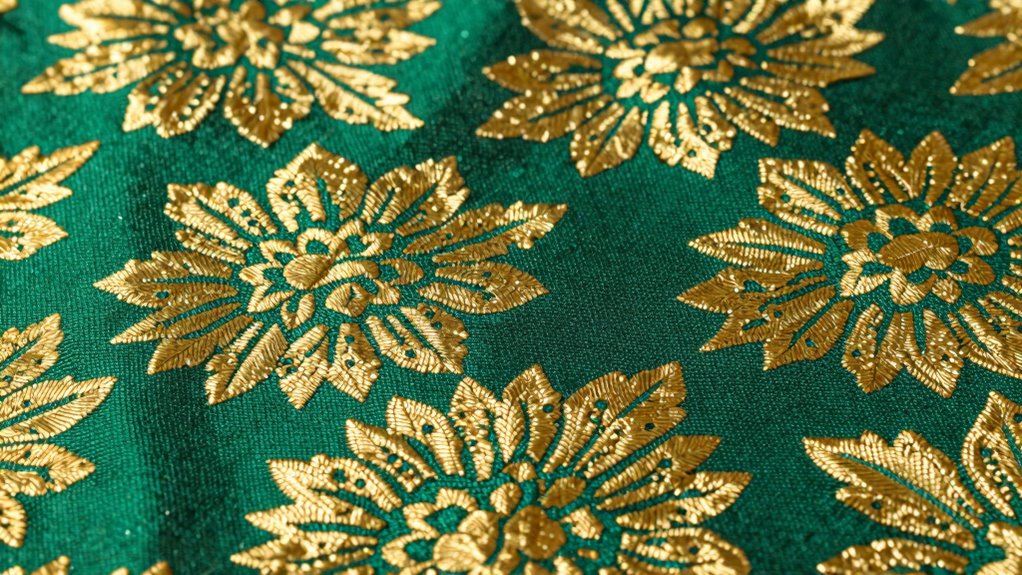
Jacquard fabric is a type of textile with complex patterns woven directly into the material, not printed or embroidered on top. It uses a special loom invented in the 19th century that automates the pattern creation, allowing detailed designs to come to life. This technique works with various fibers like silk, cotton, and synthetics, making fabrics both beautiful and durable. If you want to discover how this ancient process has evolved into modern designs, there’s more to explore.
Key Takeaways
- Jacquard fabric is woven with detailed patterns built directly into the cloth, not printed or embroidered on top.
- It was created in the early 1800s using a special loom that automatically weaves complex designs.
- The technology uses punched cards to control the weaving process, making intricate designs easier to produce.
- Today, Jacquard fabric is used in fashion, home decor, and upholstery for its rich texture and detailed look.
- Advances in digital design and new fibers keep Jacquard weaving modern and versatile.
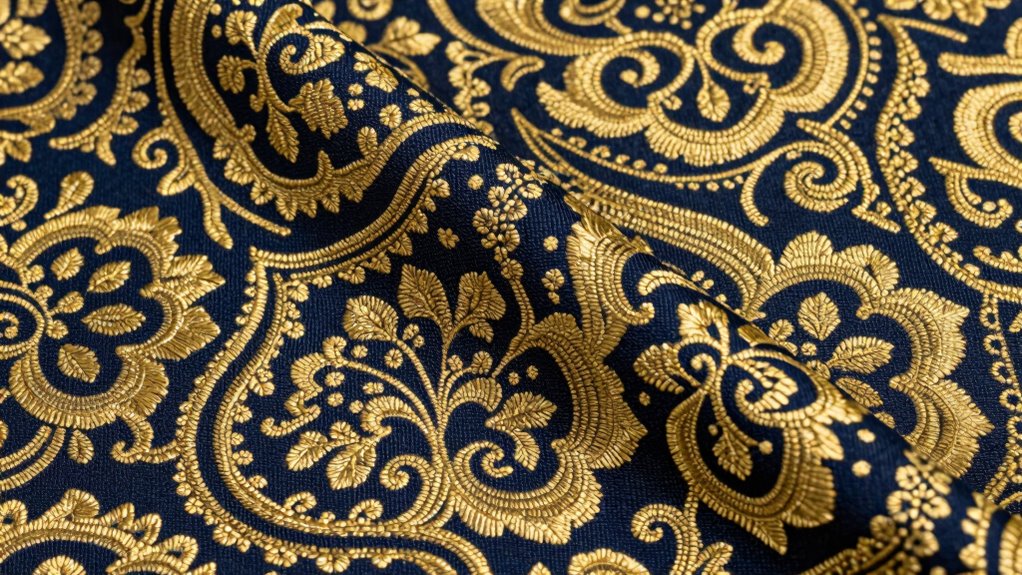
Jacquard fabric stands out for its intricate patterns woven directly into the material, rather than printed or embroidered on the surface. This distinctive technique traces back to a significant historical development in textile manufacturing. In the early 19th century, Joseph Marie Jacquard invented a loom that used punched cards to control the weaving process. This innovation allowed complex designs to be created automatically, revolutionizing the textile industry. It marked a turning point from manual, labor-intensive methods to mechanized production, paving the way for mass manufacturing of detailed fabrics. Over time, the Jacquard loom became a symbol of technological progress, influencing other industries like computing, where punched cards were used for data processing. Today, the legacy of this historical development still influences how we produce and appreciate woven textiles. The modern versatility of Jacquard fabric is a testament to how technological innovation continues to shape textile design.
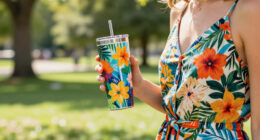
In modern applications, Jacquard fabric appears in a wide variety of products, far beyond traditional upholstery and draperies. Its detailed, textured patterns add a luxurious touch to fashion, making it popular in high-end clothing such as evening gowns, jackets, and accessories. You’ll also find it in home decor, like elegant curtains, pillow covers, and bedding, where its rich designs elevate the aesthetic appeal. The versatility of Jacquard fabric allows designers to experiment with bold, complex motifs or subtle, refined textures, depending on the intended look. Advances in weaving technology have made it easier and more affordable to produce Jacquard patterns on different types of fibers, including silk, cotton, and synthetic blends. This adaptability means you can enjoy its ornate beauty in both traditional and contemporary styles. The ongoing Technological progress continues to expand the possibilities for Jacquard textiles, blending tradition with innovation.
Furthermore, the use of Jacquard fabric isn’t limited to decorative purposes. In recent years, modern applications include innovative uses such as upholstery for luxury furniture, statement wall coverings, and even technical textiles. Its ability to incorporate intricate motifs with durability and elegance makes it a favorite among interior designers and fashion creators alike. As technology continues to evolve, you can expect Jacquard fabric to become even more diverse, integrating new fibers and digital design techniques that expand its potential. Whether for aesthetic appeal or functional use, Jacquard fabric remains a tribute to how a simple idea—woven patterns—can develop over centuries into a versatile, modern material. Its rich history and contemporary relevance ensure it stays at the forefront of textile innovation, blending tradition with modern creativity seamlessly.
As an affiliate, we earn on qualifying purchases.
Frequently Asked Questions
How Durable Is Jacquard Fabric Compared to Other Textiles?
Jacquard fabric is quite durable compared to other textiles because of its intricate fabric weave, which adds strength and resilience. Its textile longevity depends on the quality of the yarns used and the weaving process. You’ll find that jacquard holds up well over time, resisting wear and tear better than lighter, less densely woven fabrics. For long-lasting upholstery or clothing, jacquard’s durability makes it a reliable choice.
Can Jacquard Fabric Be Used for Outdoor Furniture?
Yes, you can use jacquard fabric for outdoor furniture. Imagine a sturdy, intricate tapestry standing up to the elements, thanks to its impressive outdoor durability. Its woven design often includes weather-resistant fibers that repel moisture and resist fading. While not all jacquard fabrics are suited for outdoor use, selecting one with enhanced weather resistance guarantees your furniture stays vibrant and durable through rain, sun, and wind.
Is Jacquard Fabric Suitable for Machine Washing?
Jacquard fabric is generally suitable for machine washing, but you should always check the care instructions first. Use gentle washing tips, like cold water and a delicate cycle, to prevent damage. Avoid harsh detergents, and consider placing the fabric in a mesh bag for extra protection. Air dry if possible, and avoid high heat. Following these care instructions guarantees your jacquard fabric stays vibrant and intact.
What Are Common Design Patterns Found in Jacquard Fabric?
You’ll find that jacquard fabric features some of the most breathtaking design patterns, from intricate motifs to elegant floral patterns. These patterns are woven directly into the fabric, making each piece a work of art. Whether you prefer bold geometric shapes or delicate, detailed designs, jacquard’s versatility allows it to showcase a stunning array of patterns that truly stand out and elevate any textile or décor.
How Does Jacquard Fabric Affect Clothing Comfort?
Jacquard fabric enhances clothing comfort by offering texture variation, which adds a tactile dimension that feels interesting and rich against your skin. Its intricate patterns also boost aesthetic appeal, making your garments look more luxurious and stylish. While the textured surface might feel slightly stiffer initially, high-quality jacquard often becomes softer over time, ensuring you enjoy both visual elegance and comfort in your clothing.
Conclusion
Now that you’ve seen how jacquard fabric is woven with intricate patterns, you can truly appreciate its craftsmanship. Remember, beauty is in the details, and with jacquard, every thread tells a story. Just like a tapestry that weaves together threads of history and art, this fabric elevates any design. When you choose jacquard, you’re embracing timeless elegance—proof that sometimes, the devil is in the details, and those details make all the difference.