Air purifiers can be very useful in sewing rooms by trapping fabric fibers, dust, and airborne contaminants, improving air quality and reducing respiratory issues. Their effectiveness depends on choosing the right size, using filters properly, and regular maintenance. However, they work best when combined with good ventilation and routine cleaning. If you’re unsure whether an air purifier fits your space, you’ll find useful tips and information to make an informed choice as you continue exploring.

Get your wardrobe favorites delivered free with Prime
- Fast, free delivery on millions of items
- Prime Video, Amazon Music and more included
- Member-only deals all year
Key Takeaways
- Air purifiers with HEPA filters effectively trap fabric fibers and airborne dust, improving indoor air quality in sewing rooms.
- Proper placement and regular maintenance are essential for maximizing the effectiveness of air purifiers.
- In well-ventilated spaces, natural ventilation and cleaning may suffice, reducing the need for air purifiers.
- The size and capacity of the purifier should match the room to ensure significant air quality improvement.
- Combining air purifiers with ventilation and cleaning strategies offers the most comprehensive approach to dust control.
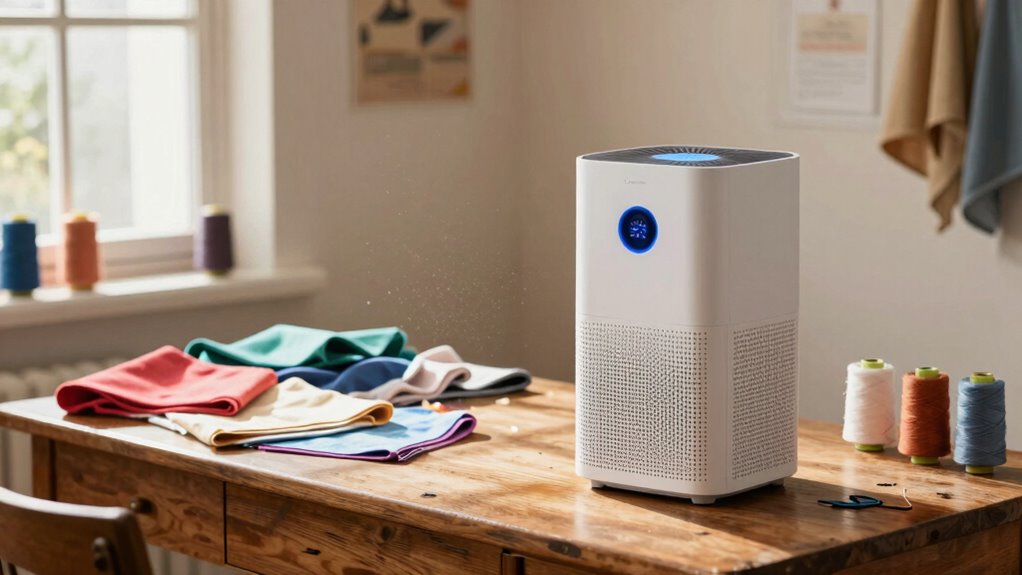
Have you ever considered how sewing activities might impact your indoor air quality? When you sew, you’re likely aware of fabric dust floating in the air, but you might not realize how much that dust can affect the overall air quality in your sewing room. Fabric dust, tiny fibers released into the air as you cut, sew, or handle fabrics, can accumulate quickly, especially if you don’t have proper ventilation. Over time, these particles can become airborne, creating a persistent haze that you breathe in with each breath. This buildup of fabric dust doesn’t just settle on surfaces; it directly impacts your air quality, potentially causing respiratory issues or allergies if left unchecked.
Sewing releases tiny fabric fibers that can harm indoor air quality and cause respiratory issues if not managed properly.
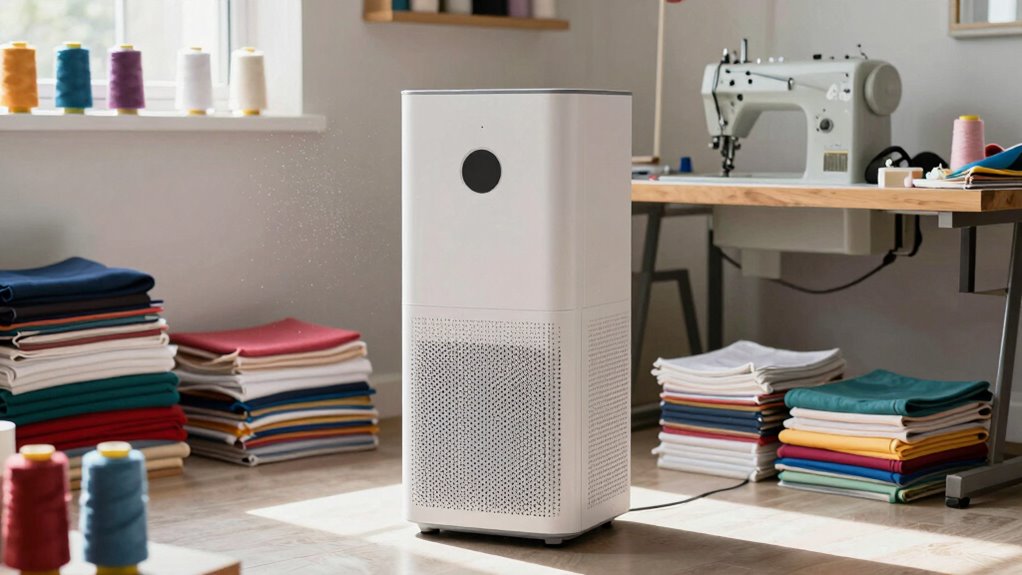
That’s where air purifiers come into play. Many sewers swear by them, claiming they help clear out airborne particles and improve the environment of their sewing spaces. But are they truly worth the investment, or are they overrated? The truth depends on your sewing habits and the size of your workspace. Air purifiers equipped with HEPA filters can trap fabric fibers, dust, pet dander, and other airborne contaminants effectively. When positioned correctly, these devices can markedly reduce the amount of dust lingering in the air, leading to a cleaner, healthier sewing environment.
However, some might argue that air purifiers are overrated, especially if your sewing room is small or well-ventilated. Opening windows or using exhaust fans can often do enough to circulate fresh air and reduce dust levels without the expense of a purifier. For those with a dedicated sewing space that’s enclosed or poorly ventilated, though, an air purifier can be a game changer. It helps minimize the airborne fabric dust, which means fewer irritations and a lower risk of respiratory issues over time. Proper ventilation combined with an air purifier can provide a comprehensive approach to improving indoor air quality. Additionally, selecting an air purifier with appropriate filter technology can enhance its effectiveness in capturing fine fibers and dust particles.
You should also consider the size of the purifier relative to your room. A small, underpowered unit won’t do much good, while a larger model with proper filtration can make a noticeable difference. Regular maintenance of the purifier is essential—changing filters as recommended ensures it continues to perform efficiently. Keep in mind, though, that an air purifier isn’t a substitute for good cleaning habits. Sweeping, vacuuming with a HEPA-filter vacuum, and controlling dust at its source remain essential. Proper dust management strategies, such as using a fabric cutting table with a built-in exhaust system, can further decrease airborne particles.
In the end, whether an air purifier is useful or overrated depends on your sewing environment and health concerns. For many, it’s a worthwhile investment that enhances air quality and makes sewing more comfortable. For others, simple ventilation and routine cleaning might suffice. Assess your space and needs—sometimes, a small device can make a big difference in breathing easier during your sewing projects. Additionally, understanding and addressing indoor air quality can lead to a healthier sewing environment overall. Regularly monitoring air quality levels and understanding airborne particles in your space can help you make better decisions about what measures are necessary.
HEPA air purifier for sewing room
As an affiliate, we earn on qualifying purchases.
As an affiliate, we earn on qualifying purchases.
Frequently Asked Questions
Do Air Purifiers Eliminate All Sewing Room Odors Completely?
Air purifiers won’t eliminate all sewing room odors completely, but they considerably improve fabric freshness and promote fashion safety. They filter out airborne particles, including dust, fumes, and odors from fabrics and chemicals. While they may not make your sewing space entirely odor-free, using an air purifier enhances air quality, helping you breathe easier and keep your workspace cleaner. For ideal results, combine it with proper ventilation and regular cleaning.
How Often Should Filters in Sewing Room Air Purifiers Be Replaced?
Ever wondered how often you should replace filters in your sewing room air purifier? Typically, filter lifespan depends on usage and air quality, but most manufacturers recommend replacing filters every 6 to 12 months. Regular replacement guarantees peak filtration and cleaner air. Keep an eye on your purifier’s indicator if it has one, and don’t wait too long—delaying replacements can reduce effectiveness and compromise your sewing environment.
Are HEPA Filters Effective Against Fabric Fibers and Dust Particles?
Yes, HEPA filters are effective against fabric fibers and dust particles. Their high HEPA efficiency means they can trap tiny particles as small as 0.3 microns, including dust, lint, and fabric fibers common in sewing rooms. This fiber filtration capability helps improve air quality by removing airborne contaminants, making your sewing environment healthier. Regularly maintaining your HEPA filter guarantees it continues to perform at peak efficiency for fiber and dust removal.
Can Air Purifiers Help Reduce Allergies Caused by Sewing Materials?
Yes, air purifiers can help reduce allergies caused by sewing materials. They improve air quality by capturing fabric allergens like dust, fibers, and chemical fumes, making your sewing environment healthier. When you use an air purifier with a HEPA filter, it actively traps tiny particles that trigger allergies, providing relief and creating a cleaner, safer space. This boost in air quality can notably lessen allergy symptoms and improve your overall comfort while sewing.
What Is the Typical Noise Level of Air Purifiers in Sewing Rooms?
You’ll notice that the noise levels of air purifiers in sewing rooms usually stay quite gentle, even at higher fan speeds. When you set the fan to a lower speed, it hums softly, blending into your creative environment without distraction. As you increase the speeds, the sound becomes a little more noticeable but remains comfortable, allowing you to focus on your sewing projects while enjoying cleaner air.
Conclusion
Considering the potential health benefits, air purifiers in sewing rooms can be quite useful, especially since studies show indoor air can be up to five times more polluted than outdoor air. If you sew frequently, investing in a quality air purifier might reduce your exposure to dust, fibers, and fumes. It’s a small step that can make a big difference in your comfort and well-being—so don’t overlook their value in your creative space.
Halloween Picks
halloween
As an affiliate, we earn on qualifying purchases.