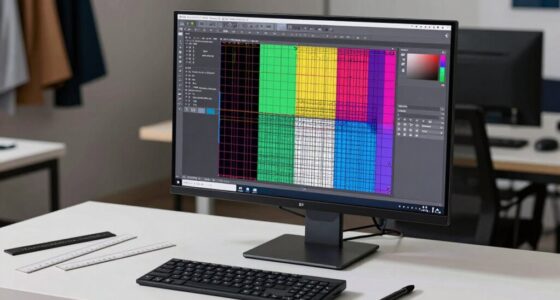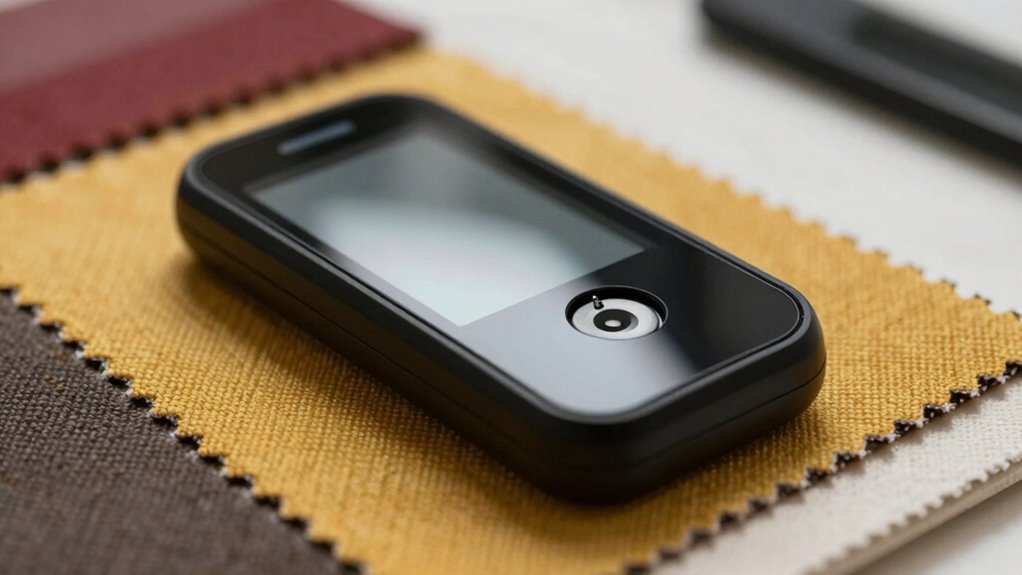

Colorimeters help you measure textile colors objectively and precisely, reducing issues caused by differences in lighting or perception. They allow you to use standardized color spaces like CIE L*a*b* to guarantee consistent color matching across fabric batches. By regularly calibrating your device with certified standards, you maintain accuracy and reliability over time. This helps keep quality high and prevents errors. To learn more about how proper calibration and quality control improve results, keep exploring further.

Get your wardrobe favorites delivered free — and shop member deals
- Fast, free delivery on millions of items
- Access to Prime Big Deal Days deals on October 6–7
- Prime Video, Amazon Music and more included
Key Takeaways
- Provide objective and precise measurement of textile colors for accurate matching.
- Standardize color assessment across different lighting conditions and observers.
- Use calibrated sensors to ensure consistent color readings over time.
- Improve batch-to-batch color consistency in textile production.
- Support quality control by verifying color accuracy and detecting deviations.
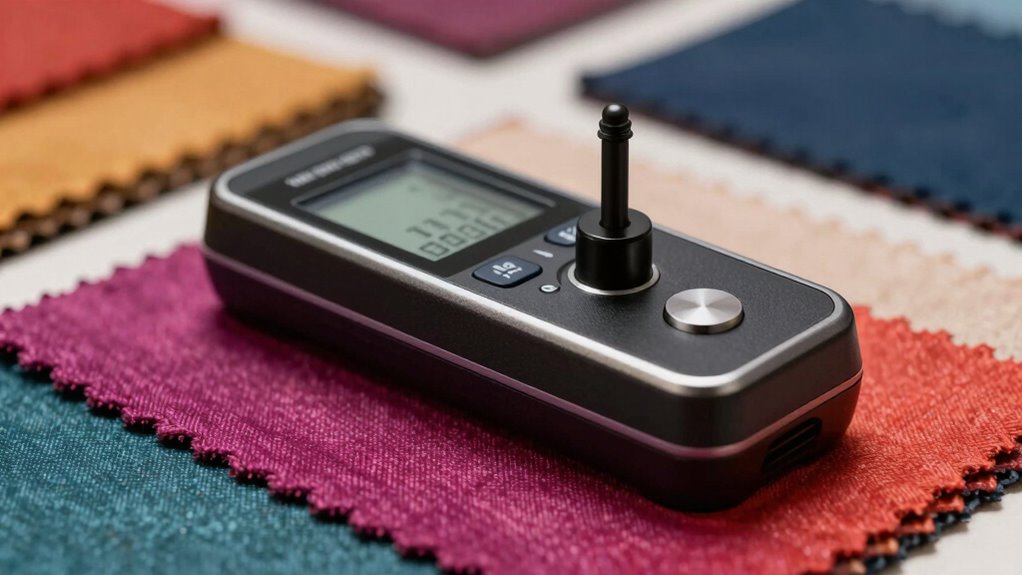
Colorimeters play an essential role in textile matching by providing precise and objective color measurements. When you’re aiming to match colors accurately across different fabric batches or designs, relying solely on the human eye can lead to inconsistencies caused by lighting conditions or personal perception. This is where colorimeters come in, offering a standardized way to assess color with high reliability. They measure the color of textiles using specific color spaces, such as CIE L*a*b*, allowing you to compare samples quantitatively. This process markedly enhances color matching accuracy, ensuring that your fabrics meet the desired standards consistently. Proper calibration methods are indispensable for maintaining this level of precision, as they help ensure accurate readings over time. Calibration involves using certified white and black calibration tiles or standards. When you calibrate your device with these standards, you set a baseline that accounts for any drift in the instrument’s sensors or light source. Regular calibration, ideally before each measurement session, helps eliminate errors caused by ambient light or aging components, maintaining the integrity of your color measurements. Additionally, understanding how to perform these calibration methods effectively is crucial for obtaining reliable results. Incorporating proper calibration routines into your workflow can significantly improve the consistency of your measurements. Regularly checking calibration accuracy with standardized references ensures ongoing measurement reliability and helps maintain high-quality textile matching. Implementing quality control processes that include calibration checks can further enhance the precision of your color assessments. Proper calibration practices are essential for achieving consistent color results across different production batches.
digital colorimeter for textiles
As an affiliate, we earn on qualifying purchases.
As an affiliate, we earn on qualifying purchases.
Frequently Asked Questions
Can Colorimeters Replace Visual Color Matching Entirely?
Colorimeters can’t completely replace visual color matching because of their limitations, like difficulty capturing subtle color nuances or differences under various lighting. While they provide objective, consistent measurements, visual comparison remains essential for evaluating how colors appear in real-world conditions. You should use colorimeters as a helpful tool alongside visual judgment to ensure accurate textile matching, especially when dealing with complex or nuanced colors.
How Do Colorimeters Compensate for Different Lighting Conditions?
You rely on colorimeters to compensate for lighting variability by using standardized lighting conditions during measurements. They are calibrated regularly to guarantee accuracy across different environments. This calibration frequency helps the device adjust for any lighting differences, providing consistent color readings regardless of ambient light changes. As a result, you get reliable textile matching, minimizing errors caused by varying lighting conditions and ensuring high-quality color consistency.
Are Colorimeters Suitable for All Types of Textiles?
Colorimeters are suitable for many textile types, especially when precise color matching is essential in textile dyeing. They help you quickly evaluate color differences and guarantee consistency across various fabrics. However, for complex or textured textiles, you might need advanced color measurement tools. In textile dyeing, using colorimeters enhances your color matching techniques, providing reliable data to achieve uniform results across different textile materials and dyeing processes.
What Is the Typical Cost Range for Professional Colorimeters?
Professional colorimeters typically cost between $1,000 and $10,000, depending on their features and accuracy. You’ll find that higher-end models offer superior colorimeter accuracy, making them ideal for precise textile matching. When doing a cost comparison, consider the balance between price and performance. Cheaper models may save money upfront but might lack the accuracy needed for consistent results, so investing in a reliable device guarantees better quality control and long-term value.
How Often Should Colorimeters Be Calibrated for Accuracy?
You should calibrate your colorimeter regularly to maintain measurement precision—typically every day before use or after significant environmental changes. If you work in high-stakes textile matching, more frequent calibration ensures consistent results. Ignoring this essential step risks inaccuracies that could compromise color matching quality. Stay vigilant with calibration frequency, and you’ll keep your measurements reliable and your textile colors perfectly aligned.
Conclusion
In essence, colorimeters act as your trustworthy compass in textile matching, guiding you through the complex landscape of color differences with precision. They help you navigate the subtle shades and hues, ensuring consistency and quality in your fabrics. Just like a seasoned sailor reads the stars, a colorimeter reveals the true color behind the surface, turning what seems like an intimidating task into a straightforward journey. With it, your textile matching becomes a voyage of confident accuracy.
Fall Picks
fall essentials
As an affiliate, we earn on qualifying purchases.