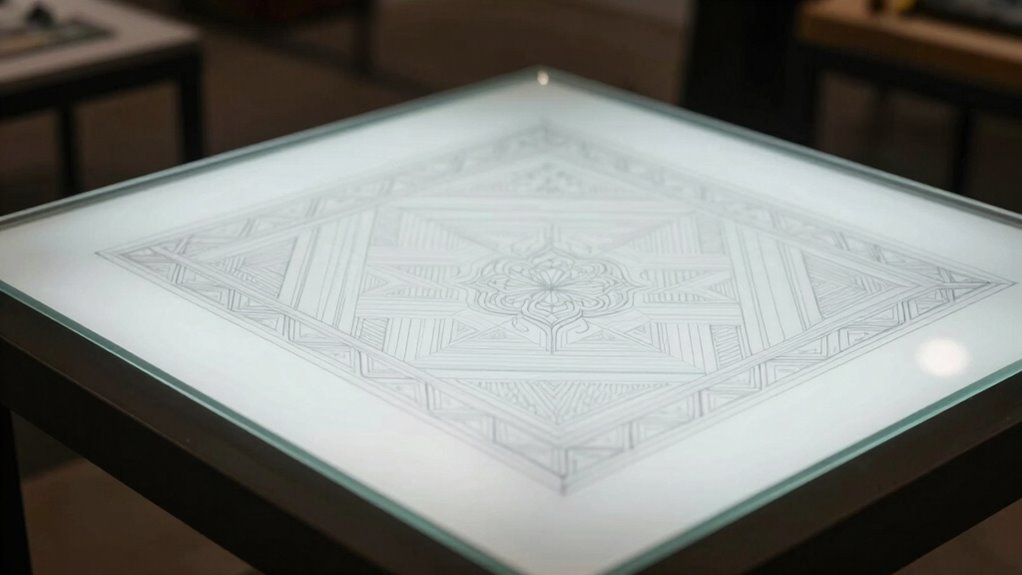

Light tables for pattern tracing still matter because they give you a bright, transparent surface that makes overlaying patterns easy and precise. They let you see through multiple layers, helping with detailed work across fashion, architecture, and art. Their adjustable brightness and portability keep them relevant, offering tactile feedback that digital tools can’t match. If you’re curious about how these features support your projects, explore more about their benefits and uses.
Key Takeaways
- Light tables enable precise overlay and tracing of patterns, enhancing accuracy in design work.
- They offer tactile feedback and visual clarity that digital tools cannot fully replicate.
- Their durability and ease of use make them ideal for continuous, professional pattern tracing.
- Modern features like adjustable brightness improve comfort and versatility during extended use.
- They bridge traditional craftsmanship with modern workflows, maintaining relevance despite digital advancements.
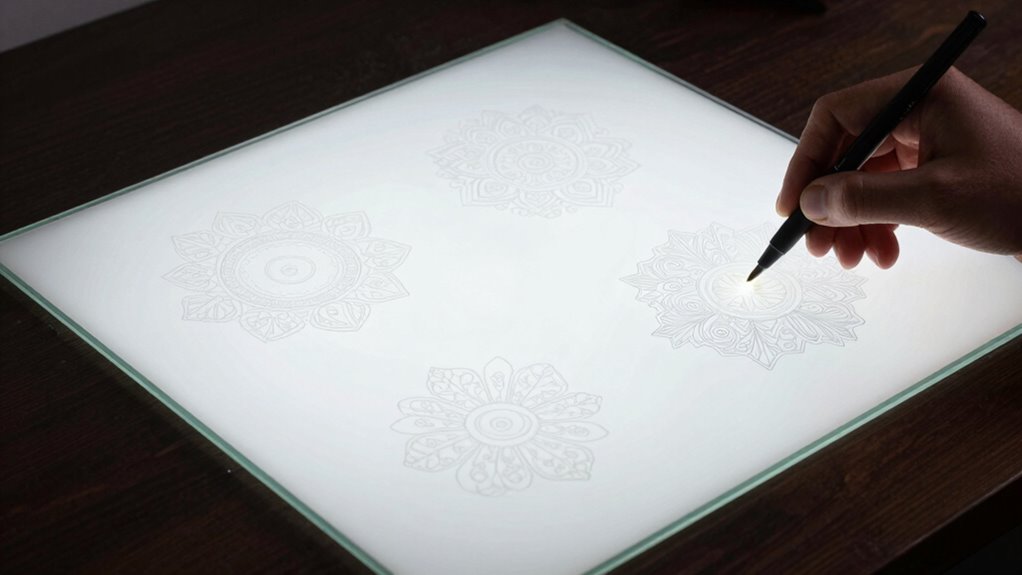
Have you ever struggled to see fine details when tracing patterns on paper? If so, you know how frustrating it can be to work without proper tools. Light tables have long been a solution, providing a clear, illuminated surface that makes tracing easier and more accurate. Their development has a fascinating history, starting from early lightboxes used in photography and design, evolving over the decades into sleek, portable devices. The historical evolution of light tables reflects technological advances, moving from bulky, incandescent models to thin, LED-lit surfaces. Today, they’re not just for artists or designers—they find applications across many fields, including fashion, architecture, and even medical imaging. In fact, their versatility allows for a broad range of specialized uses that continue to expand with technological progress. Despite the rise of digital tools, light tables remain relevant because they offer a tactile, intuitive way to work with physical patterns and drawings.
Modern applications of light tables extend far beyond traditional tracing. In fashion design, they’re indispensable for sketching and pattern making, allowing designers to overlay multiple layers and see through complex fabrics. Architects use them to trace plans and overlay drawings, ensuring precision in their drafts. Artists rely on them for detailed illustration, especially when working with multiple transparent sheets or color overlays. Even in forensic sciences, light tables help in examining evidence and uncovering hidden details in photographs or documents. Their ease of use makes them suitable for educational settings, helping students learn about design, anatomy, and technical drawing by providing a clear view of layered concepts. Additionally, the durability of modern light tables ensures they can withstand frequent use in busy studio environments, making them a reliable tool for professionals and students alike. The cost-effectiveness of many models makes them an attractive choice for both educational institutions and individual artists or designers. Furthermore, the ergonomic design of some models enhances comfort during extended use, reducing strain and increasing productivity. The versatility and simplicity of light tables keep them relevant in a digital age, where screens dominate but often lack the tactile feedback that many creators prefer.
What makes light tables stand out is their ability to combine old-school practicality with modern innovation. Many models now feature adjustable brightness, portable designs, and energy-efficient LEDs that reduce heat and power consumption. They’re affordable and user-friendly, making them accessible to hobbyists and professionals alike. Plus, their physical nature allows for immediate interaction, which can foster creativity and precision in ways that digital screens sometimes can’t match. As technology advances, some might think light tables would fade away, but their unique benefits ensure they remain essential tools. They bridge the gap between traditional craftsmanship and contemporary workflows, reinforcing their importance in various industries. Whether you’re tracing intricate patterns or simply need a reliable surface to see through layers, a light table continues to be a valuable asset, rooted in a rich history and adapted for modern needs.

LitEnergy A4 LED Copy Board Light Tracing Box, Adjustable USB Power Artcraft LED Trace Light Pad for Tattoo Transferring, Drawing, Sketching, Animation, Stenciling, Diamond Art Painting Accessories
- Lightweight and Slim Design: Only 0.2 inches thick, portable
- Adjustable Brightness: Gradual dimming with touch control
- Eye-Friendly Lighting: Flicker-free, even illumination
As an affiliate, we earn on qualifying purchases.
As an affiliate, we earn on qualifying purchases.
Frequently Asked Questions
Can Light Tables Improve Tracing Accuracy Compared to Digital Methods?
Yes, light tables can improve your tracing accuracy compared to digital methods. They provide better visual clarity, making it easier to see fine details and reduce mistakes. Unlike digital screens, light tables offer a natural, glare-free illumination that minimizes eye strain. This enhanced visibility helps you trace patterns more precisely, ensuring your work is cleaner and more accurate, especially for intricate designs where digital accuracy might fall short.
What Are the Best Materials for Making Homemade Light Tables?
You’ll want to choose durable, inexpensive materials for your DIY illumination light table. Acrylic or plexiglass sheets work best because they’re lightweight and sturdy, offering excellent transparency. For the illumination source, LED strip lights provide energy-efficient, even lighting, with a statistic showing LEDs last 25 times longer than incandescent bulbs. Combining these materials guarantees your homemade light table is both reliable and easy to assemble, perfect for precise pattern tracing.
How Long Do Light Tables Typically Last With Regular Use?
Light tables usually last for several years with regular use, but durability concerns can influence their lifespan. If you handle them gently and keep them clean, you might get 5 to 10 years of reliable use. However, frequent replacement may be needed if the light source dims or the surface gets damaged. Investing in a quality model can reduce the need for early replacement and guarantee consistent performance over time.
Are LED Light Tables More Energy-Efficient Than Traditional Ones?
LED light tables are more energy-efficient than traditional ones because they consume less energy, reducing your overall energy consumption. This lower power use also means a smaller environmental impact, helping you contribute to sustainability. You’ll notice that LED tables produce less heat and last longer, making them a smarter, eco-friendlier choice for pattern tracing. So, if you’re looking to save energy and reduce your environmental footprint, LEDs are the way to go.
Can Light Tables Be Used for Activities Other Than Pattern Tracing?
Yes, you can definitely use light tables for activities beyond pattern tracing. They’re perfect for stencil art, allowing you to see through designs clearly while you work. Educational activities like examining transparent images or layered projects also benefit from a light table’s illumination. Whether you’re creating art or exploring educational projects, a light table provides a versatile workspace that enhances visibility and precision for all kinds of creative and learning pursuits.
Conclusion
Just like a lighthouse guides ships safely through darkness, light tables continue to illuminate your creative path. They make pattern tracing clearer and more precise, turning a potentially murky process into a smooth voyage. Even in today’s digital world, their gentle glow keeps your artistry steady and focused. So don’t underestimate this timeless tool — it’s your steady beacon, helping your ideas shine brightly and guiding you toward your best work.