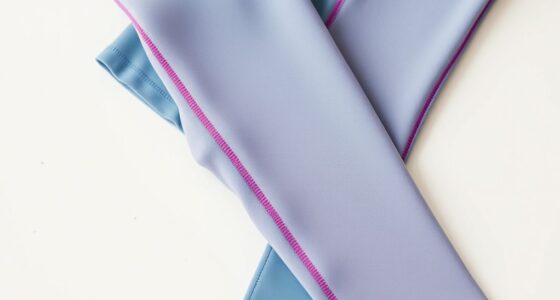
To keep your activewear performing well, wash it promptly after each use using cold water and gentle detergents. Avoid fabric softeners and bleach, as they can damage moisture-wicking fibers. Air dry or lay your clothes flat to prevent heat damage from dryers. Rotate your activewear regularly to prevent odor buildup and extend its lifespan. Proper storage and careful handling also help preserve fabric elasticity and durability. Keep these tips in mind if you want your gear to stay in top shape longer.
Key Takeaways
- Wash activewear promptly after use with gentle, cold water cycles and mild detergents to preserve moisture-wicking and antimicrobial properties.
- Avoid fabric softeners and bleach, which can damage fibers and reduce breathability.
- Air dry or lay flat to extend fabric lifespan, avoiding high heat from dryers that weaken synthetic fibers.
- Rotate activewear regularly and give clothes time to rest to prevent bacteria buildup and maintain fabric integrity.
- Store activewear properly away from direct sunlight, ensuring careful handling to keep performance features intact.
Ever wonder how to keep your activewear looking and performing like new? The key lies in understanding how to care for the fabric properly. Activewear is designed with performance fabrics that prioritize durability and comfort, but they need proper maintenance to stay at their best. When you pay attention to fabric durability, you’re ensuring that your clothes can withstand frequent workouts and washes without losing their shape, elasticity, or color. Properly caring for these fabrics helps prevent pilling, stretching, or fading, so your activewear can keep up with your active lifestyle for longer.
Proper fabric care extends your activewear’s lifespan and maintains its performance.
Odor control is another essential aspect of caring for your activewear. Many performance fabrics are engineered with moisture-wicking properties to pull sweat away from your skin, which naturally helps reduce odor. However, if you neglect proper washing routines, bacteria can build up, making your gear smell even after you’ve worked out. To maintain odor control, wash your activewear promptly after use, avoiding letting sweat sit in the fabric for too long. Using a gentle, cold water cycle and a mild detergent specifically designed for activewear can help preserve the fabric’s moisture-wicking and antimicrobial properties.
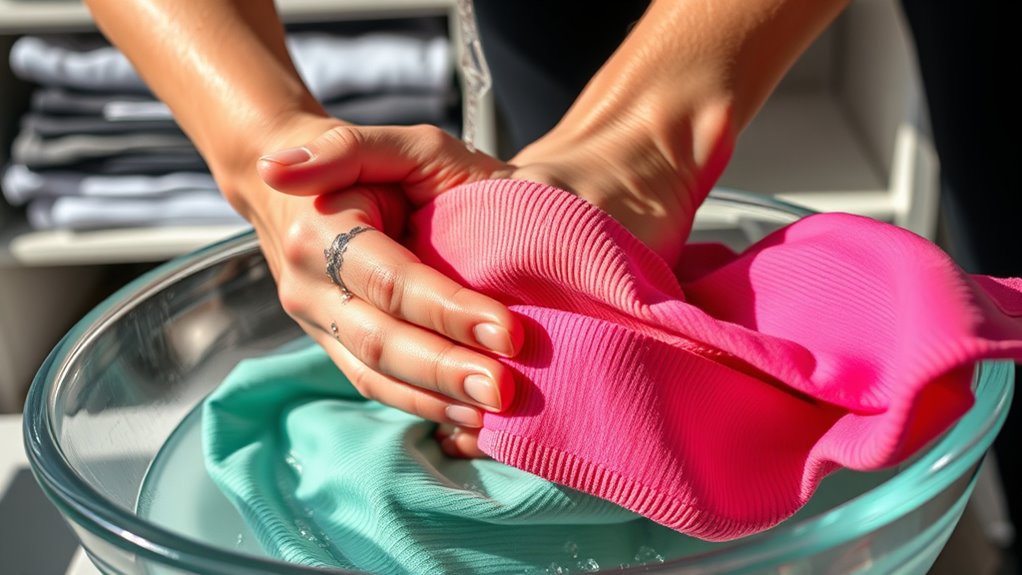
When it comes to cleaning, avoid using fabric softeners or bleach. Softeners can coat the fibers, reducing their breathability and moisture-wicking capabilities, while bleach can weaken the fabric and cause discoloration. Instead, hang your activewear to air dry or lay it flat, as high heat from dryers can break down synthetic fibers over time, diminishing their durability. Proper drying not only prolongs the life of your gear but also helps maintain its fit and performance features.
Additionally, rotate your activewear regularly. Wearing the same piece every day without washing can lead to a buildup of sweat and bacteria, which impacts odor control and fabric integrity. By giving your clothes time to rest between wears and washes, you extend their lifespan and keep them smelling fresh. For stubborn odors, adding a small amount of white vinegar or baking soda to your wash can boost odor removal without harming the fabric.
Caring for activewear is about more than just washing—it’s about maintaining the integrity of the performance fabrics that keep you comfortable and confident during your workouts. Pay attention to fabric durability, wash with care, and prioritize odor control. Incorporating proper storage practices and avoiding exposure to direct sunlight can further extend your activewear’s lifespan. With these simple steps, you’ll ensure your activewear stays in top shape, ready to support your active pursuits today and for many workouts to come.
Top picks for "activewear maintain performance"
Open Amazon search results for this keyword.
As an affiliate, we earn on qualifying purchases.
Frequently Asked Questions
Can I Use Fabric Softener on Activewear?
You shouldn’t use fabric softener on activewear because it can clog the fabric’s fibers and reduce moisture-wicking and breathability. Fabric softener drawbacks include weakening the material and decreasing its performance. Instead, try alternative fabric softening methods like adding white vinegar to the rinse cycle or using specialized sportswear detergents. These options help keep your activewear soft without compromising its performance or longevity.
How Often Should I Replace Worn-Out Sportswear?
You should replace your worn-out sportswear every 6 to 12 months to maximize sportswear longevity. Keep an eye on signs like stretched-out fabric, loss of elasticity, or persistent odors, which indicate it’s time for replacement. Following these replacement guidelines helps maintain peak performance and comfort. Don’t hold onto gear beyond its prime, as worn-out sportswear can hinder your workouts and reduce support, so listen to your body and fabric condition.
Is It Safe to Wash Activewear With Regular Clothes?
Yes, it’s safe to wash activewear with regular clothes if you pay attention to washing frequency and detergent selection. Wash your activewear separately or with similar fabrics to prevent damage, especially after intense workouts. Use a gentle detergent designed for performance fabrics to maintain elasticity and moisture-wicking properties. Avoid fabric softeners, which can break down fibers. Always follow care labels for the best results and keep your activewear in top shape.
Can I Tumble Dry Performance Fabrics?
Tumble drying can be more dangerous than a tornado for your performance fabrics. The risks include shrinking, damaging fibers, and losing elasticity. Instead, use fabric preservation techniques like air drying or laying flat to keep your activewear in top shape. If you must tumble dry, use a low heat setting, but know it could compromise the fabric’s performance and longevity. Always check your garment’s care label first.
Do Different Fabrics Require Different Cleaning Methods?
Yes, different fabrics do require different cleaning methods. Always check the fabric care labels for specific instructions. For example, synthetic fabrics may need gentle washes and air drying, while natural fibers might tolerate hotter water. When removing stains, use appropriate techniques suited to the fabric type, like pre-treating with stain removal techniques. Proper care guarantees your activewear maintains its performance and longevity.
Conclusion
Caring for your activewear is like tending a garden; with proper attention, it stays vibrant and resilient. Follow the care tips to keep your performance fabrics in top shape, ensuring they continue to support your active lifestyle. When you treat your activewear well, you’re nurturing a trusted partner on every workout journey. Remember, the effort you invest today helps your gear flourish tomorrow, turning each workout into a step closer to your best self.