To understand a fabric label without guessing, look for universal symbols that show how to wash, dry, bleach, iron, and dry clean your clothes. These icons clearly indicate the best method to care for each fabric, preventing damage. Pay attention to symbols like the water temperature, drying options, and iron heat levels. If you keep these tips in mind, you’ll guarantee your clothes stay in great shape—stick around to learn more about how each symbol helps protect your garments.

Get your wardrobe favorites delivered free — and shop member deals
- Fast, free delivery on millions of items
- Access to Prime Big Deal Days deals on October 6–7
- Prime Video, Amazon Music and more included
Key Takeaways
- Familiarize yourself with standard washing, drying, bleaching, ironing, and dry cleaning symbols on the label.
- Always check for specific temperature or cycle instructions indicated by numbers, dots, or lines.
- Note any symbols crossed out or with additional markings, which indicate restrictions or prohibitions.
- Understand the meaning of symbols related to fabric type or special care requirements.
- Follow the instructions precisely to prevent damage and maintain the fabric’s quality.
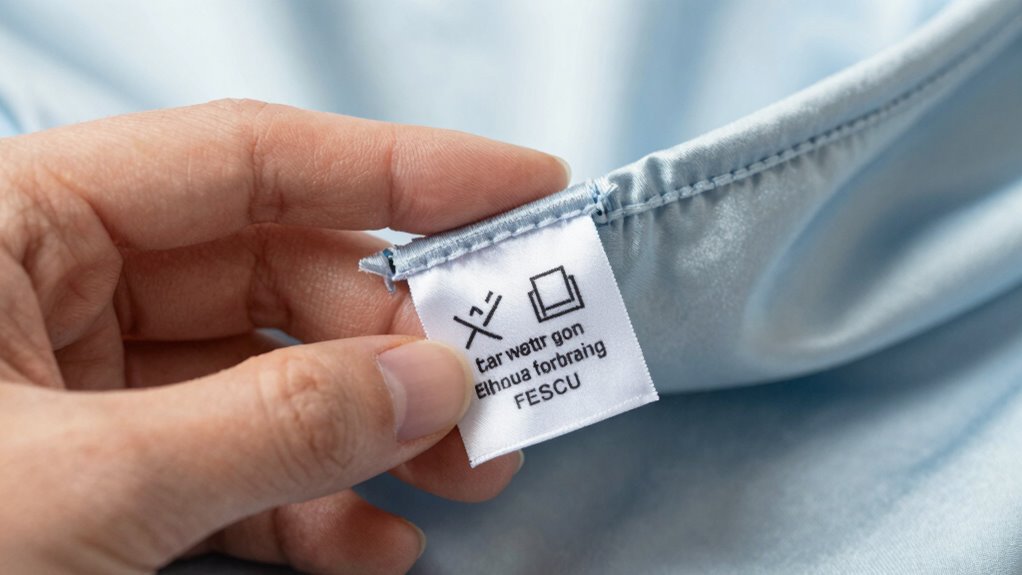
Have you ever looked at a fabric label and wondered what all those symbols and words really mean? It can feel overwhelming at first, but understanding textile symbols and fabric care tips is easier than you think once you know what to look for. These symbols are designed to communicate essential information quickly, so you can care for your clothes properly without guesswork.
Start by recognizing that each symbol on a label has a specific meaning related to washing, drying, ironing, or bleaching. For example, a tub symbol indicates washing instructions, with variations like a hand in the tub meaning hand wash only, or a number inside the tub showing the maximum temperature in Celsius. A circle often relates to dry cleaning, with letters inside the circle specifying the type of solvent that can be used. A square with a circle inside is a drying symbol, guiding you whether to tumble dry or air dry.
Learning textile symbols helps you follow fabric care tips accurately. For instance, if the symbol shows a triangle with a cross over it, it indicates bleaching is not allowed. If there’s a square with a circle inside, but no lines or symbols, it usually means tumble drying is safe. When you see an iron symbol, check for dots; one dot means low heat, while three dots indicate high heat. Some symbols even specify special instructions, like a circle with a letter indicating dry cleaning with specific solvents, or a crossed-out circle that forbids dry cleaning altogether. Additionally, understanding how fabric blends affect care can help you choose the right cleaning method for mixed fabrics. Recognizing the importance of textile symbols can prevent costly mistakes and fabric damage. Being aware of textile care labels can also guide you in selecting appropriate cleaning and maintenance routines for different types of clothing and fabrics. Moreover, familiarizing yourself with these symbols can help you make more ethical choices in garment care, ensuring you use sustainable and appropriate cleaning methods.
Deciphering these symbols saves your clothes from damage and extends their lifespan. Instead of guessing whether you can toss a sweater in the dryer or iron a delicate blouse, you can simply follow the textile symbols. Paying attention to fabric care tips not only preserves the appearance but also maintains the integrity of the fabric, whether it’s cotton, wool, silk, or synthetic fibers.
As an affiliate, we earn on qualifying purchases.
Frequently Asked Questions
What Do Symbols on Fabric Labels Mean Exactly?
The symbols on fabric labels follow care label regulations to guide you on proper maintenance. You interpret these symbols using reliable symbol interpretation guides, which clarify their meanings. For example, a triangle indicates bleaching instructions, while a square with a circle inside relates to tumble drying. By understanding these symbols, you guarantee your garments last longer and stay in good condition, avoiding damage from improper washing or drying methods.
Can Fabric Labels Tell Me About Fabric Durability?
Yes, fabric labels can tell you about fabric durability through details on fabric composition and label durability. Look for symbols and terms indicating fiber strength, such as polyester for durability or silk for delicacy. A label’s durability depends on how well it withstands washing, wear, and tear. By understanding these clues, you can gauge how long a fabric will last and choose items suited to your needs.
Are There Eco-Friendly Fabric Label Options?
Yes, eco-friendly fabric label options exist, focusing on sustainable textiles and eco-conscious certifications. When shopping, look for labels that highlight certifications like GOTS or OEKO-TEX, which guarantee environmentally responsible practices. These labels inform you that the fabric is made from sustainable materials and processed with eco-conscious methods, helping you make better choices for the planet. Always check the label for these certifications to support eco-friendly fashion.
How Often Do Fabric Label Standards Change?
Fabric label standards typically change infrequently, often influenced by updates in international standards and evolving fabric label history. You should stay informed through industry organizations and regulatory bodies, as updates may occur every few years or when new safety, environmental, or labeling requirements are introduced. By monitoring these changes, you guarantee your labels remain compliant and accurately reflect the latest standards, helping you avoid penalties and maintain consumer trust.
Do All Countries Use the Same Fabric Label Symbols?
Think of fabric label symbols as a universal language, but just like regional dialects, they have cultural differences. Not all countries follow the same label history or standards; some use symbols, others words. For example, Japan’s symbols might differ from Europe’s. While many countries are aligning under international standards, it’s wise to check local guidelines. You’ll find that understanding these nuances helps you care for fabrics correctly worldwide.
Conclusion
By learning to read fabric labels, you empower yourself to care for your clothes properly and make smarter choices. Remember, “Knowledge is power,” and understanding labels guarantees your garments last longer and look better. Don’t guess—trust the information on the tag. The more you decode, the easier it gets. So, take control of your wardrobe, and let the labels guide you. After all, a stitch in time saves nine!
Fall Picks
fall essentials
As an affiliate, we earn on qualifying purchases.