To properly set your iron, check the garment’s tag for symbols indicating the right heat level. Use low heat for delicate fabrics like silk and synthetics, medium for wool, and high for cotton and linen. Be cautious with heavy fabrics like denim, and always test small areas first. Balancing heat with steam helps prevent damage and ensures a smooth finish. Keep exploring to master each fabric type for crisp, wrinkle-free clothes.
Key Takeaways
- Check clothing tags for recommended heat symbols to determine appropriate iron settings.
- Use low heat for delicate fabrics like silk and synthetic blends; higher heat for cotton and linen.
- Adjust iron temperature based on fabric thickness and wrinkling severity for effective results.
- Incorporate steam and pressing cloths on sensitive fabrics to prevent damage.
- Maintain your iron clean and use modern temperature controls for precise, safe ironing.
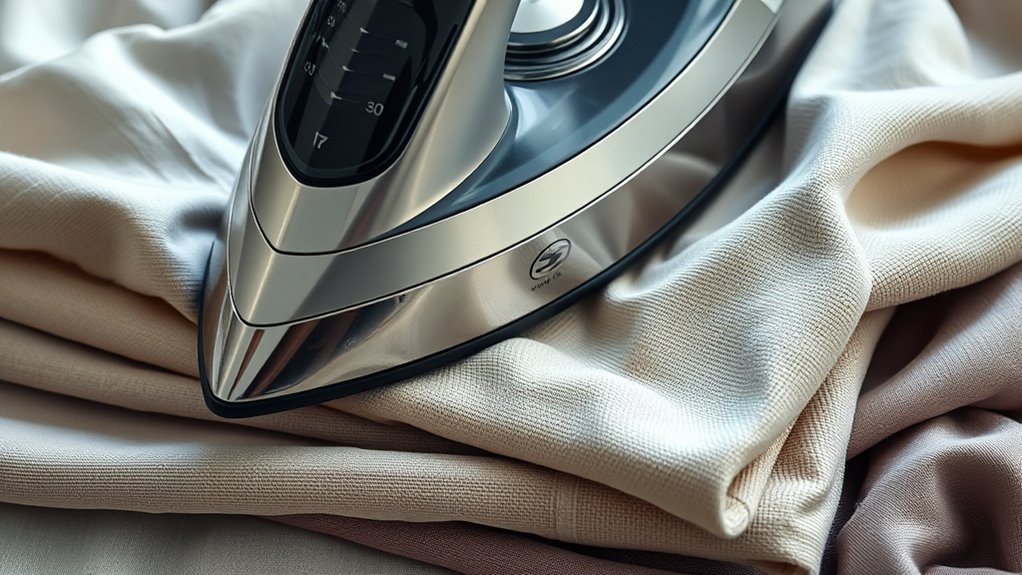
Ever wondered how to get your clothes looking crisp and wrinkle-free effortlessly? The key lies in understanding the right heat settings for different fabrics. When you’re ironing, proper fabric care is essential not only to achieve smooth results but also to prevent damage. Using the correct heat ensures you maintain the quality of your clothes while giving them a polished look. Remember, each fabric reacts differently to heat, so knowing which setting to use is crucial for iron safety and ideal results.
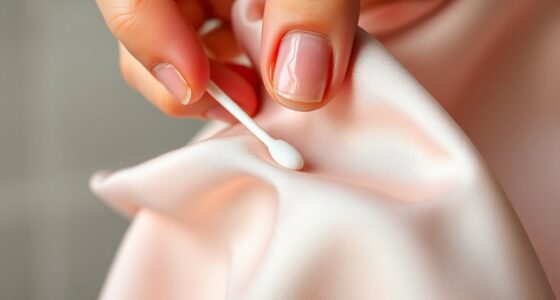
Start by identifying the fabric type before you even plug in your iron. Most clothes tags provide symbols indicating the recommended heat level. For delicate fabrics like silk and synthetic blends, lower heat settings are best. These materials are prone to scorching or melting if exposed to high temperatures. For silk, use a low heat setting, and always place a pressing cloth between the iron and the fabric to protect the delicate fibers. Synthetic fabrics like polyester or nylon also require low to medium heat to avoid shiny marks or burns.
On the other hand, natural fibers like cotton and linen are more tolerant of higher temperatures. Cotton can usually withstand medium to high heat, but you should still be cautious with synthetic blends mixed in. Linen, being a sturdy fabric, responds well to higher heat, which helps smooth out stubborn wrinkles. When ironing these fabrics, guarantee your iron is set appropriately to avoid overexposure that could weaken fibers over time. Adjust the temperature based on the fabric’s thickness and the level of wrinkling.
Wool and wool blends call for medium heat, but you should always test a small, inconspicuous area first. Overheating wool can cause it to shine or distort, so start with a lower setting and increase as needed. For heavy fabrics like denim or canvas, higher heat settings are suitable, but always keep an eye on the fabric’s response. Using steam can also help relax fibers, making the ironing process more effective and reducing the need for excessive heat.
Throughout your fabric care routine, remember that the goal is to balance heat and steam for the best results. Additionally, modern irons often feature temperature control technology, which can help you precisely select the ideal setting for each fabric type. Always keep your iron clean and in good condition, as dirt and mineral deposits can cause uneven heat distribution or stains. By paying close attention to fabric type and respecting the recommended heat settings, you’ll not only achieve crisp, wrinkle-free clothes but also extend the lifespan of your garments. Iron safety is just as important as fabric care, so take your time, and you’ll enjoy professional-looking results every time.
Frequently Asked Questions
Can I Iron Over Decorative or Embroidered Fabrics Safely?
You shouldn’t iron directly over decorative embroidery or embellished fabrics, as it can damage the intricate details and compromise fabric safety. To protect these delicate features, place a thin cloth or pressing cloth over the embroidery before ironing. This prevents direct heat contact, preserves the decorative elements, and maintains the fabric’s integrity. Always check care labels for specific instructions, ensuring your embroidered fabrics stay beautiful and intact.
How Do I Remove Stubborn Wrinkles Without Damaging Delicate Fabrics?
To remove stubborn wrinkles without damaging delicate fabrics, you should gently use a steamer or a pressing cloth with low heat. Apply fabric softening sprays beforehand to loosen fibers, making wrinkle removal easier. Always test on a small area first. This approach helps prevent new wrinkles and keeps your fabric smooth, ensuring you don’t overexpose delicate fibers to heat, which could cause damage.
Is It Safe to Use Steam on All Fabric Types?
Yes, you can use steam on most fabrics, but always prioritize fabric care and safety precautions. Check the care label first, as delicate fabrics like silk or synthetic fibers may need lower steam settings or no steam at all. For sturdier materials, steam helps remove wrinkles effectively. Always test a small area if unsure, and avoid excessive steam on sensitive fabrics to prevent damage.
What Are the Best Practices for Ironing Synthetic or Polyester Fabrics?
For perfect polyester and synthetic fabric pressing, proceed cautiously. Use a low heat setting to prevent burns and damage, and always apply heat protection like a pressing cloth. Keep the iron moving smoothly to minimize scorching or melting. Steam can be safe if used sparingly, but make sure fabrics are dry and test a small area first. Prioritize protection and patience to preserve the fabric’s finish and form.
How Do I Prevent Shiny Marks on Dark-Colored Fabrics?
To prevent shiny marks on dark-colored fabrics, you should keep the iron moving constantly and avoid pressing too hard. Using a pressing cloth helps protect the fabric sheen and distributes heat evenly. Set your iron to a lower heat setting suitable for dark fabric care, and always test on a small area first. This approach minimizes the risk of creating dull or shiny patches, keeping your dark fabrics looking their best.
Conclusion
Now that you’ve unveiled the secret dance between fabrics and heat, you’re ready to tame even the wildest wrinkles. Think of your iron as a trusty wand, wielding the power to transform crumpled chaos into crisp perfection. With each fabric’s unique rhythm, you’ll glide smoothly, creating a symphony of sleek, spotless garments. Embrace this knowledge, and watch your ironing routine become a graceful ballet—your clothes will thank you for the gentle touch.