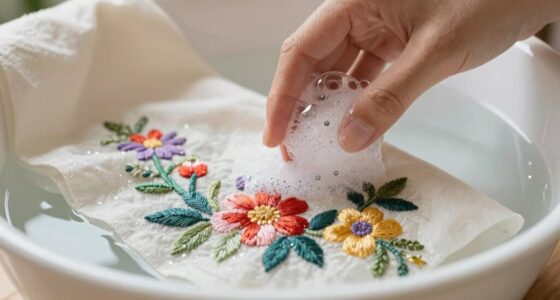
When spot cleaning delicate fabrics, gently blot the stain with a clean, dry cloth to absorb excess liquid, then prepare a solution of cool water and a mild detergent or fabric cleaner. Apply it sparingly with a soft cloth or sponge, dabbing carefully without rubbing. Rinse with cool water and blot to remove moisture. Use air-drying methods and avoid heat or direct sunlight. For more detailed tips, keep exploring how to protect your delicate textiles effectively.

Get your wardrobe favorites delivered free — and shop member deals
- Fast, free delivery on millions of items
- Access to Prime Big Deal Days deals on October 6–7
- Prime Video, Amazon Music and more included
Key Takeaways
- Blot stains gently with a clean, dry cloth to absorb excess; avoid rubbing to prevent fiber damage.
- Use cool water mixed with mild detergent or fabric cleaner, applying sparingly with a soft cloth or sponge.
- Test any stain remover on an inconspicuous area before applying to the visible stain.
- Rinse the treated area with cool water and blot to remove residual cleaning solution.
- Air-dry by laying flat or hanging in a shaded, ventilated space, avoiding direct sunlight and heat sources.

Accidents happen, and knowing how to quickly and effectively spot clean can save you time and effort. When a spill or stain occurs on delicate fabrics, immediate action makes all the difference. Proper stain removal and fabric care are essential to prevent permanent damage and keep your garments looking their best. The key is to act swiftly with gentle techniques tailored specifically for delicate textiles, which are often more prone to damage from harsh chemicals or vigorous scrubbing.
Start by gently blotting the stain with a clean, dry cloth or paper towel to absorb excess liquid. Avoid rubbing, as this can push the stain deeper into the fibers or cause fraying. Once you’ve absorbed as much as possible, prepare a mild cleaning solution. Use cool water mixed with a small amount of gentle detergent or a dedicated fabric cleaner designed for delicate materials. Never use hot water, as it can set certain stains or weaken delicate fibers.
Gently blot stains with a dry cloth, then use cool water and mild detergent for delicate fabric care.
Apply the solution sparingly to the stained area with a soft cloth or sponge. Gently dab, rather than scrub, to lift the stain from the fabric. Patience is vital here—avoid applying too much pressure, which can distort or damage the fabric. For stubborn stains, you might consider a specialized stain remover formulated for delicate fabrics, but always test it on an inconspicuous area first to make sure it won’t cause discoloration or deterioration.
After treatment, rinse the area with cool water to remove any residual cleaning solution. Use a clean cloth to gently blot away excess moisture. For fabrics that can be air-dried, lay the item flat on a clean towel or hang it in a shaded, well-ventilated area. Never wring or twist delicate fabrics, as this can cause stretching or distortion. If you’re unsure whether the fabric can be machine washed, opt for hand washing or professional cleaning instead.
Throughout the process, remember that patience and gentle handling are your best allies. Avoid harsh chemicals or vigorous scrubbing, both of which can compromise fabric integrity. Additionally, using proper cleaning techniques can help prevent accidental damage and ensure the longevity of your delicate items. Regularly inspecting your cleaning approach guarantees you’re not causing more harm than good. With proper stain removal and fabric care techniques, you can preserve the delicate fibers, maintain their appearance, and extend the life of your favorite items. When accidents happen, quick, gentle, and precise spot cleaning is your best strategy to keep your delicate fabrics looking pristine.
Frequently Asked Questions
Can I Use Regular Stain Removers on Delicate Fabrics?
You shouldn’t use regular stain removers on delicate fabrics because they may contain harsh chemicals that can cause adverse chemical reactions, damaging the fabric. Always check fabric compatibility before applying any stain remover, and opt for gentle, specially formulated products for delicate materials. This prevents unwanted reactions and preserves your fabric’s integrity, ensuring it stays looking its best without risking permanent damage.
How Often Should I Spot Clean Delicate Garments?
You should spot clean delicate garments as soon as stains occur to prevent them from setting, which 60% of professionals agree helps preserve fabric integrity. Follow the frequency guidelines of gentle, on-the-spot treatments rather than regular washing to reduce wear. By acting promptly, you minimize the risk of stain buildup, ensuring your delicate fabrics stay fresh and beautiful longer. Remember, consistent but cautious cleaning prolongs their lifespan and maintains their delicate appearance.
Are There Eco-Friendly Cleaning Options for Delicate Fabrics?
Yes, you can opt for eco-friendly cleaning options for delicate fabrics. Use eco-friendly solvents that are gentle yet effective, and choose organic detergents made from natural ingredients. These alternatives help protect your fabrics and the environment. When spot cleaning, always test a small area first and apply these products carefully to avoid damage. This way, you keep your delicate garments clean while staying eco-conscious.
What Should I Do if a Stain Doesn’T Come Out?
If a stain won’t come out, don’t panic. You can try gently dabbing with a mixture of water and mild eco-friendly detergent, but avoid rubbing to prevent fabric dye loss. To prevent future stains, always follow stain prevention tips and treat spills promptly. For stubborn stains, consider consulting a professional cleaner experienced with delicate fabrics to avoid damage. Remember, patience and gentle care are key to protecting your delicate textiles.
Can I Use Hot Water for Spot Cleaning Delicate Textiles?
Did you know that over 60% of fabric damage occurs from improper cleaning? When cleaning delicate textiles, you should avoid hot water because it can weaken fibers and cause damage. Instead, use cold or lukewarm water for spot cleaning. Hot water may seem effective, but it risks ruining delicate fabrics. Always test a small, hidden area first to prevent unintended damage.
Conclusion
Now that you know these delicate fabric spot cleaning secrets, you’re ready to tackle stains with confidence. But remember, each fabric reacts differently, and the next stain might challenge your skills in unexpected ways. Will your new techniques save the day or require a last-minute rescue? Stay alert, keep experimenting, and don’t be surprised if your favorite delicate pieces surprise you with their resilience. The next stain could be your most rewarding cleaning victory yet—are you prepared?
Fall Picks
fall essentials
As an affiliate, we earn on qualifying purchases.