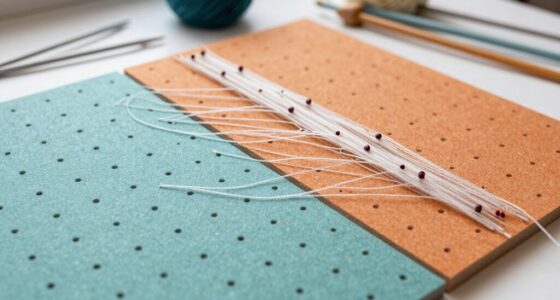
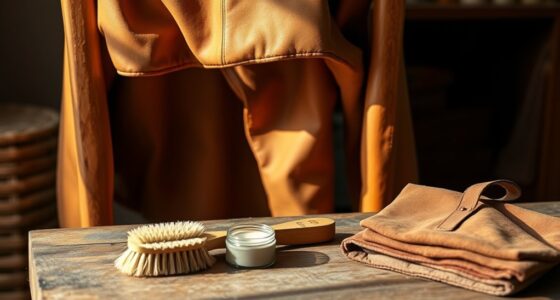
To care properly for wool, always check the care label for specific instructions, especially if treatments are involved. Wash gently by hand in cool or lukewarm water with mild, eco-friendly detergents, or use a delicate cycle in your machine with a mesh bag. Lay items flat to dry away from heat or sunlight. Store wool folded in breathable containers with natural repellents to prevent pests. Keep these tips in mind, and you’ll keep your wool soft and durable for years to come.
Key Takeaways
- Always check the care label for specific washing, drying, and storage instructions, especially if the wool is fiber-treated.
- Hand wash wool in cool or lukewarm water with gentle, wool-specific detergents; avoid harsh chemicals and bleach.
- Lay wool flat on a towel to dry, reshaping gently; never hang to prevent stretching or shrinking.
- Store wool in breathable containers like cotton bins or cloth bags; use natural repellents such as cedar or lavender for moth prevention.
- Properly dried and stored wool maintains softness, prevents damage, and prolongs its lifespan.
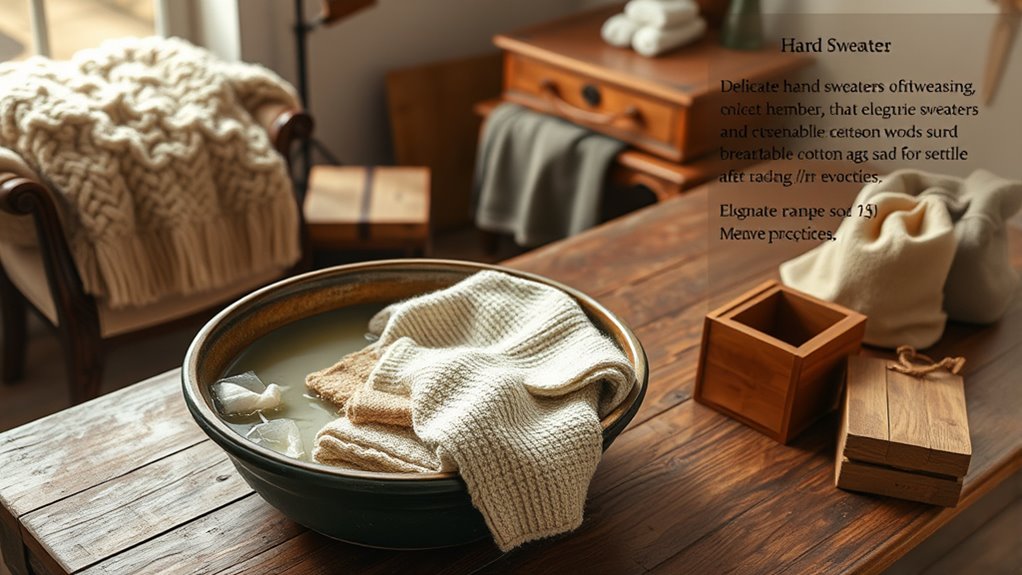
Wool is a durable and versatile fabric that requires proper care to maintain its softness and appearance. When it comes to caring for wool, understanding fiber treatments can make a significant difference. Many wool products undergo special fiber treatments to enhance durability, prevent pilling, and improve elasticity. Knowing whether your wool has been treated can help you determine the best cleaning method. For instance, some wool items are pre-treated to resist shrinking or felting, so you should follow specific instructions to preserve these qualities. Additionally, eco-friendly cleaning options are gaining popularity, allowing you to care for your wool without harming the environment. Using eco-friendly detergents and cleaning techniques not only protects delicate fibers but also reduces your ecological footprint.
When washing wool, always opt for gentle methods. Hand washing is generally preferred, especially with untreated or delicate pieces. Fill a basin with cool or lukewarm water and add an eco-friendly wool detergent or a mild soap designed for wool. Avoid harsh chemicals or bleach, as these can damage the fibers. Gently immerse your wool garment and avoid wringing or twisting it, which can distort its shape. Instead, softly squeeze out excess water, then lay the item flat on a clean, dry towel. Roll the towel with the garment inside to absorb additional moisture. This method helps maintain the fabric’s integrity and prevents stretching. If you prefer to machine wash, select the wool or delicate cycle, use cold water, and place the item inside a mesh laundry bag for added protection. Always check the care label for specific instructions, especially if your wool has undergone fiber treatments.
Drying wool correctly is vital to prevent shrinking or felting. Never hang wool garments to dry, as this can cause stretching. Instead, reshape the item gently and lay it flat on a clean towel or drying rack. Keep it away from direct sunlight or heat sources like radiators, which can weaken fibers and fade colors. When storing wool, ensure it’s clean and completely dry to prevent mold or moth infestations. Folding your wool and storing it in a breathable container, such as a cotton storage bin or cloth bag, allows air circulation and protects the fibers. For long-term storage, consider using natural repellents like cedar balls or lavender sachets to deter pests. Proper care and attention to fiber treatments and eco-friendly cleaning methods guarantee your wool stays soft, vibrant, and long-lasting for years to come.

Laundry Bags Mesh Wash Bags for Delicates, Upgraded Honeycomb & Fine Mesh, Extra Durable with Sturdy Zippers, Protect Clothes in Washing Machine Essentials for Home, College & Dorm, 12 x 16 in 4-Pack
Durable Honeycomb Mesh: Built to Last Crafted from premium 125GSM high-density honeycomb mesh, these bags resist stretching and…
As an affiliate, we earn on qualifying purchases.
As an affiliate, we earn on qualifying purchases.
Frequently Asked Questions
Can Wool Be Washed in a Regular Washing Machine?
Yes, you can machine wash wool, but you need to follow wool laundry tips carefully. Use a gentle cycle and cold water to prevent shrinking or felting. Always check the care label beforehand. Turn your wool item inside out, and avoid harsh detergents. Using a mesh bag can protect delicate fibers during machine wash. By following these steps, you’ll keep your wool looking great and lasting longer.
How Often Should I Wash My Wool Garments?
You should wash your wool garments only when they’re visibly dirty or begin to smell, usually every 4-6 wears. This helps maintain the natural fibers and extends the wool garment’s longevity. Frequent washing can damage delicate wool fibers and cause pilling. Spot cleaning and airing out between wears can reduce the need for frequent washing, keeping your wool looking fresh and lasting longer.
Is It Safe to Use Fabric Softener on Wool?
Using fabric softener on wool isn’t recommended because it can compromise wool fiber integrity. You might wonder about fabric softener safety, but it often contains chemicals that can weaken delicate wool fibers, making your garments less durable. Instead, opt for gentle wool-specific detergents. This preserves the softness and elasticity of your wool, ensuring it stays cozy and maintains its quality over time.
Can I Store Wool in a Sealed Plastic Bag?
Did you know that storing wool in plastic bags can increase the risk of moth damage? You should avoid storing wool in sealed plastic bags because they trap moisture and prevent airflow, which can lead to mold and mildew. For airtight preservation, choose breathable storage options like cotton bags. If you must use plastic, guarantee the wool is completely dry and add moth repellent to protect your garments.
How Do I Remove Stains From Wool Without Damaging It?
To remove stains from wool without damage, act quickly using gentle wool cleaning techniques. Blot the stain with a clean, damp cloth, avoiding rubbing, which can felt the fibers. For stubborn spots, mix a small amount of wool-safe detergent with cold water and gently dab the area. Rinse carefully with clean water and let it air dry. This approach preserves your wool’s softness and prevents any harm during stain removal.

Heritage Park Silk & Wool Fragrance Free, Hypoallergenic, pH-Neutral Laundry Detergent – Dermatologist-tested, Sensitive Skin-Friendly, Enzyme-Free, Concentrated Up to 64 loads (32 fl oz)
Gentle & pH-Neutral for Delicates: Specially formulated for silk, wool, cashmere, alpaca, and other protein-based fabrics, this natural…
As an affiliate, we earn on qualifying purchases.
As an affiliate, we earn on qualifying purchases.
Conclusion
By caring for your wool with gentle hands and patience, you nurture its warmth and timeless beauty. Think of your woolens as cherished treasures, each stitch a whisper of comfort. When you wash, dry, and store them thoughtfully, you’re safeguarding cozy memories for seasons to come. Let your gentle touch be the gardener, and your woolens the blooming flowers—preserving their softness and resilience so they can comfort you through countless cozy moments ahead.

Homode Cedar Blocks for Clothes Storage, Cedar Wood Chips and Balls for Closets and Drawers, Fresh Scented Sachets, 40 Pack
GREAT VALUE – Cedar closet pack with 6 cedar hang ups, 24 cedar balls, 2 cedar sachets, 8…
As an affiliate, we earn on qualifying purchases.
As an affiliate, we earn on qualifying purchases.

Acellegic 4-Tier Folding Sweater Drying Rack Mesh Clothes Hanging Foldable Sweater Dryer Portable Clothes Drying Rack for Flat Knitwear Laundry T-Shirt Swimsuit Delicates (1 Pack)
Ideal Flat Drying for Garment Shape Care: designed for flat drying, this sweater drying rack helps maintain the…
As an affiliate, we earn on qualifying purchases.
As an affiliate, we earn on qualifying purchases.