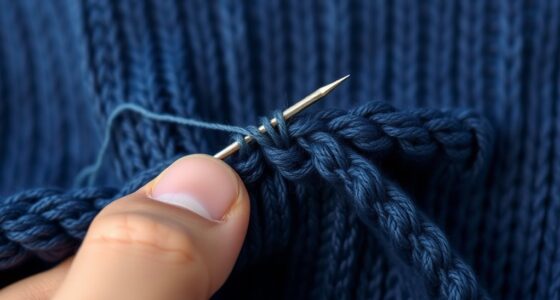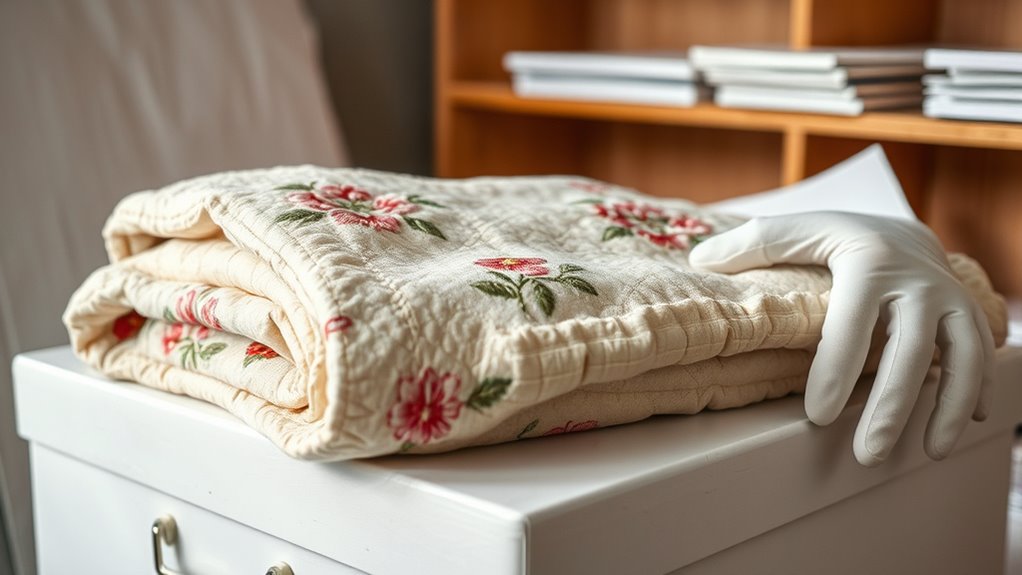

To preserve vintage textiles, keep them away from direct sunlight and store in a cool, dark environment to prevent dye fading. Handle them gently, wearing gloves, and use mild cleaning methods to avoid damage. Reinforce fragile edges with gentle stitching or conservation-grade adhesives, and store flat or rolled on acid-free supports to prevent fraying. Maintaining stable humidity and temperature is key. If you want to protect these textiles effectively, explore proper techniques that ensure their lasting beauty and integrity.
Key Takeaways
- Store textiles in a cool, dark, and climate-controlled environment to prevent dye fading and fiber deterioration.
- Use acid-free tissue paper or cotton fabric for wrapping and cushioning fragile edges during storage.
- Support entire textile surfaces during handling and avoid folding to prevent stress and fraying.
- Reinforce edges with gentle, reversible stitching or conservation-grade adhesives to prevent unraveling.
- Regularly inspect textiles for signs of fading, damage, or fraying to enable prompt conservation actions.

Vintage textiles require careful conservation to preserve their beauty and historical significance. When caring for these delicate pieces, understanding how to maintain dye stability is essential. Over time, exposure to light, fluctuations in temperature, and humidity can cause dyes to fade or bleed, diminishing the textile’s original vibrancy. To prevent this, keep your textiles away from direct sunlight and store them in a cool, dark environment. Using acid-free tissue paper or cotton fabric to wrap the textiles can also help shield them from environmental factors that accelerate dye deterioration. When handling vintage textiles, always wash your hands or wear gloves to avoid transferring oils or dirt that could further compromise dye stability. Regularly inspecting your textiles allows you to catch early signs of fading or damage, so you can take prompt action to prevent further deterioration. Incorporating gentle cleaning techniques can also prolong the life of your textiles without risking damage to sensitive dyes. Fraying prevention is another essential aspect of conserving vintage textiles. Over time, the edges of fabric can become fragile and prone to unraveling, especially if the textile has been poorly stored or handled. To protect against fraying, reinforce the edges with gentle, reversible stitching using fine silk or cotton thread. You can also apply a thin, conservation-grade adhesive along the edges if stitching isn’t feasible, but always ensure the adhesive is reversible and safe for delicate fibers. When storing or displaying your vintage textiles, avoid folding them in a way that puts stress on the vulnerable edges. Instead, roll the textile onto acid-free tubes or store it flat in a padded, supportive environment. Using acid-free tissue paper to cushion fragile areas can further prevent fraying and tearing. Moreover, gentle handling is key to preserving the integrity of vintage textiles. Always lift or move the textile with care, supporting its entire surface to avoid unnecessary tension on weak areas. If you notice any loose threads or frayed edges, address them as soon as possible using appropriate conservation techniques. Maintaining a stable environment with controlled humidity and temperature also plays a crucial role in preventing fraying and dye instability. Fluctuations can cause fibers to expand or contract, leading to weakening and eventual fraying. Consistent climate control minimizes these risks and helps keep your textiles in excellent condition for years to come. Additionally, understanding the key components of textiles can guide you in selecting appropriate preservation methods tailored to different fabric types.
Top picks for "preserv vintage textil"
Open Amazon search results for this keyword.
As an affiliate, we earn on qualifying purchases.
Frequently Asked Questions
How Can I Identify Different Types of Vintage Textile Fibers?
To identify different types of vintage textile fibers, start with fiber identification techniques like burn tests, microscopy, and chemical analysis. These methods help you determine the textile composition by examining how fibers react to heat, flame, and microscopic structure. You can also compare samples to known fiber characteristics. This process allows you to accurately classify fibers, ensuring proper care and preservation of your vintage textiles.
Are There Eco-Friendly Methods for Textile Conservation?
Are there eco-friendly methods for textile conservation? Absolutely. You can harness the power of natural dyes to gently clean and restore your vintage textiles without harsh chemicals. Paired with sustainable detergents, these methods protect delicate fibers while reducing environmental impact. Implementing these eco-conscious techniques not only preserves your textiles beautifully but also aligns with a greener lifestyle, ensuring your cherished pieces endure for generations without harming the planet.
What Are Common Pests That Damage Vintage Textiles?
Common pests that damage vintage textiles include moths, beetles, and silverfish. To prevent pest damage, you should implement pest prevention strategies like keeping your textiles clean, storing them in airtight containers, and avoiding damp environments. Natural deterrents such as lavender, cedar, or herbal sachets can help keep pests away. Regularly inspecting your textiles guarantees you catch any pest activity early and protect your vintage pieces effectively.
Can I Clean Vintage Textiles at Home Safely?
You can clean vintage textiles at home safely if you’re careful. Start with gentle cleaning techniques like light vacuuming or brushing to remove dust. For stains, try home remedies such as diluted vinegar or gentle soap, but always test a small hidden area first. Remember, avoid harsh chemicals or excessive moisture, and consider consulting a textile conservator for delicate or valuable pieces to prevent damage.
How Do Climate Changes Affect Textile Preservation?
Climate impact profoundly affects textile preservation, posing unique challenges you need to address. Rising temperatures, humidity fluctuations, and increased exposure to light can accelerate deterioration, mold growth, and fabric weakening. These preservation challenges demand you to monitor environmental conditions closely, use appropriate storage methods, and control climate factors to protect your vintage textiles. Staying vigilant about climate impact ensures your textiles remain in good condition for years to come.
Conclusion
By caring for vintage textiles, you’re safeguarding more than fabric—you’re preserving stories, history, and memories woven through time. Each gentle touch and thoughtful storage act as a guardian’s watchful eye, ensuring these treasures continue to whisper their tales for generations. Remember, your hands hold the power to keep their legacy alive, like a silent promise passing from one caretaker to the next. In protecting these textiles, you’re truly preserving a piece of the past’s enduring soul.