
To prevent fabric bleeding and color transfer, always wash new clothes separately for the first few washes and turn garments inside out. Use color-catching sheets and add white vinegar or salt to set the dye. Sort clothes by color and fabric type, following care labels closely. Avoid heat drying, as it can set stains, and act quickly if bleeding occurs. For more tips on keeping your clothes vibrant and protected, explore additional strategies below.
Key Takeaways
- Wash new clothes separately for the first few cycles to prevent color transfer.
- Use color-catching sheets or add salt/vinegar during laundry to set dyes.
- Turn garments inside out to protect colors and reduce bleeding risks.
- Always follow care labels and proper washing temperatures for different fabrics.
- Act quickly with cold water and stain remover if color bleeding occurs to minimize damage.
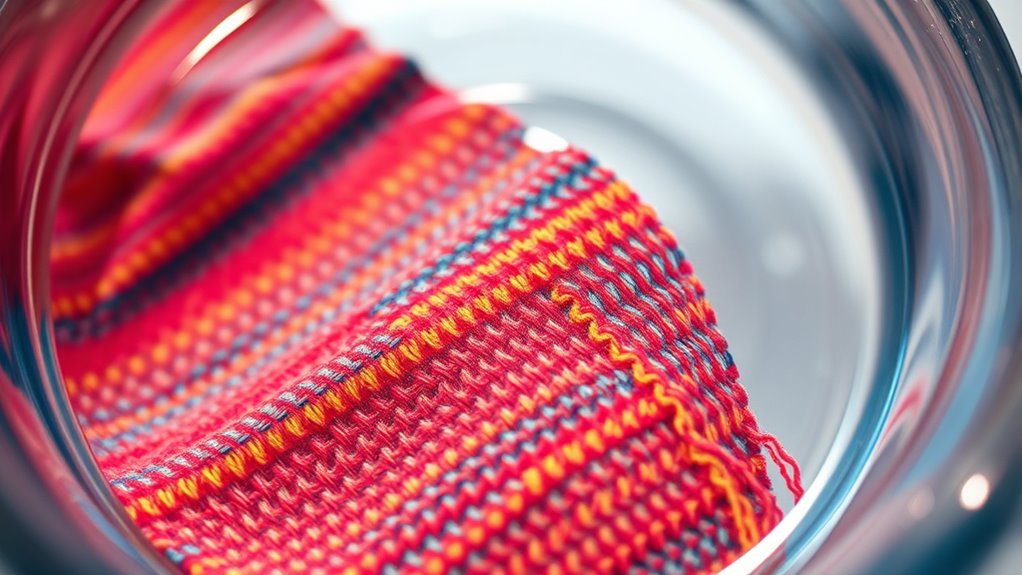
Have you ever washed a new piece of clothing only to find its color bleeding onto other fabrics? It’s frustrating to discover that your favorite shirt or vibrant towel has transferred dye, ruining other items in your laundry. Fortunately, there are ways to prevent color transfer and handle bleeding issues effectively. Understanding color transfer prevention techniques can save you time, money, and the hassle of replacing damaged clothes. When dealing with bleeding remedies, it’s essential to act quickly and follow specific steps to minimize damage.
Prevent color bleeding in laundry with quick remedies and proper sorting to keep clothes vibrant and damage-free.
First, always read the care labels on your garments. Many clothes include instructions on how to wash and dry them properly. If a piece is labeled as color-safe or hand wash only, follow those guidelines strictly. To prevent bleeding, consider washing new clothes separately for the first few washes or using a color-catching sheet. These sheets trap loose dyes during the wash cycle, preventing them from coloring other fabrics. Adding a cup of white vinegar or half a cup of salt to the wash can also help set the dye, reducing the chances of bleeding. Vinegar acts as a natural fixative for colors, especially for jeans and dark clothing.
If you encounter bleeding after washing, don’t panic. Bleeding remedies can often salvage your clothes without needing to discard them. Start by soaking the affected items in cold water mixed with a stain-removing solution or a commercial color run remover. Leave them overnight if necessary, then wash again in cold water with a gentle detergent. For stubborn dye transfer, you might need to repeat the process. After treating, air-dry your clothes rather than tumble drying, as heat can set the dye further into the fabric. Always check if the bleeding has stopped before putting items in the dryer; otherwise, you risk setting the stain permanently. Additionally, understanding fabric dye properties can help you choose the best methods for fixing and preventing bleeding issues.
Prevention remains the best strategy. Always sort laundry by color—whites, light colors, and darks—and use the appropriate wash cycle. Turning garments inside out can also help protect colors during washing. When in doubt, test a small hidden area of the fabric with water and a bit of detergent to see if the color bleeds. Taking these simple steps can markedly reduce the risk of color transfer. Remember, acting quickly with bleeding remedies can prevent long-term damage, but preventing bleeding through proper sorting and washing techniques is your best defense. By staying vigilant and using these tips, you’ll keep your clothes looking vibrant and fresh for longer, avoiding the frustration of unexpected color transfer.
Top picks for "deal fabric bleed"
Open Amazon search results for this keyword.
As an affiliate, we earn on qualifying purchases.
Frequently Asked Questions
Can Fabric Bleeding Occur in Cold Water Washing?
Yes, fabric bleeding can occur in cold water washing. Even in cold water, dye migration is possible, especially if the fabric is new or poorly dyed. To minimize this, wash similar colors together and turn garments inside out. Using a gentle cycle and a color-safe detergent can also help prevent dye from bleeding, protecting your clothes and keeping colors vibrant.
Are There Specific Fabrics More Prone to Bleeding?
You’ll notice that bleeding prone textiles, like vibrant reds and deep blues, can cause chaos in your laundry day, while some colorfast fabrics stubbornly refuse to bleed. Typically, delicate fabrics like silk, wool, and certain synthetics are more susceptible to bleeding. Keep an eye on these, especially when washing in warm or hot water, and always test for colorfastness first to avoid unexpected color disasters!
How Long Should I Soak Clothes to Prevent Bleeding?
You should soak clothes for about 30 to 60 minutes to prevent bleeding and aid stain removal. This soaking time allows the fabric to release excess dye, reducing color transfer during future washes. Use cold water and a gentle detergent or color-safe bleach if needed. Make sure to check the garment periodically, and avoid soaking too long, as it may weaken fibers or cause additional color loss.
Does Fabric Conditioner Affect Color Bleeding?
Fabric conditioner can affect colorfastness issues because it sometimes contains chemicals that weaken dye bonds, increasing dye migration. This may lead to color transfer or fading over time. To minimize this, always choose a gentle fabric conditioner designed for color protection and avoid overuse. Test new products on a small, hidden area first, and wash colored fabrics separately to prevent dye migration and maintain your clothes’ vibrant hues.
Can Fabric Bleeding Happen During Drying?
Yes, fabric bleeding can happen during drying, especially if the fabric isn’t colorfast. When you dry clothes, heat can intensify dye transfer if the colors aren’t set properly. To avoid this, always perform a colorfastness test before washing and drying new fabrics. This way, you can identify potential dye bleeding issues early and prevent colors from running during the drying process, keeping your clothes vibrant and intact.
Conclusion
Now that you know how to prevent fabric bleeding, you can confidently keep your clothes vibrant and fresh. Remember, a little care goes a long way—think of it as your secret weapon against color transfer. By following these simple steps, you’ll preserve your wardrobe’s beauty and enjoy your favorite pieces longer. So, embrace these tips, stay vigilant, and let your clothes tell their story without fading away—because your wardrobe deserves nothing less.