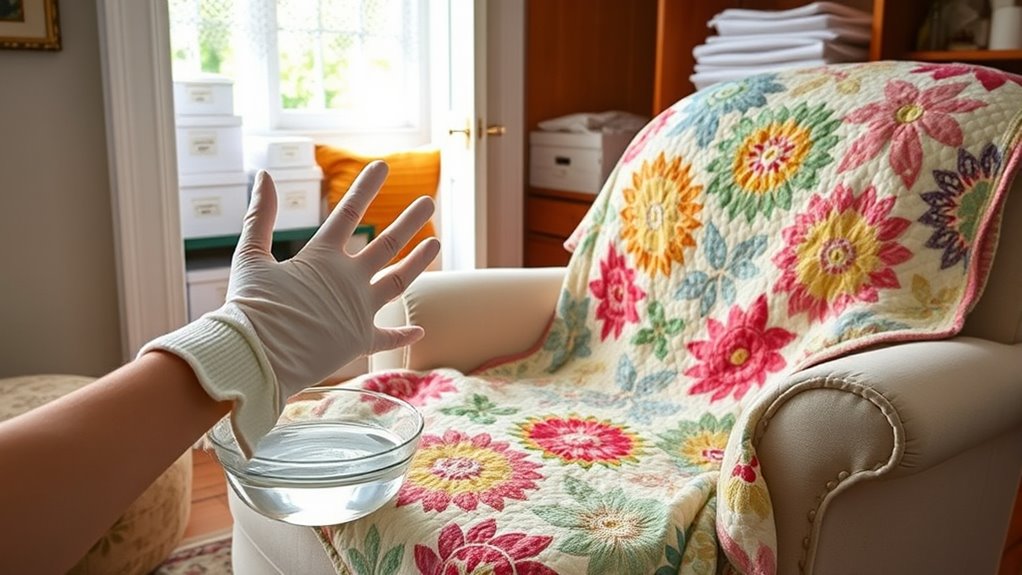

To care for heirloom quilts, handle them gently, washing with cool water and mild detergent, preferably by hand or on a delicate cycle if machine washed. Avoid harsh chemicals or bleach, and always air dry flat in a shaded area. Store quilts in breathable materials like cotton pillowcases or fabric bags, wrapped in acid-free tissue, and kept in a cool, dry, dark environment. Proper techniques will help preserve their beauty and value—you’ll discover more tips as you continue.
Key Takeaways
- Hand wash delicate heirloom quilts with cool water and mild detergent; avoid harsh chemicals and fabric softeners.
- Store quilts in breathable cotton or fabric bags, wrapped in acid-free tissue paper, and avoid plastic containers.
- Keep quilts flat during storage; if folded, roll gently and rotate to prevent fiber stress.
- Regularly inspect stored quilts for pests, moisture, or discoloration, and address issues promptly.
- Air dry quilts flat in a shaded area, avoiding direct sunlight to prevent fading and deterioration.
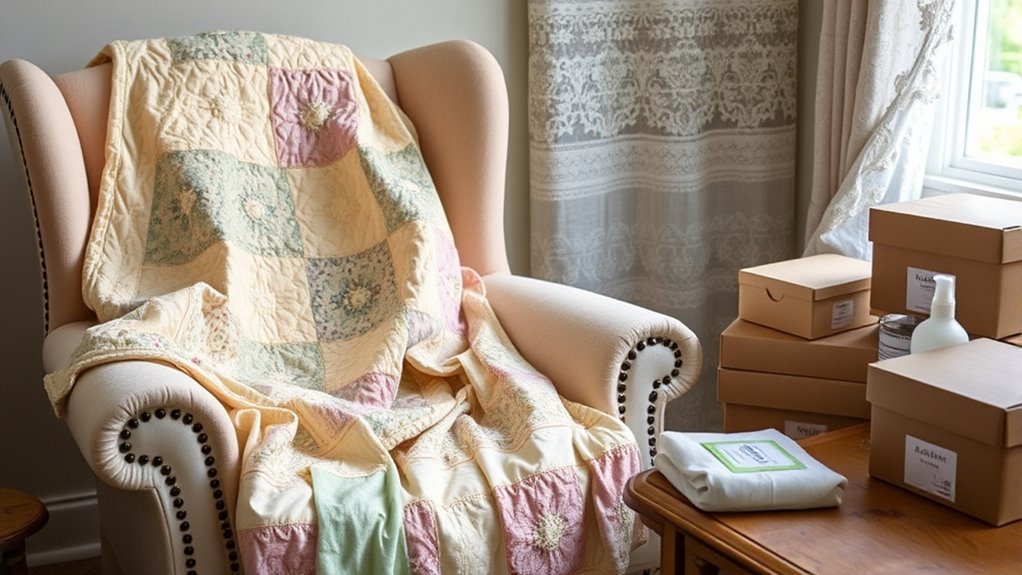
Have you ever wondered how to keep your quilts looking their best for years to come? Proper care starts with understanding quilt cleaning techniques and choosing the right quilt storage solutions. Heirloom quilts are delicate treasures; rushing into washing or storing them without proper knowledge can cause damage that’s hard to repair. To preserve their beauty and integrity, you need to approach cleaning and storage thoughtfully.
Proper quilt care preserves beauty and value for generations.
When it comes to quilt cleaning techniques, gentle handling is key. Hand washing is often the safest method, especially for fragile or antique quilts. Use cool water and a mild detergent designed for delicate fabrics. Avoid harsh chemicals, bleach, or fabric softeners, as these can weaken fibers and fade colors. Gently submerge the quilt, and don’t wring or twist it; instead, softly press out excess water. If you prefer machine washing, opt for a front-loading machine on the delicate cycle, and place the quilt inside a large laundry bag to protect it. After washing, lay the quilt flat on a clean, dry surface to air dry, avoiding direct sunlight, which can fade hues.
Storing quilts properly is equally important. The right quilt storage solutions prevent damage from pests, moisture, and light. Never store quilts in plastic bags or containers, as these trap moisture and can lead to mildew. Instead, opt for breathable storage options like cotton pillowcases or fabric storage bags. Wrap the quilt in acid-free tissue paper before placing it in a storage bin or box. Store the quilt flat if possible; folding can create permanent creases that weaken fibers over time. If you must fold, roll the quilt gently and change the fold lines periodically to prevent deep creases. Keep storage in a cool, dry, dark environment—avoid attics or basements where temperature and humidity fluctuate. Using silica gel packets can help control moisture levels, further protecting your quilt from mold and mildew. Regular inspection is also crucial. Check your stored quilts periodically for signs of pests, moisture, or discoloration. If you notice any issues, address them immediately to prevent further damage. Also, gently refold or rotate the quilt to prevent stress on specific areas. By combining careful cleaning techniques with well-thought-out quilt storage solutions, you preserve not just the appearance but also the sentimental value of your heirloom quilts. Proper care ensures that future generations can appreciate these beautiful pieces, just as you do today. Incorporating proper preservation methods enhances long-term care and protection of your treasured heirlooms.
Frequently Asked Questions
How Often Should I Wash My Heirloom Quilt?
You should wash your heirloom quilt only when it’s visibly soiled or has an odor, as frequent cleaning can damage delicate fabrics. For quilt cleaning, use gentle methods like spot cleaning or professional conservation. Proper storage techniques, such as storing in a cool, dry, acid-free container, help preserve its condition. Avoid excessive handling and direct sunlight to prevent deterioration, ensuring your heirloom stays beautiful for generations.
Can I Use a Regular Washing Machine for Delicate Quilts?
Think of your delicate quilt as a fragile butterfly needing gentle care. Yes, you can use a regular washing machine, but only on the delicate cycle with cold water. It’s like giving it a tender hug, ensuring the fabric stays intact. Use a mild detergent and avoid heavy agitation to protect those cherished stitches. Your quilt will thank you for this gentle treatment, preserving its beauty for generations to come.
What Are the Signs That a Quilt Needs Restoration?
You’ll notice your quilt needs restoration if you see fabric deterioration, like fraying or thinning, or if the colors have faded markedly. Pest infestation, such as holes or chewed edges caused by insects, also signals urgent care. If you observe these signs, it’s best to consult a textile conservator to stabilize and preserve your quilt before further damage occurs. Acting early helps maintain its beauty and longevity.
How Do I Prevent Fading in Antique Fabrics?
Did you know that sunlight can fade fabrics in just a few hours? To prevent fading in antique fabrics, you should store quilts away from direct sunlight and use UV-protective covers. Regularly rotate your quilts to minimize exposure, and keep the environment cool and dry. This approach guarantees fabric preservation and color safeguarding, helping your heirloom quilts stay vibrant and beautiful for generations.
What Is the Best Way to Display Quilts Without Damage?
To display quilts without damage, consider quilt framing or shadow box displays, which support the fabric evenly and prevent stress on seams. You should avoid direct sunlight and high humidity, as these can cause fading and deterioration. Make sure the quilt is mounted gently, using acid-free materials, and avoid pinning or hanging it by its edges. Regularly inspect the display to ensure it stays in good condition.
Conclusion
So, next time you toss that heirloom quilt into the washing machine or shove it into a dusty closet, remember—you’re not just risking a little wear and tear. You’re practically giving it a lifetime achievement award in the “Most Ignored Care Instructions” category. Cherish your quilts, or they’ll remind you of your neglect every time you see a torn corner or faded patch—proof that even heirlooms have a sense of humor.