Ergonomic seating matters in long sewing sessions because it supports your posture, reduces fatigue, and prevents muscle strain in your back, neck, and shoulders. When you sit comfortably, you can handle machines better, with less tension and vibrations that cause discomfort. Good seating also keeps your body relaxed, allowing you to work longer without pain or fatigue. If you want to learn how to create the perfect sewing setup, keep exploring these tips.
Key Takeaways
- Supports proper posture and reduces muscle strain during extended sewing periods.
- Decreases fatigue, enabling longer, more comfortable sewing sessions.
- Minimizes tension in shoulders and arms, improving overall control and precision.
- Prevents back and neck pain caused by poor seating alignment.
- Enhances productivity by maintaining comfort and focus over time.
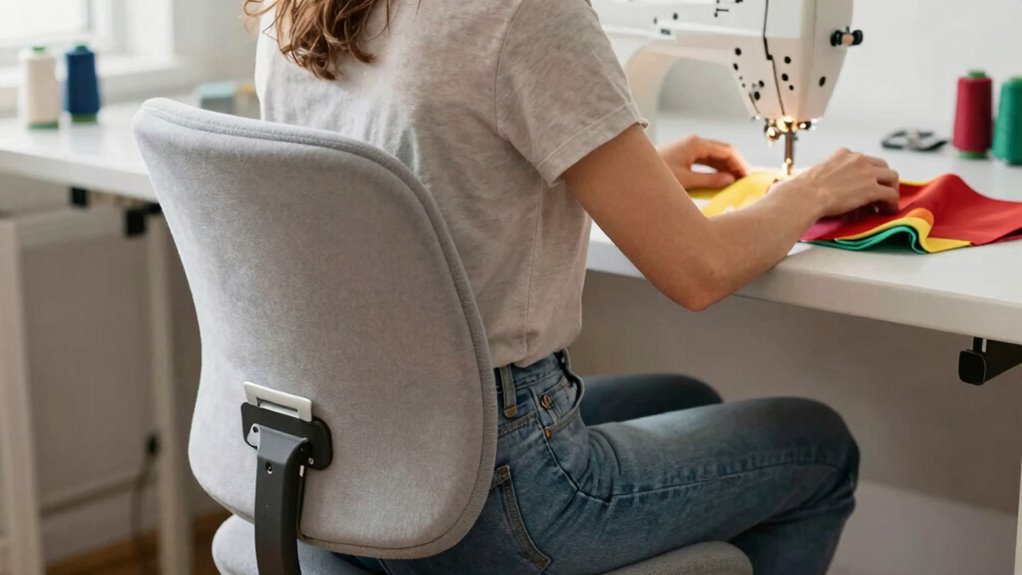
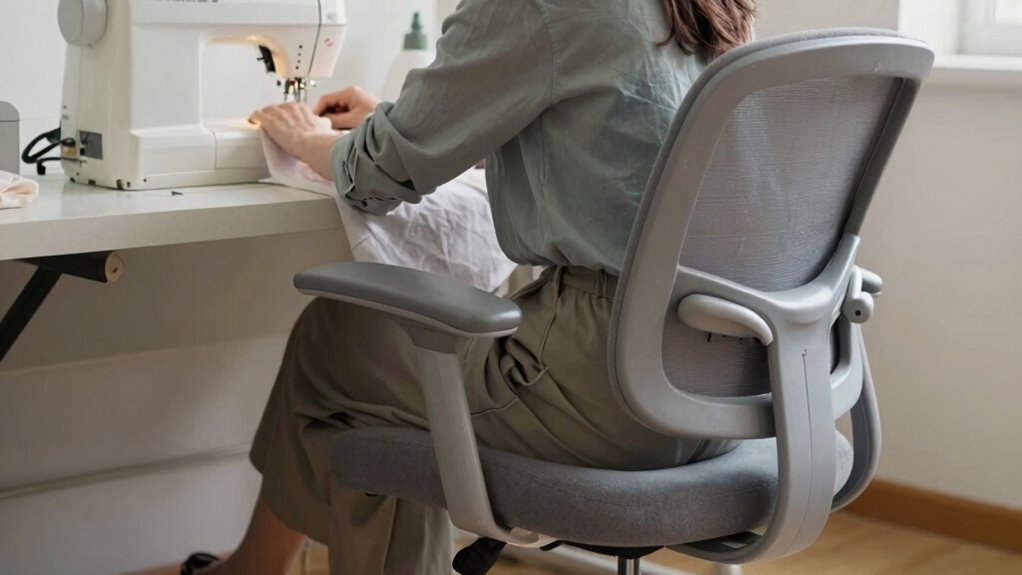
Sewing for extended periods can take a toll on your body, especially if your seating isn’t supportive and comfortable. An ergonomic seat isn’t just a luxury—it’s a necessity that helps prevent pain and fatigue, allowing you to sew longer without discomfort. When you choose the right seating, you support your posture, reduce strain on your back and neck, and improve overall productivity. Proper seating ensures your body stays relaxed, which is essential when you’re engaged in detailed or lengthy projects.
A supportive, ergonomic seat helps prevent pain, reduce fatigue, and boost your sewing comfort for longer, more enjoyable projects.
But ergonomic seating isn’t only about the chair itself. It also ties into how you handle your sewing machine and fabric choices. Machine maintenance plays a significant role in your sewing comfort. When your machine runs smoothly, it requires less force and effort to operate, reducing tension in your shoulders and arms. A well-maintained machine minimizes vibrations and noise, which can cause you to adopt awkward postures or tense muscles, leading to fatigue over time. Regularly cleaning, oiling, and checking your machine ensures it functions efficiently, making your sewing sessions more comfortable and less physically taxing. Additionally, ergonomic workspace setup can prevent unnecessary stretching or reaching, further contributing to your comfort.
Fabric selection also influences how you experience long sewing sessions. Heavier fabrics demand more effort to manipulate, which can strain your hands, arms, and shoulders. Choosing lightweight or medium-weight fabrics when possible can lessen physical stress, especially if your ergonomic seating isn’t perfect. Additionally, selecting fabrics that are easy to handle and don’t slip easily can reduce frustration and the need for excessive repositioning or force, helping you maintain good posture throughout your sewing process. Incorporating ergonomic tools like fabric grips or rotary cutters can also make handling fabrics easier and reduce physical strain. Proper workspace setup grounded in ergonomic principles can further prevent discomfort and support sustained sewing.
Ensuring your sewing environment is arranged with ergonomic principles in mind will also promote better posture and reduce fatigue during long sessions.

Sweetcrispy Home Office Computer Desk Chair, Ergonomic Mid-Back Mesh Rolling Work Swivel Task Chairs with Wheels, Comfortable Lumbar Support, Comfy Flip-up Arms for Bedroom, Study, Student, Pink
Ergonomic Lumbar Support: The ergonomically designed backrest of our ergonomic office chair has prominent lumbar support to fit…
As an affiliate, we earn on qualifying purchases.
As an affiliate, we earn on qualifying purchases.
Frequently Asked Questions
How Do I Adjust My Chair for Optimal Comfort?
You should adjust your chair so your posture alignment is straight, with your feet flat on the floor and knees at a 90-degree angle. Make sure your arm support is at a comfortable height, allowing your arms to rest naturally without strain. Keep your back supported by the chair’s lumbar support, and adjust the height so your wrists are level with your workspace. These adjustments help prevent fatigue and promote comfort during long sewing sessions.
What Materials Are Best for Ergonomic Sewing Chairs?
For ergonomic sewing chairs, opt for materials with high fabric durability like leather or high-quality mesh, which withstand wear and tear. Choose cushions with medium firmness to offer support without sacrificing comfort during long hours. Avoid overly soft or overly hard materials. Breathable fabrics help keep you cool, and durable upholstery guarantees your chair lasts through many sewing projects, making your workspace both comfortable and practical.
Can Ergonomic Seating Prevent Long-Term Back Problems?
Ergonomic seating is like a sturdy bridge over turbulent waters—you stay supported and aligned. It can indeed prevent long-term back problems by promoting proper posture correction and reducing muscle strain. When you sit correctly, you lessen the stress on your spine and muscles, helping you avoid chronic pain. Investing in ergonomic seating encourages healthier habits, making your sewing sessions comfortable and safe, even during long hours.
How Often Should I Take Breaks During Sewing?
You should take breaks every 30 to 60 minutes during sewing. Use this time for posture awareness and stretching routines to prevent stiffness and strain. Stand up, move around, and stretch your back, neck, and shoulders. These short breaks help maintain good ergonomics, reduce discomfort, and improve your focus. Consistently practicing posture awareness and stretching routines guarantees your long sewing sessions stay comfortable and safe for your body.
Are There Affordable Ergonomic Seating Options for Beginners?
Yes, there are affordable ergonomic seating options perfect for beginners. You can find budget-friendly chairs with adjustable height and lumbar support, which help you stay comfortable during long sewing sessions. Incorporate trendy sewing accessories, like cushioned seats or portable stools, to improve your posture. Staying aligned with current fashion trends in sewing gear guarantees comfort and style. Investing in ergonomic seating makes sewing more enjoyable and reduces fatigue over time.
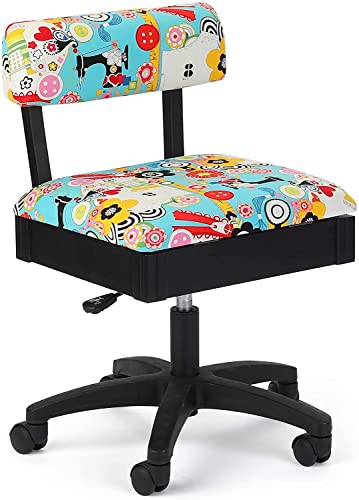
Arrow Sewing H6880 Adjustable Height Hydraulic Sewing and Craft Chair with Under Seat Storage and Printed Fabric, SEW Now SEW Wow Print
Designed with targeted lumbar support for better sewing posture
As an affiliate, we earn on qualifying purchases.
As an affiliate, we earn on qualifying purchases.
Conclusion
So, next time you settle into your sewing chair, remember that comfort isn’t just a coincidence—it’s your secret to enjoying long, productive sessions. When your seating supports your body, you’re less likely to face fatigue or strain. It’s funny how the right ergonomic chair can turn a tedious project into a relaxing escape. After all, with a little thought, your sewing space can become the perfect place where comfort and creativity naturally meet.

FLEXISPOT Adjustable Sewing Table with Flush Mount Sewing Machine Bed, Sewing Desk with Dual Adjustable Workspace, Electric Sewing Machine Table for Quilting, Crafting, Tailoring and Home Studio Use
Flush Sewing Surface: Enjoy smoother stitching and better fabric control with a sewing table designed for precision work….
As an affiliate, we earn on qualifying purchases.
As an affiliate, we earn on qualifying purchases.

Dritz Anti-Skid Gripper Fabric 11"X24", White
For sewing on soles of pajamas feet and slippers
As an affiliate, we earn on qualifying purchases.
As an affiliate, we earn on qualifying purchases.