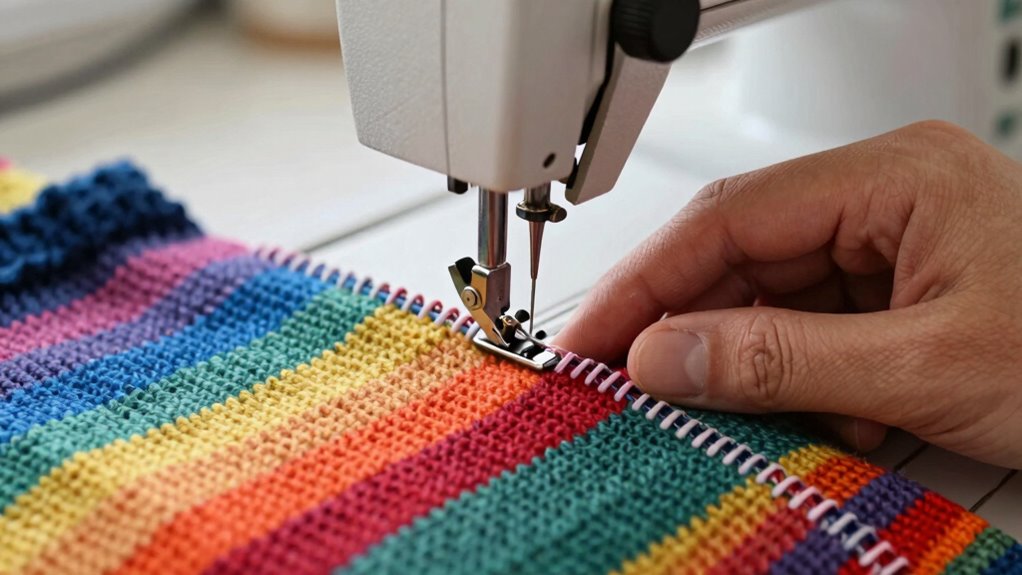
If you sew a lot of knitwear, a coverstitch machine can make a big difference. It creates professional-looking hems and seams that stretch with your fabric, preventing puckering and fraying. While a serger or zigzag stitch can handle some stretch, a coverstitch offers durability and an even finish that’s hard to match. If you want high-quality results and quicker finishes, a coverstitch machine is well worth it — learn more about its benefits below.
Key Takeaways
- Coverstitch machines create professional, stretchable hems and seams essential for high-quality knitwear finishes.
- They provide durable, neat stitches that maintain fabric elasticity better than zigzag stitches on standard machines.
- For frequent knitwear sewing, a coverstitch machine enhances efficiency and overall garment quality.
- Serger machines alone cannot produce the stretchable, decorative stitches needed for knit fabric hems.
- Investing in a coverstitch machine is worthwhile for those seeking polished, long-lasting knitwear results.
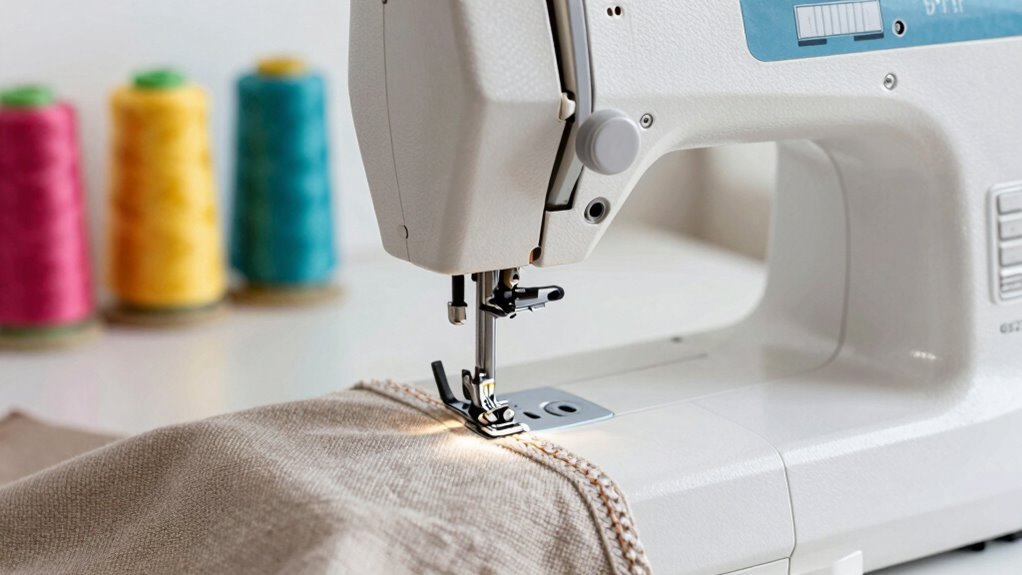
If you’re working with knitwear, a coverstitch machine is an indispensable tool that can elevate your sewing projects. This specialized machine is designed to handle the unique needs of knit fabrics, which stretch and recover differently than woven fabrics. When it comes to fabric types, knits are popular for their comfort and flexibility, but they also pose specific challenges. A coverstitch machine allows you to create professional-looking hems, seams, and finishes that maintain the stretch of the fabric without causing puckering or bunching. While you can sew knits with a regular sewing machine using stretch stitches, the results often won’t match the durability and appearance of those made on a coverstitch machine.
Using the right sewing techniques is vital when working with knitwear, and a coverstitch machine simplifies many of these. For instance, it performs a serging-like stitch that encloses raw edges, preventing fraying while allowing the fabric to stretch. This technique is especially useful for hemming T-shirts, activewear, or leggings, where the seam needs to stretch with the fabric. Additionally, a coverstitch machine can produce twin-needle effects, creating professional-looking topstitching that’s both functional and decorative. This is a significant advantage over traditional sewing methods, which often require hand-finishing or extra steps to achieve the same look and stretch. Moreover, a coverstitch machine is specifically designed to handle the stretchability of knit fabrics, ensuring your finished projects are both durable and flexible.
Investing in a coverstitch machine can also enhance your sewing skills, as it introduces you to specialized techniques that improve the overall finish of knitwear. You might wonder if investing in a coverstitch machine is necessary, especially if you already own a serger or a standard sewing machine. While those machines are versatile, they don’t replicate the specific sewing techniques that a coverstitch machine offers. For example, a serger can trim and finish edges in one step but doesn’t produce the evenly spaced, stretchable stitches that are ideal for knitwear hems. Similarly, a standard machine with a zigzag stitch can handle some stretch sewing, but it’s not as durable or neat as a professional coverstitch seam. If you frequently sew knit garments or want a high-quality finish on your projects, having a coverstitch machine can save you time and improve your results.

LNKA LK-205 Bias Tape Folder Adjustable Cloth Guide Hemmer Used for 2 or 3 Needle CoverStitch Machine Sewing Machine Folder Binder
LK-205 2or3 needle 5 lines CoverStitch Machine Sewing purpose flat stretch curling hem pull tube / bead width…
As an affiliate, we earn on qualifying purchases.
As an affiliate, we earn on qualifying purchases.
Frequently Asked Questions
Can I Substitute a Serger for a Coverstitch Machine?
Yes, you can substitute a serger for a coverstitch machine, but it might not be perfect. A serger’s stitch tension and seam durability differ from a coverstitch, which is designed specifically for knitwear hems and seams. While a serger can handle finishing edges well, it may not give you the professional look or stretchability that a coverstitch provides, especially for hems that need to move with the fabric.
Is a Coverstitch Machine Necessary for All Knit Fabrics?
A coverstitch machine isn’t necessary for all knit fabrics, but it’s highly beneficial if you want to enhance fiber elasticity and seam durability. It creates professional-looking, stretchy hems that won’t break down with wear. If your knit projects demand strong, flexible seams, investing in a coverstitch machine is worth it. However, for simpler projects, a serger or zigzag stitch can often suffice, depending on your needs.
How Much Space Does a Coverstitch Machine Require?
A coverstitch machine typically needs about 3 to 4 square feet of space, giving you enough room to manage fabric tension and perform machine maintenance comfortably. You’ll want a flat, stable surface to prevent fabric from shifting, which helps maintain stitching quality. Keep in mind, having sufficient space also makes it easier to access controls and perform regular maintenance, ensuring your machine runs smoothly and stitches your knitwear perfectly.
What Is the Typical Price Range for a Coverstitch Machine?
A coverstitch machine’s price range is like a mountain trail—ranging from budget options at around $200-$500 to professional models climbing over $2,000. For beginners or hobbyists, budget models offer basic features, while professional models boast advanced stitches and durability. Decide what suits your needs and budget, knowing that investing in a quality machine can elevate your knitwear projects, making your creative journey smoother and more rewarding.
Are Coverstitch Machines Easy for Beginners to Learn?
Coverstitch machines are generally easy for beginners to learn, especially since they offer sewing speed adjustments and stitch versatility. You can quickly master the basic operations, making it accessible even if you’re new to sewing. With practice, you’ll appreciate how smoothly the machine handles hems and finishing touches on knitwear, providing professional-looking results without complex settings. Overall, it’s a user-friendly option that helps you build confidence in your sewing skills.

Janome Cover Pro 1000CPX Coverstitch Machine with Exclusive Bonus Bundle
Bonus Includes: – Two packs of Schmetz ELx705 needles – Adjustable Seam Guide – Needle Threader
As an affiliate, we earn on qualifying purchases.
As an affiliate, we earn on qualifying purchases.
Conclusion
So, do you really need a coverstitch machine for knitwear? Honestly, you could probably get by without one—just imagine your humble sewing machine valiantly trying to mimic those professional finishes, all while your patience frays like unraveled yarn. Sure, it’s a fancy gadget, but if you’re okay with a little extra time and a bit of DIY charm, you might just enjoy the journey of turning your knitwear into a masterpiece—no coverstitch machine required.

SINGER Universal Twin Stretch Sewing Machine Needle
Twin stretch machine needle features two needles on one shaft, size 80/11
As an affiliate, we earn on qualifying purchases.
As an affiliate, we earn on qualifying purchases.

Brother Sewing Machine, XM2701, Lightweight Machine with 27 Stitches, 6 Included Sewing Feet
27 Unique built-in stitches: The XM2701 includes 27 built-in stitches including decorative, blind hem, zigzag, and stretch stitches…
As an affiliate, we earn on qualifying purchases.
As an affiliate, we earn on qualifying purchases.