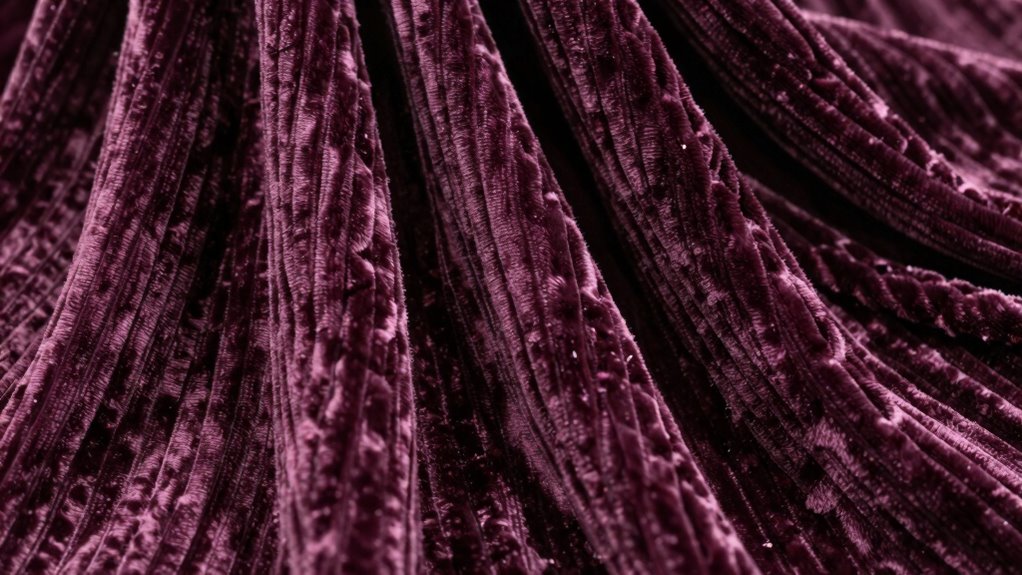

Fabric nap refers to the raised fibers that create a soft, fuzzy surface on fabrics like velvet and corduroy. These fibers are brushed or raised in a specific direction, giving the fabric its plush look and feel. The nap can wear down or flatten over time, especially with washing or use. Proper care helps preserve it longer. If you want to understand how finishes and care impact the nap’s longevity, keep exploring further.
Key Takeaways
- Fabrics with a nap have fibers raised or brushed, creating a soft, plush surface that affects appearance and texture.
- Velvet and corduroy are examples where the nap significantly influences visual depth and tactile feel.
- The nap can become flattened or uneven through wear or washing, impacting the fabric’s look and softness.
- Proper care, including gentle cleaning and correct drying, helps preserve the nap’s appearance and durability.
- Finishes like brushing or shearing enhance softness but can make fabrics more susceptible to wear and fading over time.
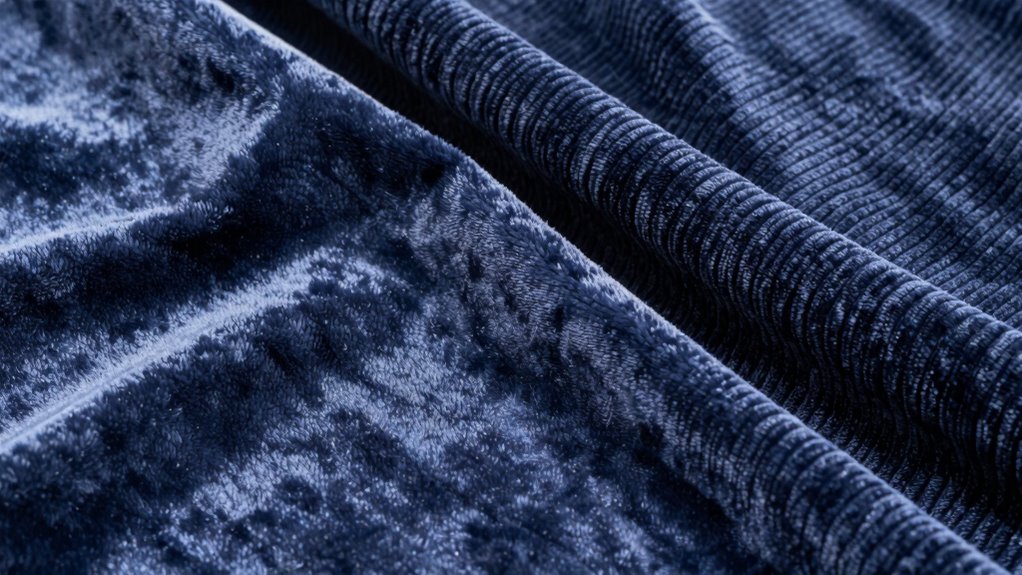
Have you ever wondered why some fabrics look worn or faded after washing? The answer often lies in the fabric nap, a key characteristic that influences how textiles age and maintain their appearance. The fiber texture plays a vital role here, as it determines how the fibers are aligned and how they interact with the fabric finish. Fabrics with a nap have fibers that are raised or brushed in a specific direction, creating a soft, fuzzy surface that gives each material its unique feel and look. When you wash or wear these fabrics repeatedly, the fibers tend to flatten or become uneven, leading to a worn appearance. This is especially noticeable in fabrics like velvet or corduroy, where the nap contributes notably to their aesthetic appeal. The fabric finish also impacts how the nap behaves over time. A brushed or sheared finish, for example, enhances the softness and visual depth of the fabric by raising the fibers. However, this same finish can make the fabric more susceptible to wear and fading because the raised fibers are more exposed to friction and environmental factors. That’s why you might see velvet or corduroy lose their plushness after multiple washes. The fabric finish, combined with fiber texture, determines how well the nap holds up and how the fabric’s surface looks after use. Proper care, such as gentle washing and avoiding excessive agitation, can help preserve the nap’s integrity, keeping the fabric looking fresh longer. An understanding of fabric construction can also help in choosing the right care methods to maintain its appearance and durability. Additionally, sound therapy and proper handling can influence the longevity of delicate fabrics by reducing friction and stress on fibers. When you handle these textiles, you should be mindful of the nap’s direction, as brushing against it or washing against the grain can cause uneven fading or flattening. Using appropriate cleaning techniques tailored for nap fabrics can further prevent damage and extend their lifespan. Exploring fabric finishing techniques can provide insights into how different surface treatments affect the durability of the nap. In some cases, special brushing techniques or steaming can restore the nap’s original look, but neglecting these details often results in a dull or worn fabric finish. Incorporating correct drying methods can also prevent the fibers from becoming misshapen or damaged over time.
As an affiliate, we earn on qualifying purchases.
Frequently Asked Questions
How Does Fabric Nap Affect Fabric Durability?
Fabric nap can influence its durability, particularly regarding wear resistance. You might notice that the fabric’s texture, whether smooth or raised, affects how it withstands friction and repeated use. A fabric with a pronounced nap, like velvet or corduroy, may show signs of wear more quickly if the fibers are easily crushed or flattened. Proper care helps preserve the nap, maintaining both the texture and the fabric’s overall durability.
Can Fabric Nap Be Restored After Fading?
Sure, you can restore fabric nap after fading—if you’re prepared for a bit of irony. The impact of fading on nap often leaves it dull, but fabric nap restoration techniques like brushing, steaming, or reapplying nap can revive it. While these methods help, they might not perfectly match the original look. Fading may be irreversible for some fabrics, so prevention remains the best approach.
Is Fabric Nap Treatment Eco-Friendly?
Yes, fabric nap treatment can be eco-friendly if it uses eco-friendly dyes and sustainable manufacturing practices. These dyes are less toxic and better for the environment, while sustainable methods reduce waste and energy consumption during production. By choosing treatments that prioritize eco-conscious materials and processes, you help protect the environment and guarantee a more sustainable future for fabric care. Always look for certifications or labels indicating eco-friendly manufacturing.
How Does Nap Influence Fabric Cleaning Methods?
Your fabric nap orientation considerably influences cleaning methods. To keep it looking its best, you should follow specific nap maintenance techniques, like brushing in the direction of the nap to avoid damage. When cleaning, use gentle vacuuming or spot cleaning, always respecting the nap’s direction. Avoid harsh scrubbing or washing against the nap, as this can cause uneven wear and dullness, compromising the fabric’s appearance and texture.
Are There Fabrics Without a Nap?
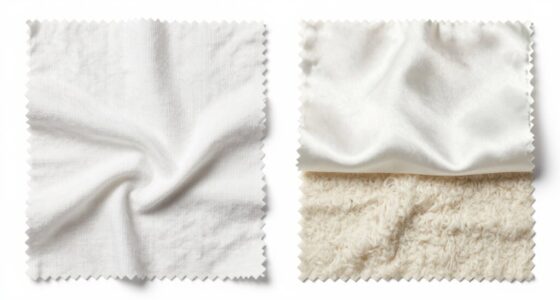
Yes, some fabrics don’t have a nap. The fabric nap history shows that woven fabrics like plain cotton or linen lack a nap because their fibers are cut evenly, unlike velvet or corduroy with raised surfaces. Types of fabric nap include smooth, brushed, or pile, but fabrics like chambray or plain weave fabrics typically don’t have a nap. Recognizing whether a fabric has a nap helps you determine proper cleaning and maintenance.
Conclusion
Think of fabric nap as the heartbeat of a textile, giving each material its unique soul. Whether velvet’s plush whisper or corduroy’s ridged rhythm, it’s the secret melody that makes each piece special. As you choose fabrics, remember their nap is like a silent song, telling stories of comfort and style. Embrace this hidden rhythm — it’s the quiet symphony that transforms mere cloth into a tactile masterpiece.