When you choose a serger over a sewing machine, your projects become faster and more professional, especially for finishing raw edges and sewing stretchy fabrics. Sergers trim and overlock edges in one step, saving time and giving a clean look, while sewing machines offer more stitch variety and control for intricate details. Knowing how these tools impact your work helps you improve your projects—stick around to discover more about matching the right tool to your needs.
Key Takeaways
- Sewing machines offer diverse stitches and detailed control, suitable for complex and decorative projects.
- Sergers quickly finish edges and seams, providing a professional look and saving time on finishing tasks.
- For stretchy fabrics like knits, sergers create durable, stretchable seams more effectively than sewing machines.
- Sewing machines excel at intricate tasks like zippers, topstitching, and precise fabric manipulation.
- Combining both tools enhances project versatility, with sewing machines for detailed work and sergers for edge finishing.
When choosing between a serger and a sewing machine, understanding their differences can help you make an informed decision for your sewing projects. Both tools serve essential roles, but they excel at different tasks. A sewing machine is versatile, capable of handling a wide range of projects, from quilting to clothing construction. A serger, on the other hand, specializes in finishing edges quickly and neatly. Knowing how each machine interacts with fabric types and stitch varieties is vital in determining which suits your needs best.
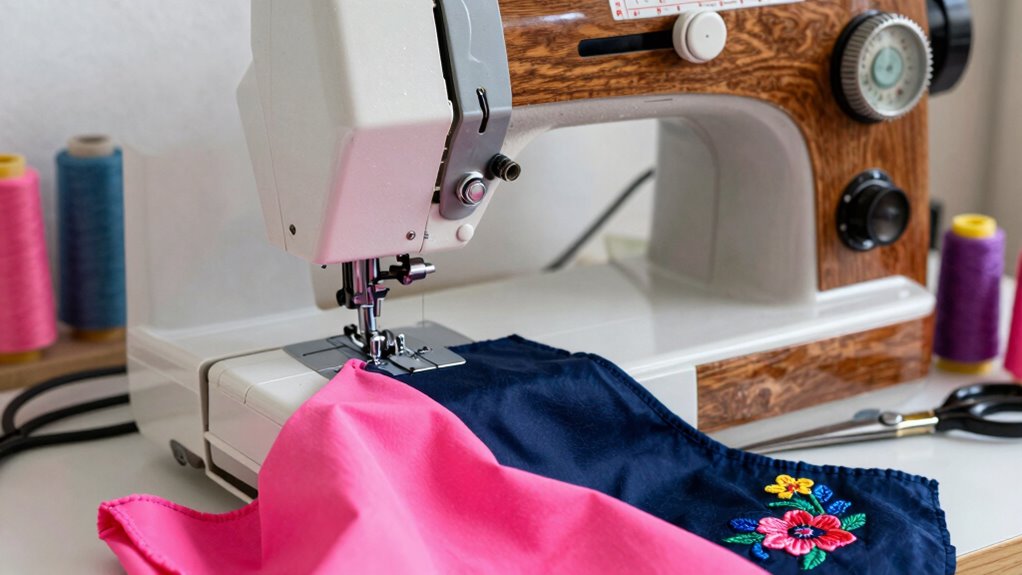
A sewing machine offers a broad selection of stitch varieties, including straight stitches, zigzag, decorative, and even buttonholes. This flexibility means you can work with various fabric types—from lightweight chiffons and delicate silks to heavy denim and canvas. The stitch options allow you to customize seams, create decorative effects, and add durability where needed. When working on complex projects like garments with multiple fabric layers or intricate details, your sewing machine provides the control and precision necessary to execute these tasks effectively.
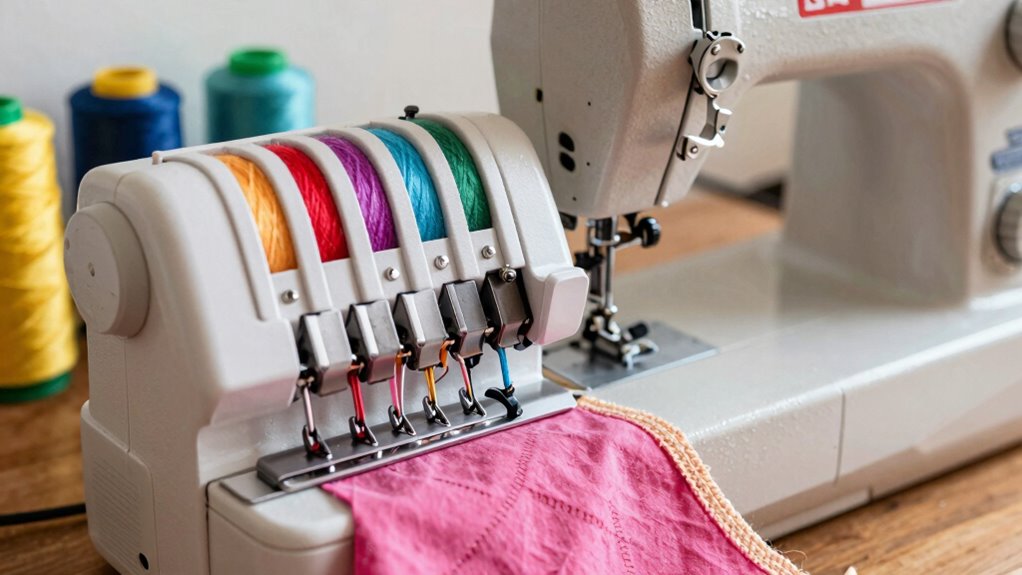
Meanwhile, a serger is designed primarily for seam finishing and edge trimming. It excels at creating clean, professional-looking seams, especially on woven fabrics like cotton, linen, and polyester. Sergers are particularly adept at handling stretch fabrics such as knits and spandex because they produce stretchable seams with their overlock stitches. When working with fabrics that fray easily, a serger’s ability to simultaneously trim and sew edges helps prevent unraveling and saves time. Additionally, a serger’s overlock stitches contribute to the durability of finished garments. However, sergers typically don’t offer a wide variety of stitches; their strength lies in their speed and efficiency for finishing raw edges.
In real projects, you’ll notice that a sewing machine provides more control for detailed work, such as installing zippers or creating precise topstitching. It allows you to work with a broader range of fabric types, thanks to adjustable stitch settings and presser foot options. Conversely, a serger is invaluable when you need to finish seams quickly and with a professional look, especially on stretch or woven fabrics prone to fraying. It’s great for constructing garments rapidly and achieving clean, durable seams that can withstand wear and washing.
Ultimately, your choice depends on your project needs. If you want versatility and a variety of stitch options for different fabrics, a sewing machine is your best bet. If your focus is on finishing edges efficiently and working primarily with woven or stretchy fabrics, a serger will elevate your sewing. Combining both tools allows you to maximize your sewing potential, but understanding their main functions helps you decide what to invest in first.
serger sewing machine combo
As an affiliate, we earn on qualifying purchases.
As an affiliate, we earn on qualifying purchases.
Frequently Asked Questions
Can I Use a Serger for Quilting Projects?
You can use a serger for quilting projects, but it’s best suited for specific tasks like finishing raw edges or creating decorative seams. Sergers excel at quick, clean quilt seam techniques, especially for seams that need extra durability. However, they aren’t ideal for binding methods or precise topstitching, which require a traditional sewing machine. Combining both tools can give you versatile, professional-looking quilts.
Do Sergers Require Special Needles or Threads?
Yes, sergers do require special needles and threads. You need to use serger needles, which are different from regular sewing machine needles because they’re designed to handle multiple threads and provide precise stitching. When it comes to thread compatibility, opt for high-quality threads specifically made for sergers to guarantee smooth operation and avoid breakage. Choosing the right needle types and threads helps achieve professional, durable seams in your projects.
Is a Serger Suitable for Delicate Fabrics?
A serger isn’t ideal for delicate fabrics because fabric compatibility and thread tension can be tricky. You may struggle to get smooth seams, and the fabric might get damaged or stretched. If you want to work with delicate materials, a sewing machine offers more control and precision. It allows you to adjust tension easily and handle fragile fabrics gently, ensuring your project stays intact and looks professional.
How Does Maintenance Differ Between Sergers and Sewing Machines?
You’ll find that maintenance differs considerably between sergers and sewing machines. With a serger, you need to regularly check and adjust thread tension for smooth operation, especially as it handles multiple threads. Cleaning routines are more frequent, involving removing lint and dust from the loopers and tension discs to prevent jams. Sewing machines generally require less frequent cleaning, but both benefit from consistent maintenance to keep stitches perfect and extend their lifespan.
Can a Serger Replace a Sewing Machine Entirely?
Sure, a serger might seem like a miracle worker, but it can’t replace a sewing machine entirely. Its limitations in sewing versatility mean you still need a regular machine for zippers, buttonholes, and intricate stitching. While a serger excels at finishing edges quickly, relying solely on it leaves gaps in project options. So, embrace the duo — your projects will thank you for the variety.

Brother Sewing Machine, XM2701, Lightweight Machine with 27 Stitches, 6 Included Sewing Feet
27 Unique built-in stitches: The XM2701 includes 27 built-in stitches including decorative, blind hem, zigzag, and stretch stitches…
As an affiliate, we earn on qualifying purchases.
As an affiliate, we earn on qualifying purchases.
Conclusion
So, whether you choose a serger or a sewing machine, remember—each tool is like a different brushstroke in your creative masterpiece. The serger’s speed and finish can transform your projects into professional-quality pieces, while the sewing machine offers versatility and precision. It’s not about which is better, but which best paints your vision. So, pick your weapon, and let your sewing journey unfold—because your next great project is just stitches away.

Singer Side Cutter Attachment | Trim & Finish Fabric Edges Seamlessly | Ideal for Zigzag & Overedge Stitches | Compatible with Low-Shank Sewing Machines
TRIM AND FINISH IN ONE STEP: Seamlessly trim fabric and finish edges as you sew, achieving a professional…
As an affiliate, we earn on qualifying purchases.
As an affiliate, we earn on qualifying purchases.

SCHMETZ Stretch Sewing Machine Needles – Precision Needles, Size 90/14, 5-Needle Cards, Pack of 1
ENGINEERED FOR STRETCH FABRIC: SCHMETZ Stretch Needles are specially engineered to sew through elastic, knit fabric, synthetic suede,…
As an affiliate, we earn on qualifying purchases.
As an affiliate, we earn on qualifying purchases.