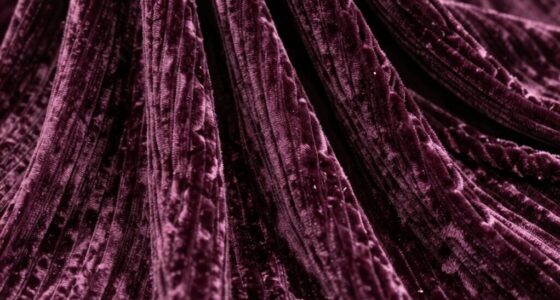
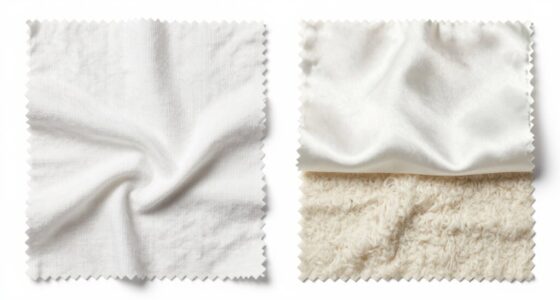
Velvet and velour are both soft, plush fabrics with textured piles, but they differ in fibers and production. Velvet is often made from silk, cotton, or synthetic blends and created through complex weaving, giving it a luxurious shine and dense pile. Velour, typically using cotton or polyester, is softer, more flexible, and made by knitting or brushing. Exploring these fabrics further reveals how their unique textures and blends suit different uses and styles.

Get your wardrobe favorites delivered free — and shop member deals
- Fast, free delivery on millions of items
- Access to Prime Big Deal Days deals on October 6–7
- Prime Video, Amazon Music and more included
Key Takeaways
- Velvet has a dense, smooth pile created through complex weaving, offering a luxurious, glossy surface; velour has a softer, less dense pile achieved by brushing or shearing.
- Velvet fibers include silk, cotton, or synthetics, providing a shiny, smooth feel; velour often uses cotton or polyester, resulting in a plush, flexible texture.
- Velvet’s intricate manufacturing involves double-cloth weaving with a cut pile, while velour is made via knitting or weaving with a cut or looped pile.
- Modern fabric treatments enhance durability, resistance to pilling, and appearance for both fabrics, making them suitable for upholstery and fashion.
- Velvet is known for its rich, velvety appearance and high-end feel; velour offers a softer, more inviting texture with greater flexibility and comfort.

Have you ever wondered what makes certain fabrics so irresistibly plush and cozy? It’s often the fiber types and manufacturing techniques behind the fabric’s luxurious feel. When it comes to soft pile fabrics like velvet and velour, understanding these elements helps you appreciate their unique qualities. Both fabrics are crafted with a pile surface that creates their signature plushness, but they differ in fiber choices and how they’re made. Velvet traditionally uses fibers like silk, cotton, or synthetic blends. The fiber type influences the fabric’s texture, sheen, and durability. Silk velvet, for example, offers a natural luster and a smooth, luxurious hand, while cotton velvet tends to be more matte and breathable. Modern velvet often incorporates synthetic fibers like polyester or nylon, which can enhance durability and reduce costs. The manufacturing techniques for velvet involve weaving two layers of fabric simultaneously, then cutting apart the top layer to reveal the pile surface. This process, known as double-cloth weaving, creates a dense, smooth pile with a rich, velvety feel. Sometimes, additional finishing steps like steaming or polishing are applied to boost sheen and softness. Additionally, advancements in fiber treatment have improved the longevity and resistance of these fabrics to wear and fading. Velour, on the other hand, is usually made from cotton, polyester, or a blend of both. Its fiber choices make it softer and more flexible than traditional velvet. Velour’s manufacturing process is simpler; it’s typically produced through a knit or woven technique that creates a pile on one side. The pile in velour is often cut or looped, giving it a plush, inviting texture that’s less dense than velvet. The key difference lies in the pile construction and fiber treatment—velour’s fibers are brushed or sheared to achieve a velvety surface, and the fabric is usually finished with a brushing process that raises the fibers for extra softness. Both fabrics benefit from advancements in manufacturing techniques that improve their durability and appearance. For instance, high-quality synthetic fibers are now blended to enhance resistance to wear and fading, making these fabrics ideal for upholstery or fashion. While velvet’s luxurious reputation stems from its rich fiber types and complex weaving process, velour’s versatility comes from its simpler manufacturing and softer fiber choices. In essence, your preference might boil down to the feel you want, but knowing the fiber types and manufacturing techniques behind these fabrics helps you choose the right one for your project or wardrobe.
As an affiliate, we earn on qualifying purchases.
Frequently Asked Questions
How Do I Properly Care for Velvet and Velour Garments?
To care for velvet and velour garments, always follow fabric softening tips by using gentle, specialized detergents. Turn them inside out before washing to protect the pile and avoid harsh agitation. For stain removal techniques, gently dab with a damp cloth and mild soap—never rub. Air dry or use a low heat setting. Regularly brushing with a soft brush keeps the fabric looking plush and fresh.
Are Velvet and Velour Suitable for Outdoor Use?
Think of velvet and velour as delicate dancers on an outdoor stage; they’re not the best performers for harsh conditions. They lack outdoor durability and water resistance, so exposure to rain or sun can damage their plush surfaces. If you want fabrics that stand up to the elements, choose materials specifically designed for outdoor use. Velvet and velour shine brightest in indoor environments, where their softness can be truly appreciated.
Can Velvet and Velour Fabrics Be Machine Washed?
You can usually machine wash velvet and velour fabrics, but it depends on how they’re dyed and finished. Check the care label, as some are delicate due to fabric dyeing processes used historically for luxurious textiles. To keep their softness, use gentle cycles and cold water. Avoid harsh detergents or high heat, which can damage the pile. Proper care maintains their plush feel and vibrant color.
What Are the Eco-Friendly Options for Soft Pile Fabrics?
Imagine weaving a tapestry of sustainability—eco-friendly options brighten your fabric choices. You can opt for sustainable fiber options like organic cotton, hemp, or Tencel, which minimize environmental impact. Recycled fabric innovations, such as recycled polyester from plastic bottles, further reduce waste. These eco-conscious fabrics help you enjoy soft, luxurious textures while supporting a greener planet. Choosing them makes your wardrobe not just stylish, but also a positive force for the environment.
How Do I Distinguish Between Velvet and Velour Visually?
You can distinguish velvet from velour by examining the fabric texture and sheen variation. Velvet has a dense, plush surface with a smooth, consistent texture and a noticeable sheen that reflects light uniformly. Velour, on the other hand, has a softer, more stretchy feel with a matte finish and less sheen variation. Hold the fabric up to the light; velvet’s sheen stands out more, making it easier to tell apart.
Conclusion
When choosing between velvet and velour, you’re revealing the secret to luxurious comfort that feels like a hug from a cloud. Both fabrics wrap you in softness, but velvet’s rich, smooth pile offers a regal touch, while velour’s plush, slightly more casual vibe keeps things cozy and inviting. Whichever you pick, you’re embracing a fabric so irresistibly soft, it’s practically a miracle—worthy of turning your space into a true sanctuary of comfort and style.
Fall Picks
fall essentials
As an affiliate, we earn on qualifying purchases.