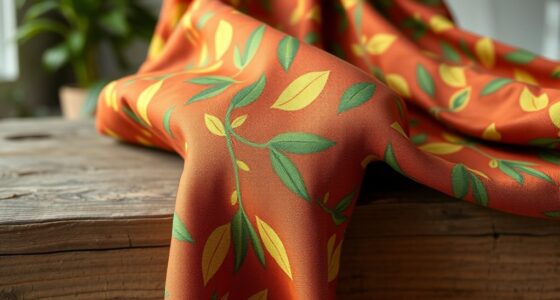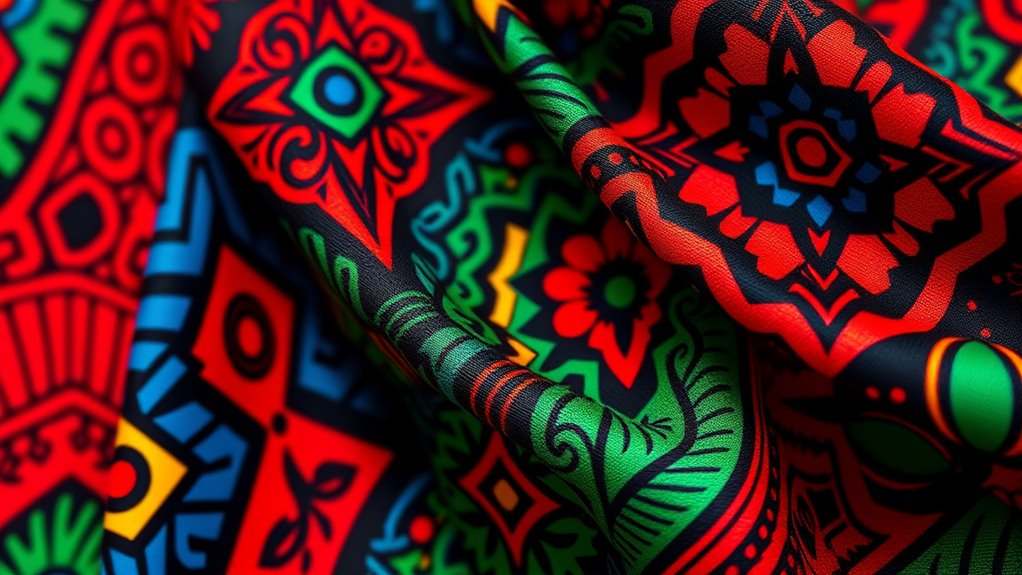

African wax prints are vibrant fabrics full of meaning, with patterns that tell stories, symbolize love, fertility, resistance, or social status. Their bold colors and intricate designs capture attention while representing cultural identity and pride. Used in fashion worldwide, they inspire trends, blend tradition with modern style, and support local artisans. If you want to understand how these textiles connect culture and creativity, there’s much more to discover below.
Key Takeaways
- African wax prints feature vibrant patterns and colors that symbolize stories, proverbs, and cultural values.
- The designs often represent themes like love, fertility, resistance, and community identity.
- They are used in modern fashion, inspiring high-end and streetwear across Africa and globally.
- These textiles support local artisans, preserve traditional techniques, and promote cultural pride.
- Wax prints serve as visual storytelling tools, connecting generations and embodying cultural heritage.

African wax prints are vibrant, bold fabrics that have become a defining element of fashion and culture across the continent. Their striking patterns and lively colors immediately catch your eye, but these textiles go far beyond mere aesthetics. They carry deep cultural symbolism, often reflecting stories, proverbs, or social status. When you wear wax prints, you’re not just making a fashion statement; you’re expressing identity, heritage, and community. Each pattern can symbolize different meanings, from love and fertility to resistance and unity. This layered symbolism makes wax prints more than fabric—they’re a form of visual storytelling that connects generations and celebrates cultural diversity.
You’ll also notice how these fabrics continuously inspire fashion innovations. Designers across Africa and around the world incorporate wax prints into modern clothing, blending tradition with contemporary trends. From high-fashion runways to everyday streetwear, wax prints serve as versatile materials that challenge conventional notions of fashion. You can see them on tailored suits, flowing dresses, and accessories, proving that these textiles are adaptable and relevant today. The bold patterns lend themselves well to creative experimentation, encouraging designers to push boundaries and reimagine traditional motifs in new ways. This fusion of traditional symbolism and modern design exemplifies how wax prints are at the forefront of fashion innovations, making them a powerful tool for cultural expression and style evolution.
Moreover, the popularity of wax prints highlights their role in fostering cultural pride and economic development. When you choose to wear these fabrics, you’re supporting local artisans and textile producers, many of whom have preserved traditional dyeing and printing techniques for generations. This ensures that cultural craftsmanship continues to thrive amid globalization. Wax prints also serve as a means of cultural preservation, allowing communities to maintain their unique identities while adapting to contemporary fashion trends. As their influence spreads globally, they act as ambassadors of African culture, showcasing a rich heritage that’s alive and evolving.
In essence, African wax prints are more than just eye-catching fabrics; they embody cultural symbolism and fuel fashion innovations that resonate far beyond the continent. When you wear or incorporate wax prints into your wardrobe, you participate in a vibrant cultural dialogue—one that honors history while embracing modernity. These textiles remind you that fashion can be a powerful expression of identity, storytelling, and creativity, bridging the past and present in a colorful, meaningful way.

African Fabric 6 Yard Printed Wax Cloth African Ankara Fabric for Party Dress FP6390
- Package Size: 6 yards (216 x 45 inches)
- Vibrant Ankara Design: Bright, colorful traditional prints
- Durable Material: Made of pure polyester for longevity
As an affiliate, we earn on qualifying purchases.
As an affiliate, we earn on qualifying purchases.
Frequently Asked Questions
How Are African Wax Prints Produced Sustainably?
You can produce African wax prints sustainably by choosing eco-friendly dyes that reduce environmental impact and using fair trade certification to guarantee ethical labor practices. Opt for natural or low-impact synthetic dyes, and partner with suppliers committed to sustainable methods. These steps help minimize pollution, support fair wages, and promote responsible manufacturing, ensuring your wax prints are environmentally and socially conscious while maintaining vibrant, beautiful patterns.
What Are Common Cultural Taboos Associated With Certain Patterns?
Imagine a fabric whispering secrets; certain patterns hold deep cultural sensitivities. You should avoid patterns that symbolize death or taboo subjects, as they’re considered disrespectful or offensive. Pattern prohibitions often stem from traditional beliefs, so respecting these cultural sensitivities is essential. If you disregard these taboos, you risk offending communities or misrepresenting their heritage. Always research carefully before choosing a design to honor the cultural significance it carries.
How Do Patterns Influence Social Status or Identity?
Your choice of patterns directly influences your social status symbolism and identity expression. Wearing certain vibrant or intricate designs can signal wealth, cultural pride, or social rank, helping others recognize your position or role within the community. By selecting specific patterns, you actively communicate aspects of your identity, showcasing your heritage or personal values. Patterns serve as visual language, shaping how you’re perceived and how you express your unique social identity.
Are There Specific Occasions for Wearing Particular Wax Print Designs?
Imagine you’re at a vibrant festival, and yes, specific wax print designs are perfect for occasions like weddings, funerals, or festivals. You’ll notice cultural symbolism embedded in the patterns, reflecting respect or celebration. Fashion trends also influence choices, blending tradition with modern styles. Wearing these prints on special days honors cultural heritage, helps you connect with community, and makes a bold statement about your identity and respect for tradition.
How Has Globalization Affected Traditional African Wax Print Production?
Globalization has transformed traditional African wax print production by integrating global supply chains, making fabrics more accessible worldwide. You might notice a wider variety of designs and quicker production times, but this also challenges cultural authenticity. While it boosts economic opportunities, it can dilute the traditional craftsmanship and cultural significance. You should be aware of these changes, as they influence both the authenticity and availability of authentic wax prints in modern markets.
Conclusion
You now see how African wax prints are more than just fabrics—they’re vibrant stories woven into every pattern. Their meanings run deeper than words, connecting history, culture, and identity in a tapestry of stunning colors. As you embrace their modern uses, remember, these prints are like living art, capable of transforming any outfit into a masterpiece. Once you wear them, you’ll feel as if you’ve draped yourself in the heartbeat of Africa itself—truly a breathtaking experience.