
To craft eco-conscious projects, start by sourcing recycled and upcycled fabrics like old clothes or fabric scraps. Use zero waste sewing techniques to minimize leftover material, and choose sustainable textiles to reduce environmental impact. Transform worn-out garments into new accessories or home decor, adding character and authenticity to your crafts. Embracing these methods helps you create beautiful items while supporting sustainability. Keep exploring to discover inspiring ideas and practical tips for greener crafting.
Key Takeaways
- Prioritize recycled, repurposed, and ethically sourced fabrics to minimize environmental impact.
- Utilize zero waste sewing techniques to optimize fabric use and reduce scraps.
- Transform old textiles into functional and decorative items like tote bags or patchwork quilts.
- Incorporate unique, authentic elements by upcycling discarded textiles into crafts.
- Promote eco-friendly practices that decrease reliance on new fabrics and support sustainability goals.
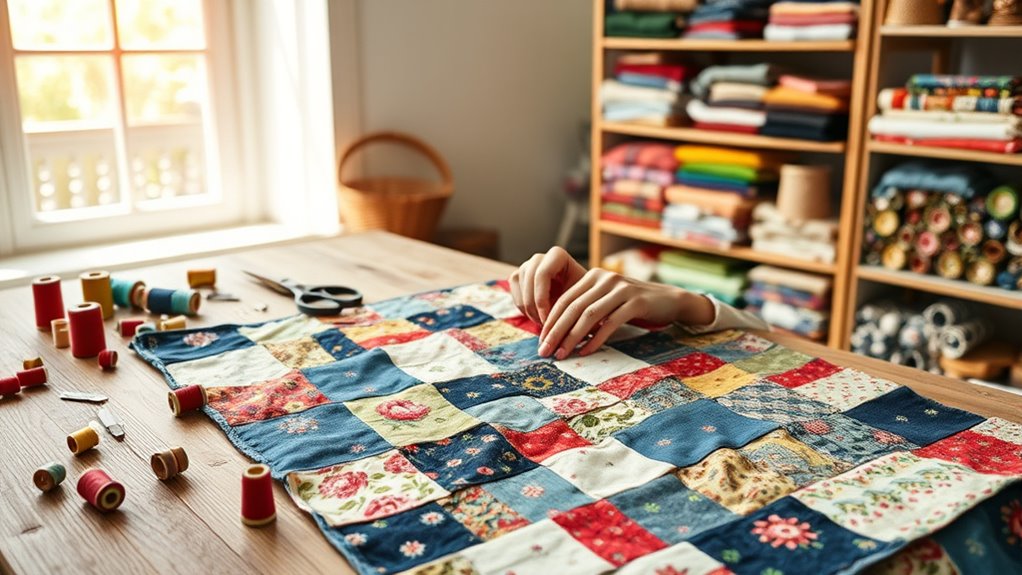
Ever wondered how you can create beautiful crafts while helping the environment? The answer lies in embracing upcycled and recycled fabrics, which not only reduce waste but also add unique character to your projects. When you start sourcing materials, focus on sustainable textile sourcing. This means choosing fabrics that are recycled, repurposed, or ethically produced. You can find old clothes, fabric scraps, or even discarded textiles that would otherwise end up in landfills. By selecting these materials, you’re actively reducing your environmental footprint and giving new life to items that might have been discarded. It’s a simple yet powerful way to guarantee your crafting is eco-friendly from the ground up.
Once you’ve gathered your materials, mastering zero waste sewing techniques becomes essential. These methods help you minimize fabric waste during your projects, making your crafting process more sustainable. For example, you can plan your pattern layout carefully to maximize fabric efficiency, cutting only what’s necessary. This approach reduces leftover scraps and encourages thoughtful use of every piece of fabric. Additionally, you might consider modular designs that allow for adjustments or reassemblies, so no fabric goes to waste. Zero waste sewing isn’t just about saving fabric; it’s about cultivating a mindset of mindful consumption and resourcefulness. When you sew with purpose, you’re less likely to produce excess scraps, and you’ll develop a more sustainable approach to crafting overall. Incorporating sustainable textile sourcing and zero waste sewing techniques into your projects transforms the way you approach DIY crafts. Instead of purchasing new, mass-produced fabrics, you’re actively participating in reducing demand for environmentally harmful textiles. Plus, you get the satisfaction of creating something truly unique, with a personal touch that commercial products can’t match. As you develop your skills, you’ll find that upcycling and recycling fabrics become second nature—turning old t-shirts into tote bags, worn-out jeans into stylish patchwork quilts, or fabric scraps into decorative accents. These practices not only benefit the planet but also deepen your connection to your craft.
Frequently Asked Questions
How Do I Choose the Best Fabrics for Upcycling Projects?
You should choose fabrics that are durable, easy to dye, and versatile for upcycled fabric patterns. Look for natural fibers like cotton, linen, or hemp, as they take fabric dyeing techniques well and age beautifully. Avoid delicate or heavily synthetic materials. Consider the color and texture to match your project’s style, and always test your fabric first to confirm it responds well to dyeing and holds up over time.
What Are Some Beginner-Friendly Eco-Conscious Craft Ideas?
You can start with simple projects like tote bags or pillow covers, which use basic recycling techniques. These are beginner-friendly and promote sustainable fashion. Use old shirts or jeans, then cut, sew, or knot to create new items. Not only will you reduce waste, but you’ll also learn eco-conscious crafting. These projects are fun, practical, and perfect for building your skills while contributing to a greener planet.
How Can I Reduce Waste When Sourcing Recycled Materials?
Picture yourself in a cozy thrift store, carefully selecting fabric scraps with vibrant colors and textures. To reduce waste during fabric sourcing, always plan your project first, so you buy only what you need. Reuse leftover pieces for small crafts or scraps for stuffing. By being mindful, you cut down on waste and make the most of recycled materials, turning every piece into a thoughtful, eco-friendly creation.
Are There Safety Tips for Working With Old Fabrics and Dyes?
When working with old fabrics and dyes, always prioritize fabrics safety by washing and inspecting materials thoroughly. Use gloves and masks to avoid skin contact and inhaling dust or fumes. Follow dye precautions, working in well-ventilated areas, and wear protective gear to minimize exposure to potentially harmful chemicals. Test dyes on small fabric samples first, and wash your finished projects properly to remove residual chemicals. Safety first guarantees eco-friendly crafting remains safe and enjoyable.
How Do I Organize My Upcycling Craft Supplies Effectively?
Organize your upcycling supplies like a librarian sorting books—systematically and clearly. Use storage solutions like labeled bins or clear drawers to keep fabrics, trims, and tools separated. Labeling techniques help you quickly find what you need and keep everything tidy. Group similar items together, and consider stacking or stacking bins to maximize space. This way, your supplies stay accessible, neat, and ready for your next creative project.
Conclusion
By choosing upcycled and recycled fabrics, you’re helping reduce waste and conserve resources. Did you know that the fashion industry is responsible for about 10% of global carbon emissions? Your eco-conscious DIY projects not only create unique, personalized items but also contribute to a more sustainable planet. Keep experimenting with sustainable materials, and remember that every small effort adds up to big environmental benefits. Together, we can make a meaningful difference, one craft at a time.