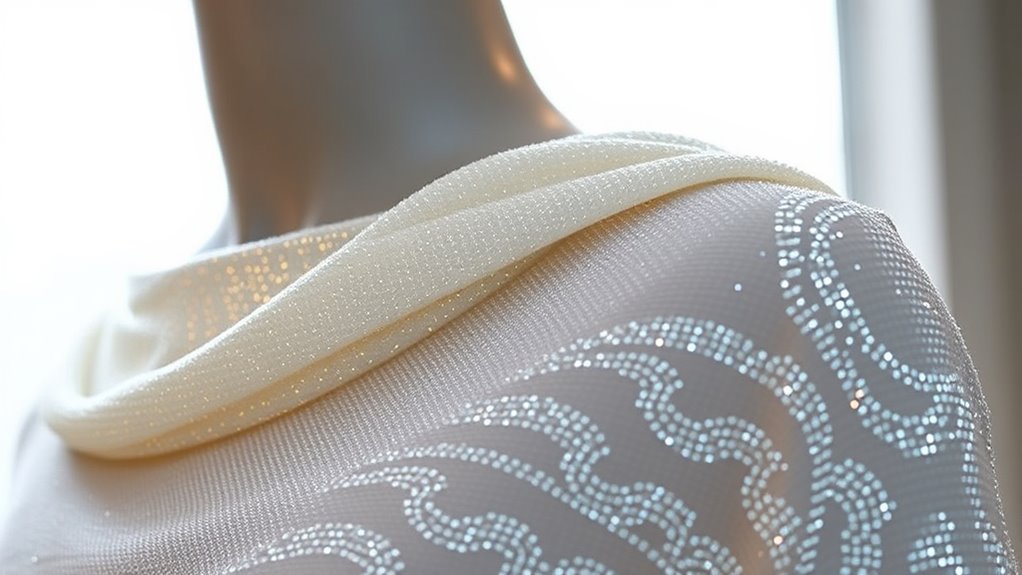

Energy-harvesting fabrics use nanotechnology to convert sunlight and body heat into electricity, powering your devices seamlessly. These textiles embed nanoscale materials that capture energy efficiently while remaining comfortable and durable. They support sustainable production practices, reducing environmental impact. Whether for athletic wear or everyday clothing, they enable continuous power without bulky batteries. If you want to discover how these innovative fabrics are transforming wearable tech, keep exploring the fascinating details ahead.

Get your wardrobe favorites delivered free with Prime
- Fast, free delivery on millions of items
- Prime Video, Amazon Music and more included
- Member-only deals all year
Key Takeaways
- Nanotechnology enables embedding photovoltaic and thermoelectric nanostructures into fabrics for efficient solar and body-heat energy harvesting.
- Sustainable manufacturing practices ensure eco-friendly production of energy-harvesting textiles with reduced environmental impact.
- Integrated energy storage solutions, like small batteries, allow garments to power devices without external batteries.
- These fabrics are versatile, suitable for clothing that continuously generates power during outdoor activities and daily wear.
- Advancements aim to improve efficiency and add functionalities like self-cleaning and adaptive energy collection for smarter textiles.

Energy-harvesting fabrics are revolutionizing wearable technology by capturing and converting ambient energy into usable electrical power. As you explore these innovative textiles, you’ll notice how advances in nanotechnology integration play a vital role. Nanoscale materials are embedded within the fibers, markedly enhancing their ability to absorb solar energy and body heat. This integration allows the fabrics to be highly efficient at energy conversion without adding bulk or sacrificing comfort. The tiny structures increase the surface area exposed to environmental sources, making energy harvesting more effective. Plus, nanotechnology enables precise control over the fabric’s properties, such as flexibility, durability, and responsiveness. This means you get clothing that not only powers your devices but also withstands the rigors of daily wear.
Energy-harvesting fabrics use nanotech to efficiently convert environmental energy into power while remaining comfortable and durable.
Sustainable manufacturing practices are at the core of developing these fabrics. Manufacturers focus on eco-friendly production methods, utilizing renewable resources, reducing waste, and minimizing chemical use. This approach guarantees that energy-harvesting textiles are environmentally responsible from creation to disposal. By adopting sustainable processes, companies reduce their carbon footprint and promote a circular economy—where materials are reused and recycled. For you, this means choosing garments that support environmental health without compromising performance. The drive towards sustainability also encourages innovation, leading to more cost-effective and scalable solutions. As a consumer, you benefit from accessible, eco-conscious products that align with your values.
The combination of nanotechnology integration and sustainable manufacturing makes energy-harvesting fabrics not just a technological breakthrough but a practical solution for everyday life. Imagine wearing a jacket that powers your smartphone or fitness tracker simply by being outdoors or in motion. These textiles harness solar energy through embedded photovoltaic nanomaterials or capture body heat via thermoelectric nanostructures. The energy generated can be stored in small batteries or supercapacitors integrated into the fabric, providing a continuous power source. This seamless integration minimizes the need for bulky batteries or external chargers, offering you a more convenient, clutter-free experience. Advances in nanotechnology play a crucial role in optimizing the energy conversion process and durability of these fabrics.
Furthermore, these fabrics are designed with versatility in mind. They can be incorporated into a range of clothing items—from athletic wear to everyday casuals—helping you stay connected and powered up in a sustainable way. As research progresses, expect even greater efficiencies and new functionalities, such as self-cleaning surfaces or adaptive energy harvesting based on environmental conditions. Ultimately, energy-harvesting fabrics exemplify how cutting-edge nanotechnology and sustainable manufacturing can combine to create smarter, greener textiles that keep you energized while protecting our planet.
solar energy harvesting clothing
As an affiliate, we earn on qualifying purchases.
As an affiliate, we earn on qualifying purchases.
Frequently Asked Questions
How Durable Are Energy-Harvesting Textiles in Daily Use?
Energy-harvesting textiles are fairly durable for daily use, but their wear and tear depend on material resilience and how you care for them. You should avoid excessive friction and harsh washing to maintain their energy-harvesting capabilities. With proper handling, these fabrics can withstand regular wear, but over time, their efficiency might decline slightly. Overall, investing in high-quality, resilient materials extends their lifespan and keeps them functional longer.
Are These Fabrics Safe for Sensitive Skin?
Yes, these fabrics are generally safe for sensitive skin because manufacturers use hypoallergenic materials to minimize skin irritation. They’re designed with comfort in mind, avoiding common irritants. However, it’s essential to check the specific product details, as some energy-harvesting textiles may still cause minor reactions for extremely sensitive individuals. Always do a patch test first and choose high-quality, skin-friendly options for the best experience.
Can Energy-Harvesting Fabrics Be Washed Easily?
You can wash energy-harvesting fabrics, but follow specific washing instructions to guarantee longevity. For example, a smart jacket with solar fibers was washed carefully by hand, avoiding harsh detergents and high temperatures, preserving its functionality. Proper care prevents damage to delicate components, extending fabric longevity. Always check manufacturer guidelines, as improper washing can reduce efficiency or cause wear, but with proper care, these innovative textiles remain durable and functional through multiple washes.
What Is the Cost Comparison With Traditional Textiles?
You’ll find that energy-harvesting fabrics tend to have higher initial costs due to increased manufacturing expenses and specialized materials. These cost implications mean they’re generally more expensive than traditional textiles upfront. However, as production scales up and technology advances, prices could decrease, making them more affordable. While they might cost more initially, their long-term benefits—like sustainable energy collection—could outweigh the higher costs for consumers and industries alike.
How Efficient Are Solar and Body-Heat Energy Conversion Methods?
You’ll find that solar fabrics have a photovoltaic efficiency typically ranging from 10-20%, depending on the materials used, while body-heat powered textiles focus on thermoelectric performance, which varies based on temperature differences. Although these methods aren’t as efficient as traditional energy sources, ongoing advancements are improving their performance. You can expect gradual increases in efficiency, making these textiles more practical for wearable energy harvesting in the future.
Conclusion
Imagine a future where your clothing fuels your devices, turning everyday moments into energy. By embracing energy-harvesting fabrics powered by solar and body heat, you become part of a sustainable revolution. Don’t just wear clothes—wear innovation that powers your life. As these textiles weave technology into your daily routine, remember: you’re not just a user, but a catalyst for change. Step into this bright, energized future and let your wardrobe light the way.
Fall Picks
fall essentials
As an affiliate, we earn on qualifying purchases.