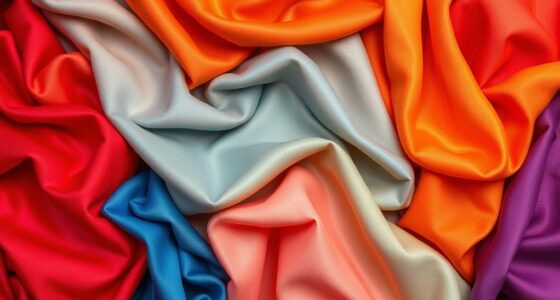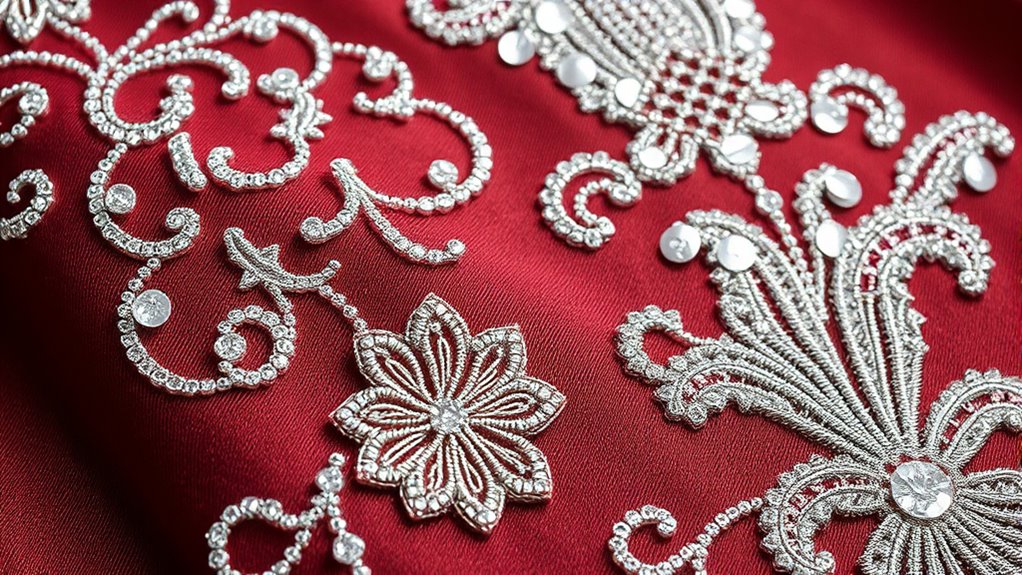

The art of embellishment involves transforming plain fabrics into stunning pieces by adding beads, sequins, and embroidery. You can create rich textures, vibrant patterns, and shimmering effects that reflect cultural significance or personal style. Using special tools and techniques, you’ll attach these decorative elements carefully to enhance the fabric’s appearance and meaning. Exploring these methods further reveals how traditional craftsmanship merges with modern creativity to produce truly unique designs.
Key Takeaways
- Fabric embellishment involves adding beads, sequins, embroidery, and appliqués to enhance visual appeal and texture.
- The choice of materials like metallic threads, glass beads, and shimmering sequins impacts design richness and durability.
- Techniques require specific tools such as needles, embroidery hoops, and beading tools to achieve detailed, intricate work.
- Embellishments often hold cultural significance, symbolizing identity, status, or spiritual beliefs across various traditions.
- Skilled craftsmanship allows for personalized, complex designs that reflect cultural heritage and artistic expression.
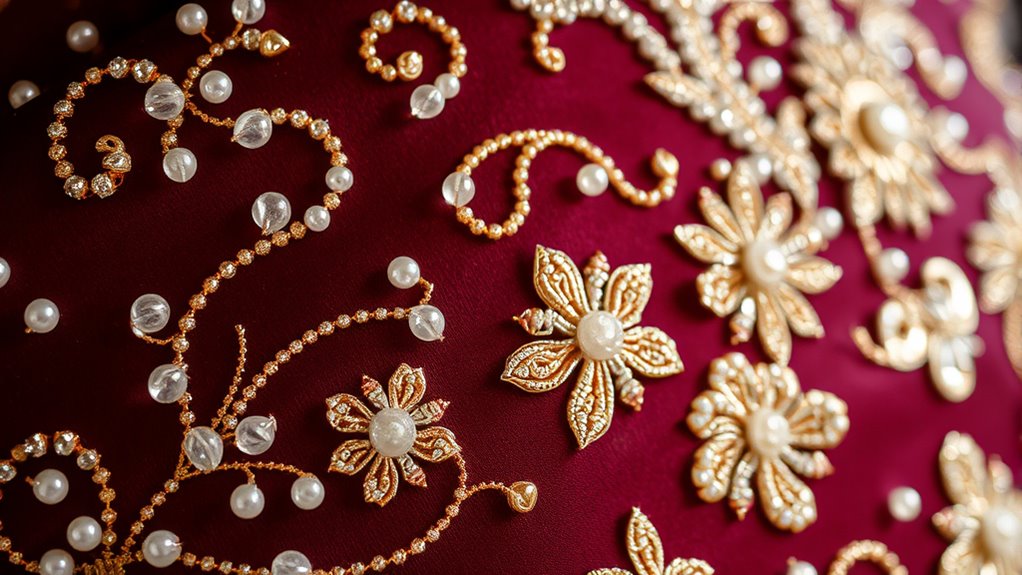
Fabric embellishment transforms plain textiles into stunning works of art by adding decorative elements like beads, embroidery, sequins, and appliqués. This process allows you to elevate simple fabrics into unique, eye-catching pieces, whether for fashion, home décor, or traditional wear. To achieve this, understanding the various techniques and materials involved is essential. You might choose to sew intricate embroidery using silk threads or attach shimmering sequins with a fine needle. Beads can be sewn along patterns to create texture and depth, while appliqués involve stitching fabric shapes onto the base material for added dimension. Each technique offers a different effect and requires specific tools and skills. For instance, embroidery often uses embroidery hoops, needles, and colorful threads, while sequins and beads need small, precise needles or even specialized beading tools. The choice of materials—like metallic threads, glass beads, or shimmering sequins—further influences the final look, allowing you to customize your design to match your aesthetic vision. Additionally, selecting high-quality fabric embellishment materials can significantly impact the durability and appearance of your finished piece.
Beyond the technical aspects, fabric embellishments hold deep cultural significance across the world. Many traditions use specific motifs, colors, and techniques to symbolize identity, status, or spiritual beliefs. For example, in Indian culture, intricate embroidery such as zardozi or mirror work adorns wedding garments and ceremonial attire, representing prosperity and protection. In West Africa, beaded jewelry and embroidered textiles serve as symbols of social standing, heritage, and rites of passage. Similarly, Eastern European folk costumes often feature vibrant embroidery patterns that tell stories or signify regional origins. By incorporating these embellishments, you connect your work to centuries-old traditions, honoring cultural heritage and storytelling. Understanding the cultural significance behind certain motifs and techniques enriches your craftsmanship, giving each piece a deeper meaning beyond its aesthetic appeal.
Frequently Asked Questions
What Are the Best Tools for Detailed Embroidery Work?
To achieve detailed embroidery work, you’ll want fine embroidery needles, like crewel or beading needles, for precision. Sharp, small scissors help with intricate trimming, and beading tools assist with attaching embellishments securely. Use embroidery hoops to keep fabric taut and compatible with delicate embellishment techniques. Choose quality threads and sequins suited for your fabric to guarantee durability and a polished look. These tools help you craft stunning, detailed embroidery on various fabrics.
How Do I Choose the Right Embellishments for My Fabric?
Did you know that 78% of crafters say matching embellishment styles enhances fabric appeal? To choose the right embellishments, consider your fabric’s texture and weight—delicate chiffons suit sequins, while sturdy linens handle beads better. Think about your design’s theme and the overall look you want. Always test small pieces first to guarantee fabric compatibility, so your embellishments stay beautiful and durable.
Can Embellishments Be Added After the Garment Is Completed?
Yes, you can add embellishments after the garment is completed, but timing matters. Embellishment timing influences how well post-creation embellishments adhere and look. To guarantee success, use appropriate adhesives or sewing techniques suited for the fabric. Carefully plan your design beforehand, and proceed gradually. Adding embellishments post-creation allows flexibility for adjustments or updates, giving you a chance to personalize or enhance your garment even after its initial completion.
What Fabric Types Are Most Suitable for Beading and Sequins?
Imagine the perfect sparkle, but only if you select the right fabric. You should opt for sturdy fabrics like silk, velvet, or tulle that can hold beads and sequins without sagging. Consider stretchability for comfort and durability, and guarantee your embellishments match the fabric’s color for a seamless look. These fabrics provide the ideal foundation to make your beading and sequins truly stand out, creating a stunning, lasting effect.
How Do I Care for Embellished Fabrics to Prevent Damage?
To care for your embellished fabrics, always opt for dry cleaning to prevent damage to beads, sequins, and embroidery. Store them flat or hanging in a breathable garment bag, avoiding direct sunlight and humidity. Handle gently to prevent loosening or breakage, and avoid folding over embellished areas. Regularly check for loose embellishments and secure them promptly. These steps ensure your beautiful pieces stay pristine and durable over time.
Conclusion
Now that you’ve uncovered the art of embellishment, you hold the brush to transform plain fabric into a vibrant canvas. Beading, sequins, and embroidery are your palette, each adding sparkle and depth to your creation. Let your imagination weave stories into every stitch, turning simple cloth into a masterpiece that dances with light. Embrace these techniques, and watch your fabric come alive like a starry night sky—radiant, mesmerizing, and uniquely yours.