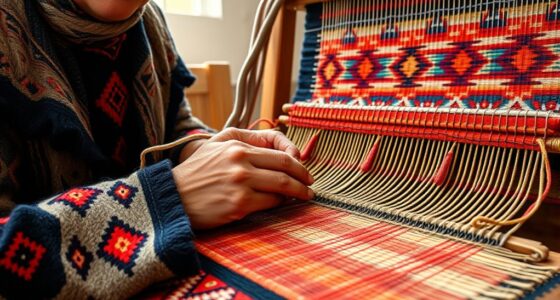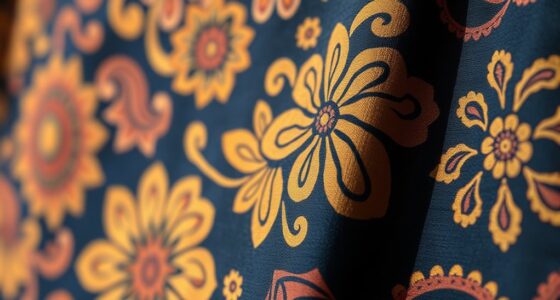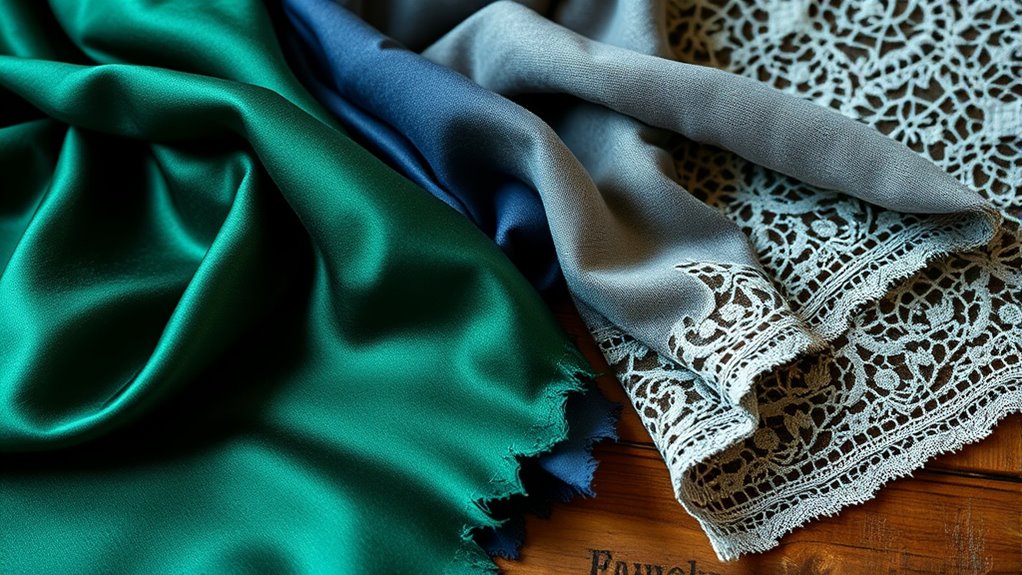

Fabric symbolism in film and costume design uses textures and colors to reveal character traits, social class, and emotional states without words. You might notice rough fabrics like burlap indicating hardship, while luxurious silks suggest wealth. Dark hues evoke mystery or mourning, bright shades show energy or confidence. Every choice helps tell a layered story, deepening your understanding of characters and scenes. If you keep exploring, you’ll discover how these textile choices subtly shape the narrative.
Key Takeaways
- Fabric choices in costumes convey character traits, social status, and emotional states without dialogue.
- Textiles like silk, velvet, or burlap symbolize wealth, hardship, or humility, enriching storytelling.
- Colors of fabrics evoke emotions or themes, such as black for mystery or pastels for innocence.
- Fabric textures and materials provide visual cues that support character development and narrative arcs.
- Costume designers use fabric symbolism deliberately to deepen audience understanding and enhance cinematic storytelling.
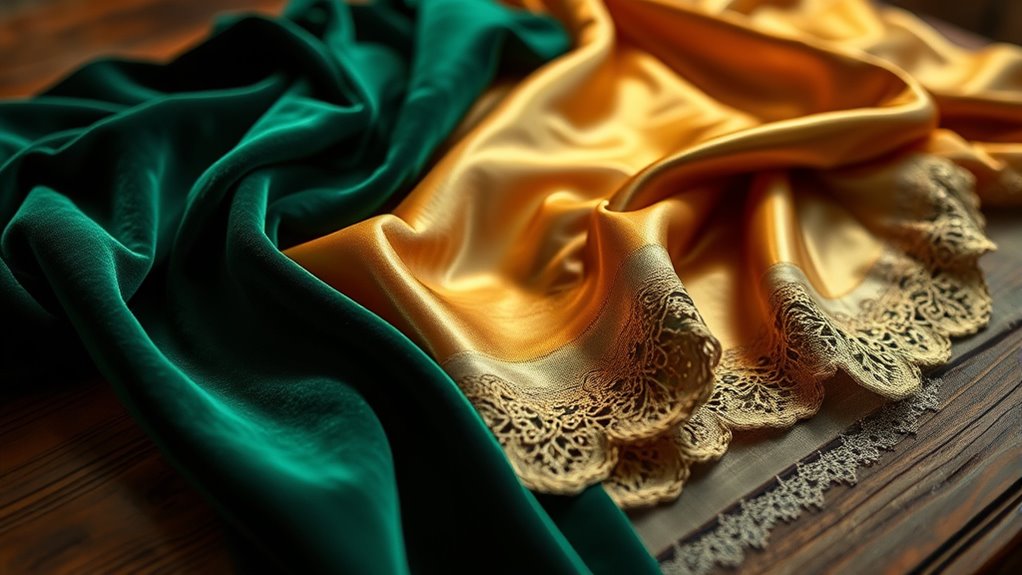
Fabric symbolism plays an essential role in film and costume design by conveying deeper meanings beyond visual appeal. When you pay attention to textile meanings, you’ll notice how fabrics communicate a character’s personality, status, or emotional state without a single line of dialogue. Every choice of material can tell a story—whether it’s the roughness of burlap hinting at hardship or the silk’s smoothness suggesting sophistication. Fabric color psychology further amplifies these messages, influencing how viewers interpret what they see. For example, red fabrics often evoke passion, anger, or danger, while blue can suggest calmness, loyalty, or melancholy. By understanding these subtle cues, you become more attuned to the layered storytelling woven into costume design.
Fabric choices reveal characters’ personalities, status, and emotions without words, enriching storytelling through texture and color symbolism.
In film, costume designers leverage textile meanings to craft visual cues that support character development and narrative arcs. When a character dons a tattered wool coat, it might symbolize their struggle or resilience, while a pristine white dress could portray innocence or vulnerability. The textures and types of fabrics chosen also help define social class or cultural background. You might notice that royalty or wealthy characters wear luxurious velvets or silks, emphasizing their privilege, whereas common folk wear coarse linen or rough cotton, highlighting their modest means. These fabric choices serve as visual shorthand, making it easier for you to grasp complex characters quickly. Additionally, understanding fabric symbolism helps viewers decode subtle messages conveyed through costume details.
Fabric color psychology plays an instrumental role in shaping your emotional response to a scene. Dark-colored fabrics, like black or deep purple, often evoke mystery, authority, or mourning, while lighter hues such as pastels can suggest innocence or fragility. Bright, bold colors like yellow or orange grab your attention and evoke energy, optimism, or even chaos. Costume designers intentionally select fabrics with specific colors to evoke these feelings, guiding your perception and emotional engagement with the story. When you notice a character dressed in muted tones during a tense scene, it might signal concealment or internal conflict, whereas vibrant clothing could indicate confidence or a desire to stand out.
Understanding textile meanings and fabric color psychology enhances your appreciation of the visual storytelling in film. It’s not just about what looks good but about how these choices deepen your connection to the characters and narrative. Every fabric, every color, is a deliberate decision meant to communicate something more profound. As you watch a film, start paying attention to these details, and you’ll discover how costume design subtly influences your understanding of the story, often operating beneath the surface to enrich your viewing experience.
Frequently Asked Questions
How Do Fabric Choices Influence Character Development in Films?
You can see how fabric choices influence character development by highlighting fabric color significance and material authenticity. Bright, bold colors often symbolize confidence or rebellion, while muted tones suggest vulnerability or tradition. Authentic materials like leather or silk add depth, revealing a character’s status or personality. By carefully selecting fabrics, you help viewers understand characters’ emotions, backgrounds, and growth without words, making the storytelling more powerful and nuanced.
What Are the Historical Origins of Fabric Symbolism in Costume Design?
You should know that fabric symbolism in costume design has roots in medieval textiles and royal fabrics. Historically, these textiles signified social status and wealth, with luxurious materials like silk and velvet reserved for royalty and nobility. Over time, designers adopted these symbols to convey character traits or societal positions, making fabric choices a powerful storytelling tool that connects modern costume design to its rich historical origins.
How Can Fabric Texture Reflect a Character’s Emotional State?
Ever wondered how fabric texture reveals a character’s inner world? You can use tactile perception to show emotional resonance—rough fabrics might suggest anger or frustration, while smooth silk reflects calm or elegance. By paying attention to texture, you deepen the audience’s understanding of a character’s emotional state without words. Isn’t it fascinating how a simple choice of fabric can speak volumes about what someone’s feeling inside?
Are There Cultural Differences in Fabric Symbolism Used in Films?
Yes, there are cultural differences in fabric symbolism used in films. You’ll notice that regional textile symbolism and cultural fabric meanings vary widely, reflecting unique traditions and beliefs. For example, certain colors or patterns might symbolize status, spirituality, or community in one culture, but hold different meanings elsewhere. When you pay attention to these differences, you’ll see how filmmakers use regional textile symbolism to deepen characters and enrich storytelling.
How Do Costume Designers Select Fabrics to Symbolize Themes?
You select fabrics to symbolize themes by considering fabric color meanings, like red for passion or danger, and textile patterns symbolism, such as floral designs for femininity or growth. You also think about how textures and fabric types convey emotions—smooth silks for elegance or rough wool for toughness. By aligning these choices with narrative goals, you help visually reinforce characters’ personalities, conflicts, or story themes effectively.
Conclusion
Ultimately, fabric in film and costume design is more than material—it’s a silent language that reveals character, mood, and hidden truths. The choice of textures and patterns acts as a mirror to inner worlds, weaving symbolism into every stitch. By paying attention to these subtle signals, you uncover a deeper understanding of the story’s fabric, appreciating how clothing and textiles weave together to craft meaning beyond words, transforming mere visuals into powerful storytelling tools.