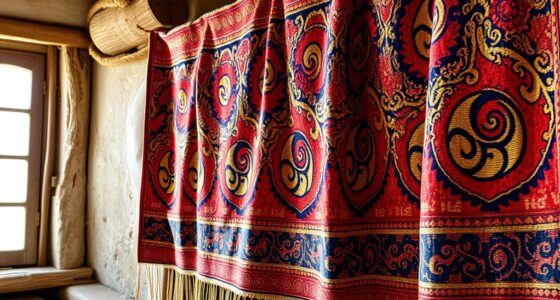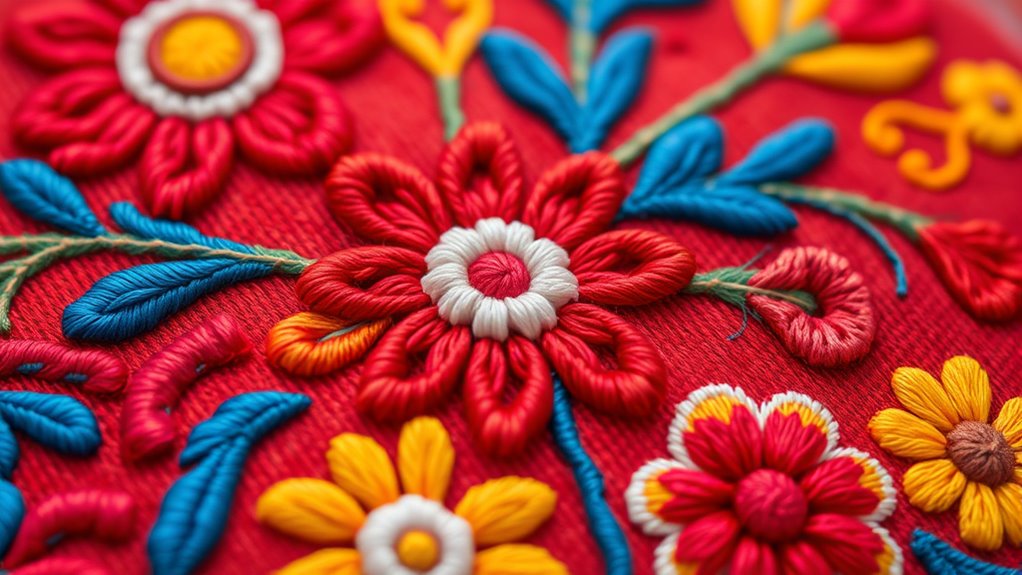

Otomi embroidery is vibrant Mexican folk art that uses intricate hand stitches to create colorful designs full of cultural symbolism. You’ll see motifs like animals, plants, and celestial symbols that tell stories, reflect beliefs, and preserve Otomi traditions. Bright natural dyes enhance these textiles, making each piece both beautiful and meaningful. If you want to explore how these intricate designs reveal Otomi spirituality and heritage, there’s more to uncover behind each stitch.
Key Takeaways
- Otomi embroidery is a traditional Mexican folk art that features vibrant, hand-stitched motifs on fabric.
- It incorporates symbolic designs like animals, plants, and celestial symbols, each with cultural meanings.
- Natural dyes and durable textiles like cotton or linen are used to create colorful, intricate patterns.
- The craftsmanship is passed down through generations, preserving Otomi cultural heritage and storytelling.
- These embroidered textiles serve as both decorative art and meaningful cultural artifacts.
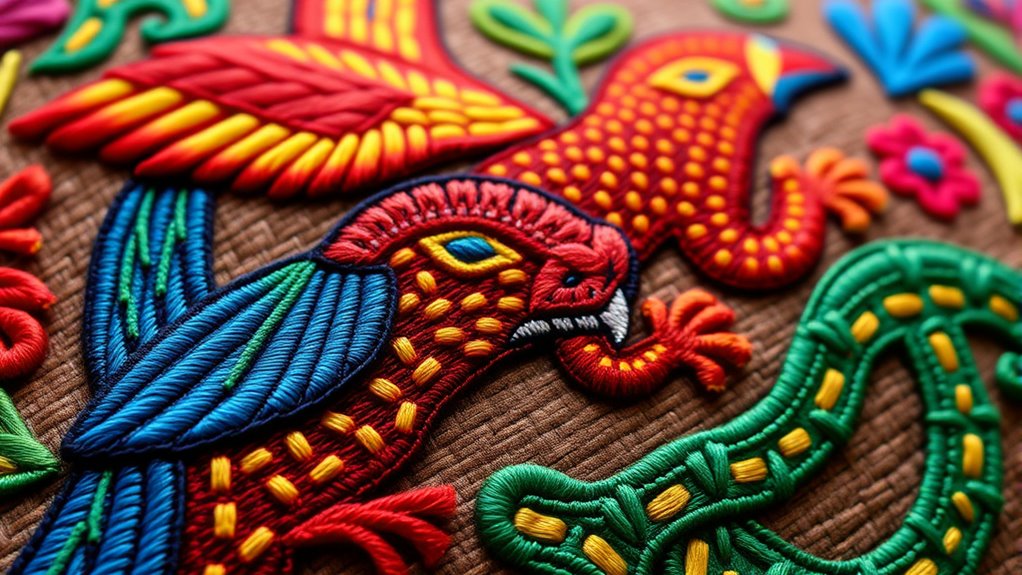
Have you ever wondered how Otomi embroidery captures the vibrant spirit of Mexican culture? When you look closely at these intricate fabrics, you’ll notice how every stitch tells a story. Otomi embroidery is not just about creating beautiful patterns; it’s about preserving a rich heritage through symbolic motifs and traditional techniques. These motifs often include animals, plants, and celestial symbols, each carrying specific meanings rooted in Otomi mythology and daily life. For example, a stylized bird might symbolize freedom or spirituality, while a flower could represent fertility or growth. These symbols aren’t randomly chosen—they’re carefully selected to convey cultural values and beliefs, making each piece a meaningful artifact of Otomi identity.
Otomi embroidery weaves cultural stories through symbolic motifs like animals and plants, preserving heritage with intricate, meaningful craftsmanship.
As you explore Otomi embroidery, you’ll see that the traditional techniques used are fundamental to its authenticity. Artisans typically employ hand embroidery, using vibrant threads to bring their designs to life on fabric. Cotton or linen serve as the base material, providing a sturdy canvas for detailed work. The stitches themselves are precise, often incorporating a variety of stitches like satin, cross, and backstitch, which allow for both durability and visual richness. This meticulous craftsmanship ensures that each piece is unique and durable, often passed down through generations. The process is labor-intensive, requiring patience and skill, but it’s also a form of cultural expression that connects the artisan with their ancestors.
The use of traditional techniques also helps maintain the authenticity of Otomi embroidery, aligning with centuries-old practices. These methods have been handed down through families, keeping alive a sense of community and cultural continuity. When you see an embroidered piece, you’re witnessing not just decorative art but a tangible link to Otomi traditions. The vibrant colors—reds, blues, yellows, and greens—are often derived from natural dyes, further emphasizing the connection to nature and local resources. This careful selection of materials and techniques results in textiles that are both aesthetically enthralling and culturally significant.
Furthermore, the vibrant colors used in Otomi embroidery are often sourced from natural dyes, connecting the artwork directly to the environment and traditional resourcefulness. In essence, Otomi embroidery’s power lies in its ability to blend symbolic motifs with traditional techniques, creating a vibrant tapestry of Mexican heritage. When you appreciate these textiles, you’re experiencing a form of storytelling that has endured through generations. It’s a celebration of Otomi identity, a visual language that encodes history, spirituality, and community in every stitch. Whether for cultural preservation or artistic appreciation, Otomi embroidery invites you to see beyond the surface and discover a world rich with meaning and tradition.
Frequently Asked Questions
What Are the Traditional Symbols Used in Otomi Embroidery?
You’ll notice that Otomi embroidery features symbolic motifs like animals, plants, and celestial symbols, each holding cultural significance. These motifs often represent elements of daily life, spiritual beliefs, and local legends. By incorporating these symbols, you preserve traditional stories and cultural identity. The vibrant colors and intricate designs come together to create a meaningful, visually stunning piece that reflects the Otomi community’s rich heritage and worldview.
How Has Otomi Embroidery Evolved Over the Years?
You’ll find that Otomi embroidery has evolved through history, blending traditional symbols with contemporary designs. This evolution reflects changing cultural influences and artisans’ creativity. Its history shows a deep cultural significance, preserving indigenous stories and beliefs. Today, you see modern motifs alongside classic ones, keeping the craft vibrant and relevant. This ongoing evolution allows Otomi embroidery to honor its roots while embracing new artistic expressions.
Which Regions in Mexico Are Best Known for Otomi Embroidery?
You’ll find Otomi embroidery best known in the regions of Hidalgo, Querétaro, and Puebla. These areas showcase rich regional craftsmanship and deeply rooted cultural symbolism through vibrant, intricate designs. As you explore, you’ll notice how local traditions influence patterns and techniques, making each piece unique. The craftsmanship highlights the community’s artistic expression, preserving cultural heritage while offering stunning textiles that reflect Mexico’s vibrant cultural mosaic.
How Do Otomi Embroidery Techniques Vary Among Artisans?
While techniques across artisans may seem uniform, each one brings a unique flair by blending traditional methods with personal touches. You’ll notice variations in stitches, color palettes, and fabric choices, reflecting diverse artisan styles. Regional motifs influence these differences, with some emphasizing floral patterns and others geometric designs. This rich diversity showcases how individual creativity and local traditions shape Otomi embroidery, making each piece a distinctive expression of cultural heritage.
What Are the Contemporary Influences on Otomi Embroidery Designs?
You see that contemporary influences like modern fashion and urban art shape Otomi embroidery designs today. As you explore these patterns, you notice bold colors, abstract motifs, and innovative styles inspired by street art and current trends. These elements blend tradition with modern aesthetics, allowing artisans to express personal creativity while appealing to a global audience. This fusion keeps Otomi embroidery vibrant, relevant, and evolving in today’s artistic landscape.
Conclusion
You’ve discovered the vibrant world of Otomi embroidery, a true reflection of Mexican culture on fabric. By embracing this art, you keep traditions alive and add color to everyday life. Remember, “A picture is worth a thousand words,” and Otomi embroidery speaks volumes through its intricate designs and lively hues. So, don’t just admire from afar—try incorporating this beautiful craft into your own world and keep the cultural legacy thriving.