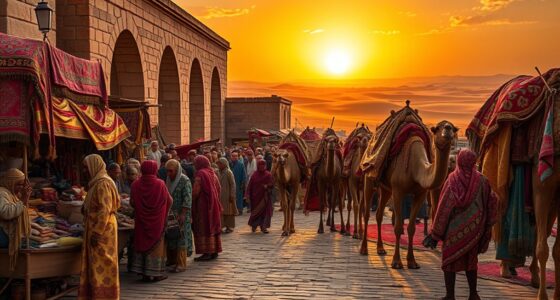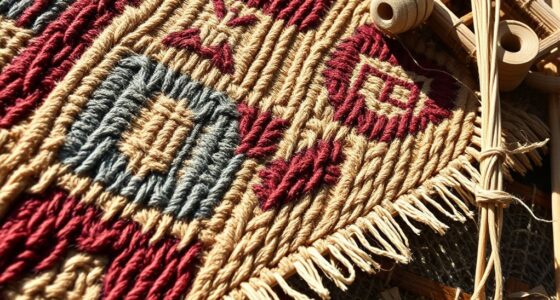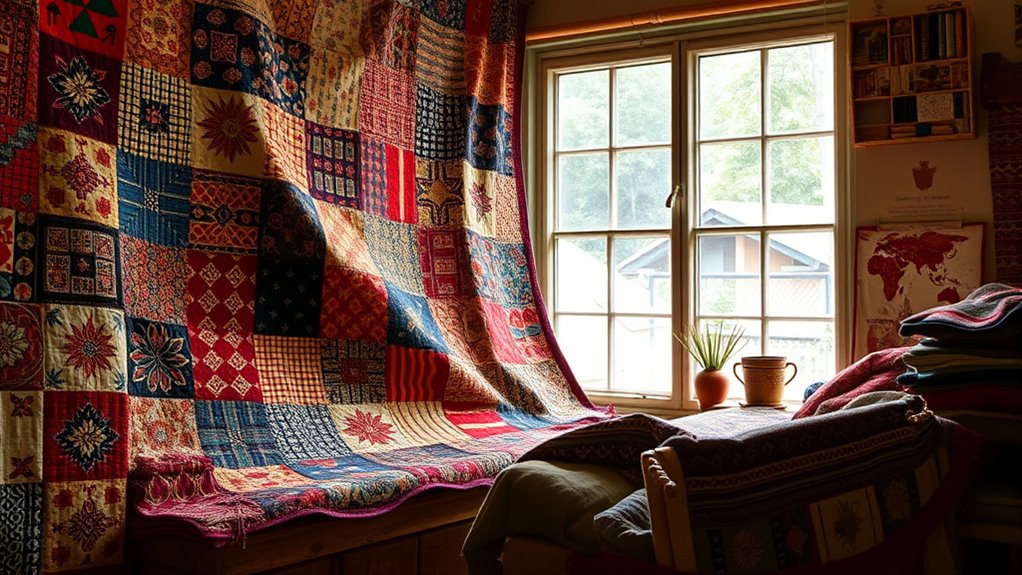

Quilting traditions around the world are rich stories stitched into fabric, reflecting cultural symbols, meanings, and history. Whether it’s African American bold geometric designs, Japanese boro layered textiles, or Indigenous patchwork patterns, each quilt tells a unique story passed down through generations. These textiles serve as visual language, embodying community values, resilience, and identity. If you want to explore how these stories in stitches connect people and cultures, you’ll find more fascinating details ahead.
Key Takeaways
- Different cultures use quilting techniques and motifs to encode stories, values, and symbols unique to their heritage.
- Quilting traditions highlight resourcefulness and craftsmanship, reflecting local materials and environmental influences.
- Specific fabrics, colors, and patterns in quilts serve as visual language, communicating cultural identity and historical narratives.
- Quilts act as cultural artifacts preserving community history, stories, and resilience across generations.
- Unique quilting styles worldwide—such as African American bold geometric designs or Japanese boro layering—embody cultural values and storytelling.
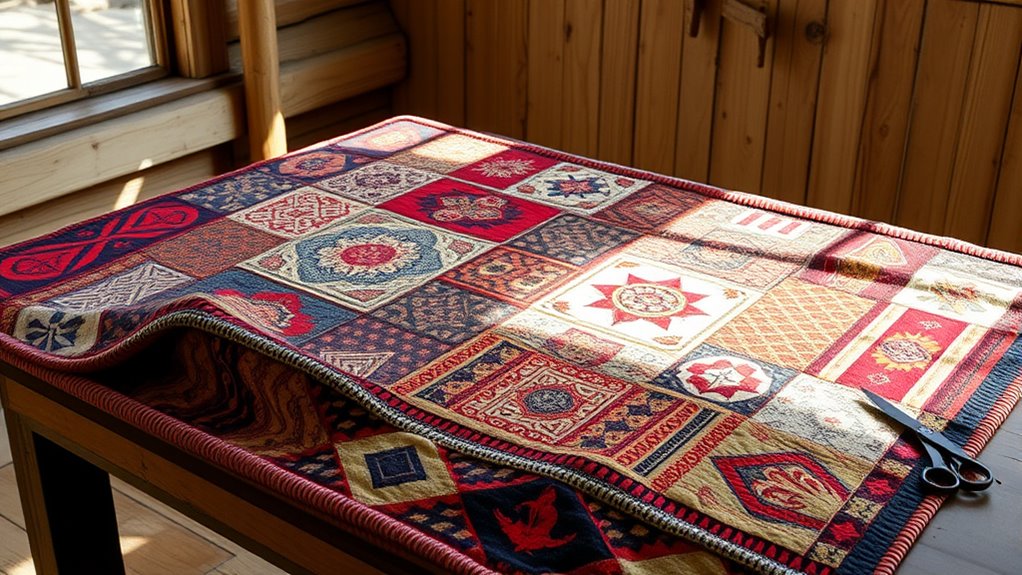
Have you ever wondered how quilting reflects the unique cultures and histories of different communities? It’s more than just stitching together pieces of cloth; it’s a visual language that conveys tradition, values, and identity. Each quilt tells a story, often rooted in the fabric symbolism used by its makers. Fabric symbolism refers to the meaning or significance attached to specific fabrics, colors, and patterns. For example, in some cultures, certain textiles represent prosperity, protection, or spiritual beliefs. When you see a quilt adorned with particular motifs or colors, you’re witnessing a cultural expression that’s been passed down through generations. These symbols transform a simple patchwork into a powerful narrative device, connecting you directly to the community’s history and worldview.
Alongside fabric symbolism, cultural quilting techniques play a crucial role in shaping these stories. Different communities have developed distinct ways of constructing quilts, utilizing local materials and traditional methods. In African American quilting, for example, techniques like paper piecing or appliqué are often combined with bold geometric designs that symbolize resilience and community bonds. Meanwhile, Japanese boro quilting involves layering scraps of indigo-dyed fabric, creating textured pieces that speak of resourcefulness and sustainability. Each technique reflects not only the climate and available resources but also the cultural values surrounding craftsmanship and storytelling. When you observe these techniques, you gain insight into the community’s lifestyle, aesthetic preferences, and historical struggles. Recognizing the attention paid to detail in these quilts highlights the dedication and skill of the makers.
Understanding these cultural quilting techniques also reveals how quilting serves as a form of cultural preservation. Many communities face the threat of losing their traditions due to modernization, but quilting keeps these stories alive. By learning and practicing traditional methods, makers maintain a tangible link to their ancestors, passing down skills and stories through generations. When you participate in or admire these quilts, you’re engaging with a living tradition that’s been carefully preserved and adapted over time. It’s a testament to the resilience and ingenuity of communities who use fabric symbolism and specialized techniques to keep their histories vibrant. So, the next time you see a quilt with intricate patterns or vibrant colors, remember it’s more than fabric—it’s a cultural artifact, stitched with stories that stretch across time and borders.
Frequently Asked Questions
How Do Quilting Techniques Vary Across Different Cultures?
You’ll notice that quilting techniques vary across cultures through unique stitches, patterns, and materials. Cultural symbolism often influences designs, reflecting beliefs or stories, while regional craftsmanship guarantees specific methods are passed down. For example, some communities favor intricate appliqué, while others use bold geometric shapes. These differences create diverse quilting styles that showcase each culture’s history, values, and artistic expression, making every quilt a meaningful piece of cultural storytelling.
What Materials Are Traditionally Used in Global Quilting Practices?
You’ll find that traditional quilting materials vary worldwide, often reflecting local resources and customs. Commonly, people use natural fabrics like cotton, silk, or wool, dyed with vibrant fabric dyes from plants or minerals. Thread types also differ, including silk, cotton, or linen, chosen for their durability and cultural significance. These materials connect you to the region’s history, craftsmanship, and storytelling through each stitch, making every quilt a cherished cultural artifact.
Are There Specific Symbols or Motifs Unique to Certain Regions?
You’ll notice that regional motifs and cultural symbols often define quilting styles in different areas. For example, African quilts frequently feature bold geometric patterns and symbolic shapes representing community and spirituality. In Japan, traditional kogin quilting incorporates motifs that tell stories or symbolize nature. These unique symbols reflect local histories, beliefs, and identities, making each regional quilt a meaningful expression of its cultural heritage.
How Has Modern Technology Influenced Traditional Quilting Methods?
Modern technology transforms quilting like an artist wielding a magic wand. You now use digital embroidery to craft intricate designs effortlessly, and online quilting communities connect you with crafters worldwide, sharing tips and inspiration. This digital shift preserves traditions while allowing creativity to soar beyond borders. Technology acts as both a bridge and a brush, enriching your quilting journey and making it more accessible and vibrant than ever before.
What Role Do Quilting Stories Play in Preserving Cultural Heritage?
You see, quilting stories hold great storytelling significance because they preserve cultural identity by sharing traditions, histories, and personal experiences through fabric and stitches. When you incorporate stories into quilts, you actively keep cultural heritage alive, passing it down to future generations. These stories serve as visual narratives, allowing you to connect with your roots and celebrate your community’s unique identity through the art of quilting.
Conclusion
As you explore quilting traditions worldwide, you realize these stitches weave more than fabric—they intertwine cultures, stories, and histories. Each quilt is a silent storyteller, a tapestry of collective memory that bridges generations. Like a river flowing through time, these traditions carry the essence of their creators, reminding you that quilting isn’t just art—it’s a heartbeat of humanity, echoing across borders and ages, forever stitched into the fabric of our shared story.