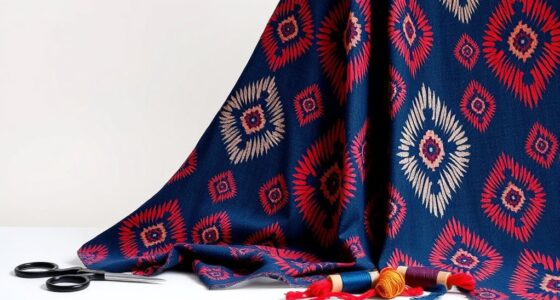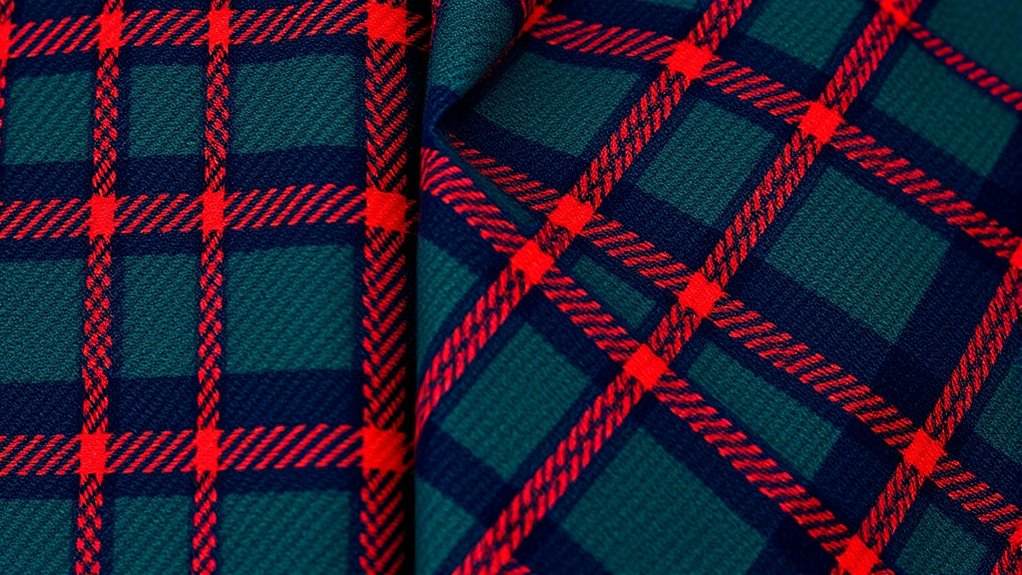

Tartan is a traditional Scottish pattern with crisscrossed lines that represent specific clans, symbolizing heritage and cultural pride. Plaid, on the other hand, is a broader term for similar patterns used worldwide in casual fashion, like flannel shirts. While tartan holds historical significance tied to Scottish identity, plaid is more about style and trends. To discover how these patterns continue to influence fashion and culture today, keep exploring their rich history and modern adaptations.
Key Takeaways
- Tartan is a specific Scottish pattern representing individual clans, with unique color combinations and historical significance.
- Plaid is a broader term for crisscrossed patterns found worldwide, often used in casual fashion without Scottish origins.
- Tartan symbolizes Scottish heritage, clan identity, and cultural pride, while plaid is mostly associated with fashion trends.
- Both patterns feature intersecting bands but differ in cultural meaning, with tartan linked to tradition and plaid to modern style.
- Modern fashion incorporates tartan and plaid, blending traditional symbolism with contemporary designs and trends.
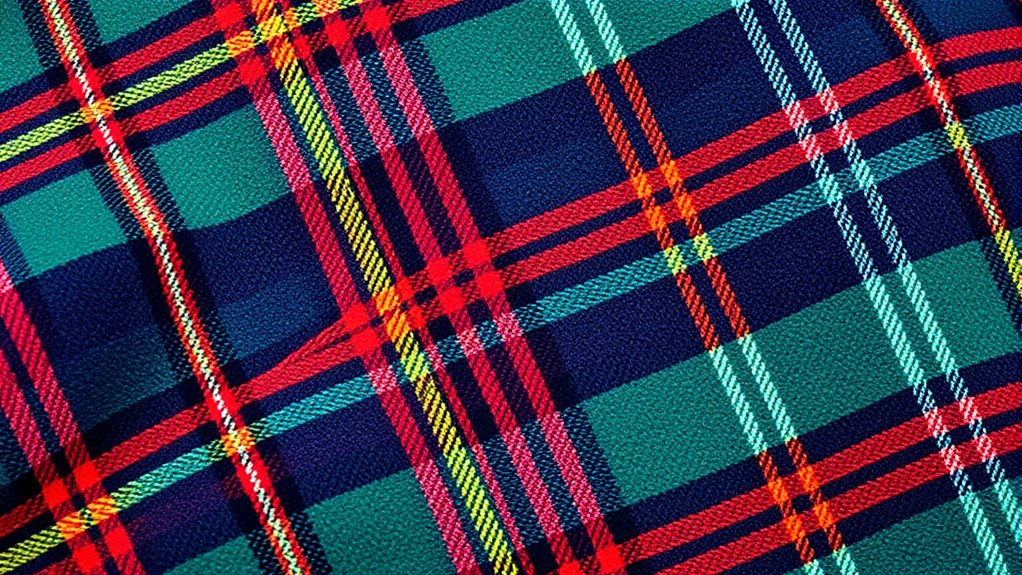
Have you ever wondered what sets tartan and plaid apart? Despite often being used interchangeably, these patterns have distinct meanings rooted in history and symbolism. Tartan specifically refers to the crisscrossed horizontal and vertical bands in specific color combinations that originated in Scotland. Its history dates back centuries, serving as a form of identification for Scottish clans and families. Each clan developed its own unique tartan pattern, which became a symbol of heritage and allegiance. Over time, tartan’s symbolism expanded beyond clan identification to represent Scottish culture as a whole. Today, you’ll see tartan patterns embracing a variety of fashion trends, from traditional kilts to contemporary designer clothing. The pattern’s versatility has helped it stay relevant, blending historical significance with modern style. Additionally, tartan’s cultural importance continues to influence fashion and identity today.
In contrast, plaid is a broader term that describes any pattern of crisscrossed horizontal and vertical bands in different colors, not necessarily tied to Scottish heritage. While tartan is deeply embedded in Scottish history and symbolism, plaid has a more global presence, often associated with Western fashion and casual wear. You might notice plaid in flannel shirts, skirts, or accessories, often worn to evoke a rugged or cozy aesthetic. Despite this, plaid’s roots can trace back to various cultures worldwide, each with its own significance and history, making it more of a fashion trend than a symbol of heritage. Its widespread popularity stems from its adaptability and timeless appeal, allowing it to evolve with changing styles while maintaining a classic look.
Fashion trends have played a significant role in bringing tartan and plaid into contemporary wardrobes. Modern designers frequently incorporate tartan into their collections, sometimes reimagining traditional patterns with bold colors or oversized designs. This fusion of old and new keeps the pattern fresh and relevant. Meanwhile, plaid remains a staple in streetwear and casual fashion, often used to create a laid-back, approachable vibe. As you explore different styles, you’ll notice how these patterns can be both a nod to heritage and a statement of current trends. Whether worn as a classic kilt or a trendy shirt, tartan and plaid continue to symbolize more than just patterns—they embody history, culture, and style evolution. Their enduring presence in fashion proves that these patterns are more than just fabric; they are expressions of identity and creativity, constantly shaped by the trends of today while paying homage to their rich past.
Frequently Asked Questions
How Are Tartans Officially Registered or Recognized?
You can register your clan tartan with the official Scottish registry to guarantee recognition. The process involves submitting your tartan design for approval, often through the Scottish Register of Tartans, which maintains the official registry. Once registered, your tartan becomes officially recognized, preserving your clan’s heritage. This registration process helps protect your pattern and allows it to be used officially for clothing, ceremonies, and cultural events.
What Are the Traditional Symbols Associated With Specific Tartans?
You’ll notice that each traditional tartan often features symbols like family crests or clan badges, which hold deep significance. These symbols represent your ancestral ties, history, or allegiance, creating a sense of identity woven into the fabric. As you explore further, you’ll uncover stories behind these symbols, revealing the rich heritage and pride that make each tartan uniquely yours. Truly, they’re more than patterns — they’re living histories.
Can Individuals Create Their Own Unique Tartan Patterns?
Yes, you can create your own unique tartan patterns through a custom tartan design process. Many companies now offer modern tartan creation services, allowing you to choose colors and patterns that reflect your personality or heritage. This modern approach to tartan design makes it easy to develop a one-of-a-kind pattern, perfect for personal use, special events, or even as a family or corporate symbol.
How Do Tartan Patterns Vary Across Different Scottish Regions?
You’ll notice tartan patterns vary across Scottish regions through distinctive regional color schemes and weaving techniques. Each area uses specific colors that reflect local history and landscape, while weaving methods influence the pattern’s texture and complexity. By examining these variations, you can identify the region a tartan represents. Your appreciation deepens as you recognize how tradition and craft shape each unique Scottish tartan, connecting you to its heritage.
Are There Modern or Contemporary Uses of Tartan Outside Scotland?
You might think tartan is just traditional Scottish wear, but today, it’s everywhere. In fashion trends, designers incorporate tartan into high-end collections and streetwear, blending old with new. Companies also use tartan patterns in corporate branding to evoke heritage and trust. This modern twist keeps tartan relevant, showing how a centuries-old pattern can adapt to contemporary styles and marketing strategies worldwide.
Conclusion
As you explore tartan and plaid, you begin to see how these patterns gently weave stories of Scottish heritage into everyday life. They whisper of traditions, families, and history, inviting you to appreciate their quiet significance. Embrace these patterns as more than just fabrics—they’re subtle reminders of a rich cultural tapestry, inviting you to carry a piece of Scotland’s soul with you. In wearing them, you connect quietly to a storied past that endures beyond words.