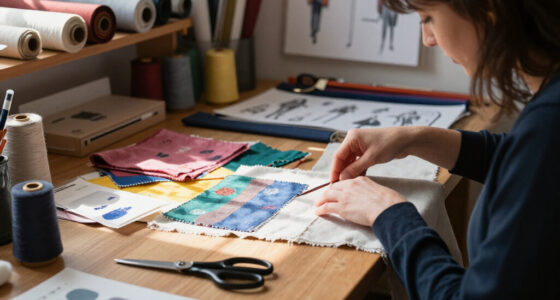

Textile craftsmanship signals quality because it’s built on skilled techniques that create durable, unique fabrics. When you choose handcrafted textiles, you’re getting products made with careful processes like hand-weaving, natural dyeing, and sustainable fibers, which resist wear and environmental damage. These methods preserve cultural heritage and guarantee each piece is meaningful and resilient. If you want to understand how these traditional practices elevate fabric quality and sustainability, there’s more to discover below.
Key Takeaways
- Skilled craftsmanship ensures fabrics are durable, resistant to wear, and maintain quality over time.
- Traditional techniques and hand-made processes add uniqueness, character, and cultural value to textiles.
- Use of sustainable fibers enhances fabric strength, softness, and environmental resilience.
- Artisanal methods promote sustainability by reducing waste and supporting local economies.
- Craftsmanship reflects a commitment to excellence, authenticity, and timeless quality beyond mass-produced options.
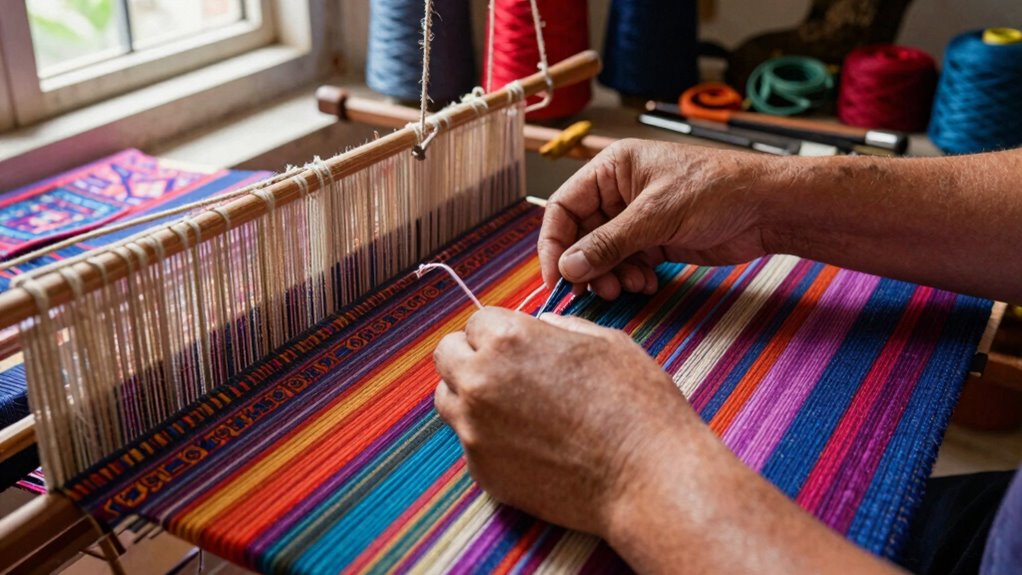
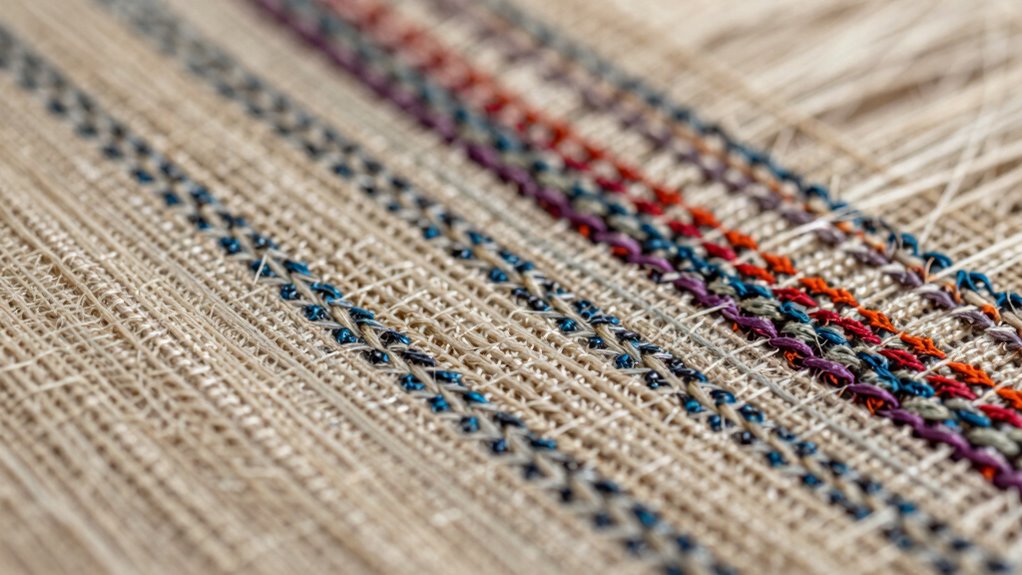
Textile craftsmanship plays an essential role in guaranteeing the quality and durability of fabrics you encounter daily. When you look closely at well-made garments or textiles, you’ll notice that craftsmanship isn’t just about aesthetics—it’s about the careful processes that elevate simple fibers into lasting, meaningful pieces. Many artisans work with sustainable fibers, choosing materials like organic cotton, hemp, or bamboo, which are environmentally friendlier and often stronger than conventional options. These sustainable fibers are not only better for the planet but also lend a natural quality to the fabric, making it softer, more resilient, and longer-lasting. When combined with artisanal techniques—such as hand-weaving, embroidery, or traditional dyeing methods—the result is a textile that embodies both integrity and uniqueness. Additionally, these techniques often involve a sustainable practices approach, reducing waste and minimizing environmental impact. You’ll find that artisanal techniques reflect a mastery that machines simply cannot replicate. These methods involve a level of detail and care that guarantees each piece is crafted with intention and precision. For example, handloom weaving produces a fabric with a distinct texture and strength, thanks to the meticulous process that controls every thread. Hand-dyeing with natural pigments creates depth and richness in color, unlike mass-produced textiles that rely on synthetic dyes. These techniques preserve cultural heritage and foster a connection between the maker and the wearer. Because artisans often produce textiles in small batches, there’s a focus on quality rather than quantity, leading to fabrics that last longer and age gracefully. The artisanal techniques often involve intricate craftsmanship that adds value and character to each textile, making it unique. Recognizing the cultural heritage embedded in these textiles further emphasizes their significance and authenticity. Emphasizing traditional methods also helps sustain local economies and keeps ancient skills alive for future generations. The importance of textile craftsmanship extends beyond aesthetics; it’s about trust and authenticity. When you buy a piece made through artisanal techniques, you’re supporting skilled craftspeople who have honed their craft over years or even generations. This craftsmanship ensures that each textile is durable, with stitches and finishes that withstand wear and washing better than mass-produced alternatives. The use of sustainable fibers further enhances this durability, as these materials tend to be stronger and more resistant to environmental damage. By valuing craftsmanship, you’re embracing a mindful approach to fashion—one that prioritizes quality over fleeting trends and encourages sustainable practices. Ultimately, textile craftsmanship signals quality because it embodies a commitment to excellence, sustainability, and cultural preservation. It’s about more than just appearance; it’s about the story behind each fabric, the skill of the maker, and the longevity of the final product. When you choose textiles crafted with artisanal techniques and sustainable fibers, you’re investing in pieces that are meaningful, resilient, and timeless—qualities that mass-produced fabrics simply can’t match.

Hydration Nation Authentic Large Handwoven Mexican Striped Throw Blanket – Soft, Durable, Eco-Friendly – 70"x50" – Sunrise
- Authentic Handwoven Mexican Blanket: Light, soft, breathable, and colorful
- Versatile Multi-Use Blanket: Decor, yoga, picnic, beach, and more
- Softens and Warms with Use: Gets cozier after each wash
As an affiliate, we earn on qualifying purchases.
As an affiliate, we earn on qualifying purchases.
Frequently Asked Questions
How Does Textile Craftsmanship Impact Environmental Sustainability?
Textile craftsmanship impacts environmental sustainability positively by emphasizing sustainable dyeing techniques and the use of eco-friendly fibers. When you choose handcrafted textiles, you’re supporting methods that reduce water and chemical usage, minimizing pollution. Skilled artisans often prioritize natural dyes and sustainable materials, which lower your carbon footprint. By valuing craftsmanship, you promote eco-conscious choices that help preserve resources and reduce environmental harm, making your fashion sustainable and responsible.
What Are Common Misconceptions About Handmade Textiles?
Many believe handmade textiles are always imperfect or expensive, but that’s a misconception. Material authenticity varies, and skilled artisans often select the best materials, ensuring quality. Handmade textiles hold deep cultural significance, reflecting traditions and stories, which enhances their value. You might think mass-produced fabrics are comparable, but craftsmanship guarantees unique, authentic pieces that celebrate cultural heritage, making them truly special and meaningful.
How Can Consumers Identify Authentic Handcrafted Textiles?
You can spot authentic handcrafted textiles by paying close attention to details. Look for subtle imperfections, which reveal artisanal techniques and add character. Feel the fabric’s texture—genuine craftsmanship often results in a richer, more complex surface. Check for authenticity markers like hand-stitched seams or unique patterns. These clues whisper the story of skilled artisans behind every piece, revealing its true origin and craftsmanship—something machine-made textiles can’t replicate.
What Training Is Required for Skilled Textile Craftsmanship?
You need specialized training in fabric dyeing and weaving techniques to become skilled in textile craftsmanship. This involves learning traditional methods, understanding fiber types, and practicing dye application to achieve vibrant, lasting colors. You’ll also study various weaving techniques, mastering handloom or machine skills, and gaining an eye for detail. Consistent practice and mentorship from experienced artisans help refine your skills, ensuring you produce high-quality, authentic handcrafted textiles.
How Does Craftsmanship Influence the Durability of Textiles?
Craftsmanship acts like a sturdy backbone for textiles, making them last through the storms of time. When you pay close attention to fiber strength and weaving techniques, you’re weaving durability into every thread. Skilled artisans guarantee each stitch and twist adds resilience, transforming simple fibers into a fortress of quality. So, your choice of craftsmanship directly influences how long your textiles stand strong, enduring wear and tear with grace.
Conclusion
So, when you hold a handcrafted textile, you’re touching more than just fabric—you’re feeling the heartbeat of tradition woven into every stitch. It’s like catching a whisper of history, a symphony of skill that no machine can replicate. Textile craftsmanship is the soul behind quality, turning simple threads into timeless stories. Embrace these artisanal treasures, for in their fiber lies a legacy that echoes beyond fleeting trends, forever anchoring you in authenticity and artistry.