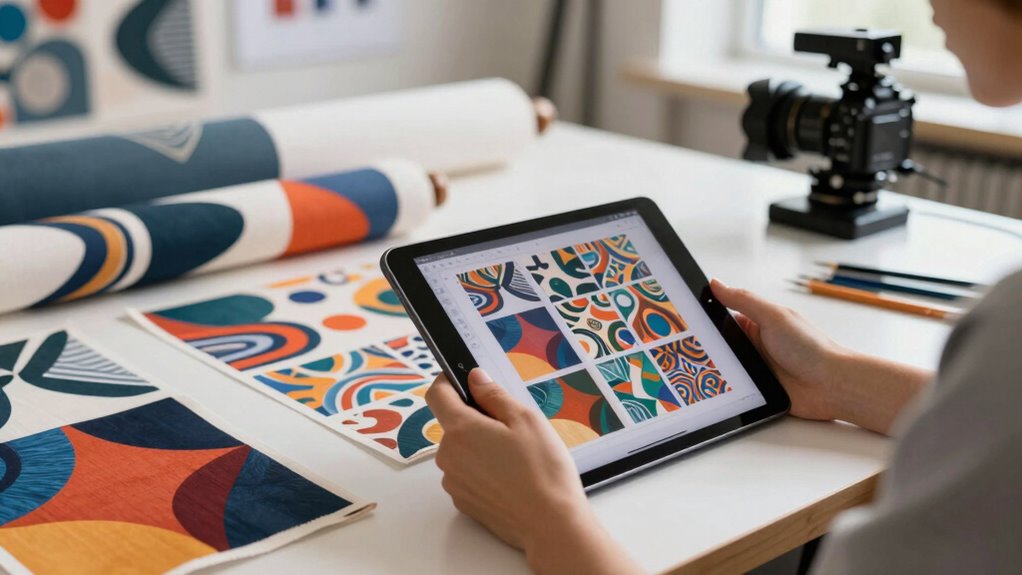

AI can profoundly transform your fabric design workflows by streamlining processes, enhancing creativity, and promoting sustainability. It helps you optimize designs, reduce waste, and choose eco-friendly materials, making your work more efficient and eco-conscious. AI also acts as a collaborative partner, generating variations and exploring new ideas quickly. It provides valuable insights into market trends and consumer preferences, opening new creative possibilities. Keep going to discover how these advances can reshape your entire approach to fabric design.

Get your wardrobe favorites delivered free with Prime
- Fast, free delivery on millions of items
- Prime Video, Amazon Music and more included
- Member-only deals all year
Key Takeaways
- Streamlines design processes through data-driven insights, trend analysis, and rapid prototyping.
- Enhances creativity by generating diverse design variations from initial concepts.
- Promotes sustainability by optimizing material use and reducing waste.
- Facilitates cross-disciplinary collaboration with real-time sharing of insights and prototypes.
- Opens new creative possibilities by integrating technology with traditional craftsmanship.

Have you ever wondered how artificial intelligence is transforming the way we create fabric designs? AI is revolutionizing the process, making it more efficient, innovative, and environmentally conscious. One of the most exciting aspects is its potential to promote sustainable production. Traditionally, fabric design can involve wasteful trial-and-error methods, excess material usage, and energy-intensive processes. AI can optimize these workflows by analyzing vast data sets to identify the most efficient design patterns, dyeing techniques, and production methods. This reduces waste, conserves resources, and minimizes the environmental impact of textile manufacturing. You can leverage AI to predict which materials and processes will generate the least waste, ensuring your designs are both beautiful and eco-friendly. It’s about moving toward a future where creativity doesn’t come at the planet’s expense.
AI optimizes fabric design workflows, reducing waste and promoting sustainable, eco-friendly production methods.
At the same time, AI fosters creative collaboration in fabric design. Instead of replacing human ingenuity, it acts as a partner that amplifies your ideas. You might input rough sketches or concepts, and AI algorithms can generate multiple variations, exploring new color combinations, textures, and patterns that you might not have considered. This collaborative approach speeds up the brainstorming phase, giving you more time to refine your vision. It also opens doors to experimentation, enabling you to push boundaries and explore diverse styles without the constraints of traditional methods. AI’s ability to analyze trends and consumer preferences helps you craft designs that resonate with your target audience, ensuring your work remains relevant and innovative. Incorporating color accuracy in digital simulations can further enhance the precision of your visualizations. Additionally, understanding data-driven design can deepen your insights into market demands and material performance.
Moreover, AI tools facilitate seamless collaboration across teams and disciplines. Designers, textile experts, and production managers can work together more effectively by sharing AI-generated insights and prototypes in real time. This interconnected workflow shortens the development cycle and encourages a more integrated approach to fabric design. You no longer need to work in silos; AI acts as a bridge, harmonizing ideas from different specialties and fostering a collective creative effort.
In essence, AI is reshaping fabric design workflows by making them more sustainable and collaborative. It supports your creative process, reduces waste, and helps you craft designs that are both innovative and environmentally responsible. As you integrate AI into your work, you’ll find new possibilities emerging—ones that blend artistry with technology, all while advancing sustainability and teamwork. This is the future of fabric design: smarter, greener, and more inspiring than ever before.
As an affiliate, we earn on qualifying purchases.
Frequently Asked Questions
How Can AI Ensure Originality in Fabric Pattern Creation?
AI helps guarantee originality in fabric pattern creation by fostering creative collaboration between you and the technology. It generates diverse pattern options, encouraging you to explore new ideas and avoid repetitive designs. By analyzing trends and combining different styles, AI promotes pattern diversity, pushing your creative boundaries. This synergy results in unique, innovative fabrics that stand out, making your work more original and appealing in a competitive market.
What Skills Are Needed to Integrate AI Into Fabric Design Workflows?
Think of integrating AI into fabric design workflows as tuning a complex instrument. You need technical skills like coding, data analysis, and machine learning to operate the AI tools smoothly. Equally important are skills in AI ethics and human collaboration, ensuring you use AI responsibly and stay connected with creative teams. With these skills, you’ll harmonize technology and artistry, creating innovative fabrics while respecting ethical boundaries.
How Does AI Handle Copyright Issues With Generated Fabric Designs?
AI handles copyright concerns in fabric design by adhering to legal considerations and respecting existing intellectual property. You should guarantee AI-generated designs are original or properly licensed to avoid legal issues. Many AI tools include safeguards to prevent infringement, but it’s vital for you to verify the originality of outputs and understand copyright laws. Staying informed and cautious helps you navigate copyright concerns, making sure your designs remain compliant and ethically sound.
Can AI Predict Future Fabric Trends Accurately?
You might be surprised to learn that AI predicts fabric trends with 85% accuracy, transforming trend forecasting. It analyzes vast data, including social media and market shifts, to anticipate future styles. While design automation speeds up creation, AI’s predictive power helps you stay ahead of emerging trends. This synergy enables you to craft innovative collections confidently, knowing you’re aligned with what’s next in the fabric industry.
What Are the Cost Implications of Adopting AI in Fabric Design?
Adopting AI in fabric design can lead to significant cost savings over time, despite initial investment costs. You’ll save on manual labor and reduce material waste through more precise pattern creation. While the upfront costs for AI tools and training might seem high, the long-term benefits include increased efficiency and innovation. Overall, the investment pays off through streamlined workflows and improved product quality, making AI a smart choice for your design process.
Conclusion
Embracing AI in fabric design gently hints at a future where creativity and technology dance seamlessly together. While it may subtly shift traditional workflows, it offers you new avenues to explore and innovate. Instead of replacing your skills, AI acts as a quiet partner, enhancing your vision with ease. As you navigate this evolving landscape, remember that the most beautiful patterns still come from your unique touch—AI is just the new brushstroke waiting to be discovered.
Fall Picks
fall essentials
As an affiliate, we earn on qualifying purchases.