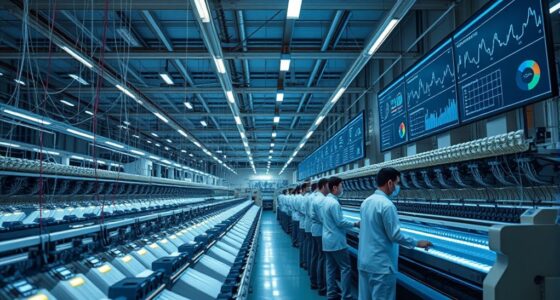
By leveraging AI and data analytics, you can substantially boost quality and efficiency in textile manufacturing. These technologies help identify inefficiencies, enable real-time monitoring, and facilitate predictive maintenance. They also improve demand forecasting and reduce waste, leading to cost savings and sustainability. Automating routine tasks allows your workforce to focus on innovation, while smarter resource management enhances competitiveness. Keep exploring to uncover how these advancements can transform your operations and drive long-term success.
Key Takeaways
- AI detects fabric defects early, improving product quality and reducing rework.
- Data analytics optimize process parameters for consistent textile quality.
- Predictive maintenance minimizes equipment downtime, ensuring efficient production.
- Real-time monitoring enhances resource utilization, reducing waste and increasing efficiency.
- Data-driven insights support continuous quality improvements and operational excellence.
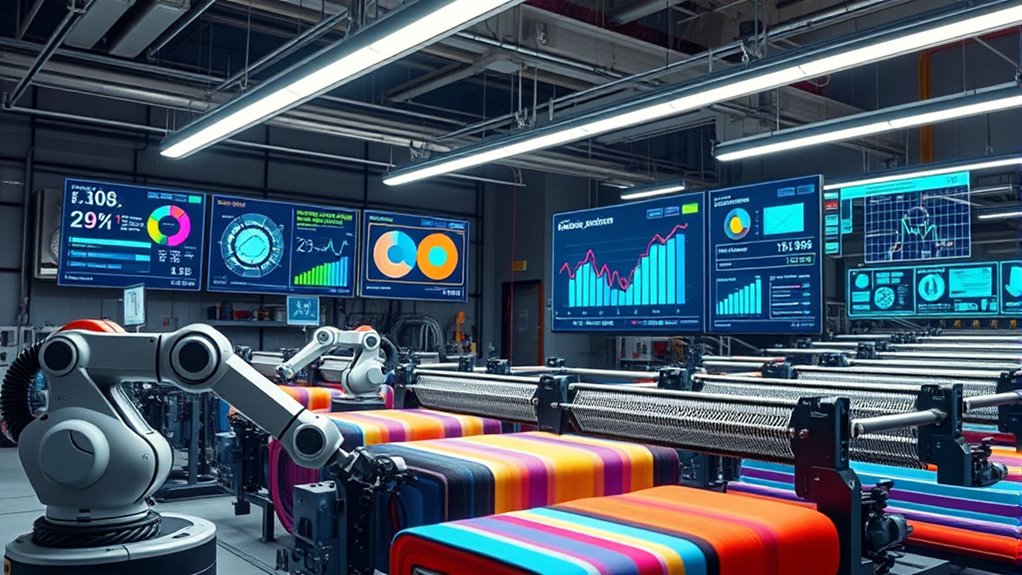
Artificial intelligence and data analytics are transforming textile manufacturing by enabling companies to optimize processes, reduce waste, and improve product quality. As you adopt these advanced tools, you’ll find that sustainable practices become more integrated into your operations. AI can analyze vast amounts of data from various sources, helping you identify inefficiencies and areas where resources are being overused. This insight allows you to make smarter decisions that minimize environmental impact while maintaining high standards. For example, by monitoring energy consumption and raw material usage in real-time, you can adjust processes to use fewer resources without sacrificing quality. This not only supports your company’s sustainability goals but also leads to cost savings over time.
AI-driven data analysis helps optimize resources, reduce waste, and enhance sustainability in textile manufacturing.
Supply chain optimization is another critical area where AI and data analytics make a significant difference. In textile manufacturing, a complex network of suppliers, manufacturers, and distributors often results in delays and excess inventory. AI-driven analytics help you forecast demand more accurately, ensuring that you produce just enough to meet market needs. This reduces overproduction and excess stock, which often end up as waste. With real-time data, you can quickly respond to disruptions, reroute shipments, and adjust procurement plans, keeping your supply chain agile and efficient. This proactive approach minimizes delays and inventory costs, giving you a competitive edge in a fast-paced industry.
You’ll also see improvements in quality control as AI-powered systems continuously monitor your production lines. Using machine learning algorithms, you can detect defects early in the process, often before they become visible to the naked eye. This proactive defect detection reduces rework and scrap, leading to higher-quality products and less waste. Additionally, AI can analyze historical data to predict when equipment is likely to fail, allowing for preventive maintenance that keeps machines running smoothly. Predictive maintenance reduces downtime and prolongs the lifespan of your equipment, further enhancing overall efficiency. Incorporating data-driven decision making into your operations can significantly enhance your competitive advantage and operational resilience.
Implementing AI and data analytics is also about empowering your workforce. Rather than replacing human workers, these technologies serve as tools to enhance their capabilities. Your team can focus on more strategic tasks, such as innovation and process improvement, while AI handles routine monitoring and analysis. This synergy results in a more productive, motivated workforce that can adapt quickly to changing demands.

Automation in Garment Manufacturing (The Textile Institute Book)
As an affiliate, we earn on qualifying purchases.
As an affiliate, we earn on qualifying purchases.
Frequently Asked Questions
How Does AI Improve Sustainability in Textile Manufacturing?
AI improves sustainability in textile manufacturing by enabling eco-friendly innovations and waste reduction. You can use AI to optimize resource usage, such as water and energy, minimizing environmental impact. It also helps identify inefficiencies, reducing fabric waste during production. By implementing AI-driven solutions, you make your processes more sustainable, lowering costs and environmental footprint, while supporting eco-friendly practices that benefit both your business and the planet.
What Are the Initial Costs of Implementing AI Systems?
The initial costs of implementing AI systems might seem astronomical, but they’re worth every penny. You’ll need to budget for implementation costs like hardware, software, and training, which can be substantial. Conducting an ROI analysis helps you weigh these expenses against long-term savings and efficiency gains. While the upfront investment feels intimidating, the transformative potential of AI quickly outweighs the initial costs, delivering massive benefits down the line.
How Do Data Analytics Predict Market Trends in Textiles?
You use data analytics for market analysis and trend forecasting by examining large sets of industry data, consumer preferences, and sales patterns. This helps you identify emerging trends early, predict future demands, and adjust your production accordingly. By leveraging real-time insights and historical data, you can make informed decisions, stay competitive, and meet market needs efficiently, ensuring your textile business remains ahead of the curve.
What Training Is Needed for Staff to Use AI Tools Effectively?
You need to invest in staff training that boosts AI literacy, otherwise you’ll be lost in a sea of algorithms. Equip your team with the skills to understand data analytics and operate AI tools confidently. This includes hands-on workshops, online courses, and ongoing support. Remember, a technically clueless team is like fabric without weave—flimsy and ineffective. So, train them well, or prepare for a textile disaster!
How Secure Is Sensitive Manufacturing Data With AI Solutions?
Your sensitive manufacturing data stays secure with AI solutions through robust data encryption and strict access controls. These measures guarantee that only authorized personnel can view or modify critical information, reducing the risk of breaches. Regular updates and vigilant monitoring further protect your data. When you implement these security practices, you safeguard your operations while leveraging AI’s benefits efficiently and confidently.
predictive maintenance sensors for textile machines
As an affiliate, we earn on qualifying purchases.
As an affiliate, we earn on qualifying purchases.
Conclusion
As you embrace AI and data analytics, you’re opening the door to a vibrant tapestry of innovation in textile manufacturing. Like a skilled weaver, you can interlace quality and efficiency seamlessly, transforming raw materials into masterpieces. With these tools guiding your every stitch, you’ll craft a future where your processes sing in harmony, and your success shines brighter than a freshly woven fabric. Step confidently into this new era—your masterpiece awaits.

Data Analytics Data Engineering Funny Data Scientist Joke T-Shirt
Funny design. Data Analytics Design.
As an affiliate, we earn on qualifying purchases.
As an affiliate, we earn on qualifying purchases.
automated quality control systems for textiles
As an affiliate, we earn on qualifying purchases.
As an affiliate, we earn on qualifying purchases.