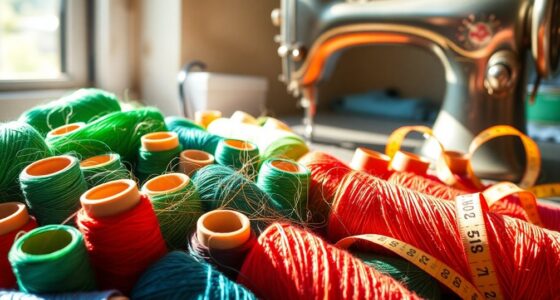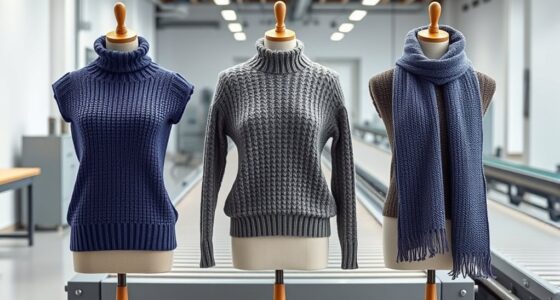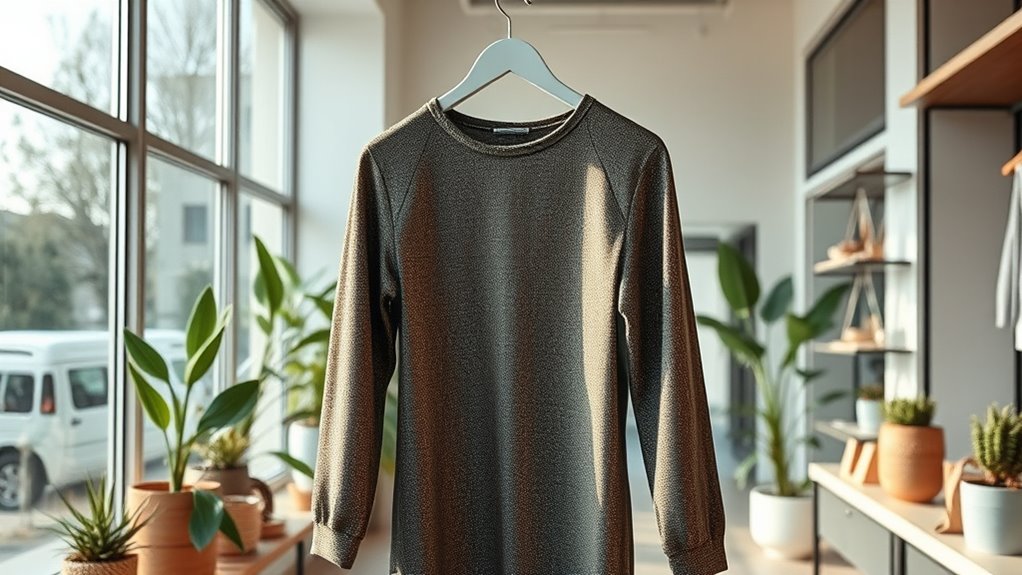
Biodegradable polyester isn’t an oxymoron anymore; it’s becoming a real option for sustainable fast fashion. Advances in technology make it possible to create eco-friendly materials that perform well and stay affordable. While manufacturing challenges exist, progress shows that biodegradable polyester could meet consumer demands for style and sustainability without compromise. If you want to understand how this material is shaping the future of fashion, there’s more to explore ahead.
Key Takeaways
- Biodegradable polyester aims to combine environmental benefits with fast fashion’s demand for affordability and rapid production.
- Technological advances are improving biodegradability and performance, making it more viable for industry adoption.
- Manufacturing challenges, such as higher costs and specialized feedstocks, currently hinder large-scale fast fashion use.
- Consumer acceptance depends on balancing sustainability with style, durability, and price expectations.
- The future of biodegradable polyester in fast fashion depends on overcoming production hurdles and increasing market demand.
Biodegradable polyester is an innovative material designed to break down naturally in the environment, offering a sustainable alternative to traditional plastics. As someone interested in eco-friendly fashion, you might wonder whether this material will truly make a difference or just serve as another greenwashing ploy. The key to its success lies in consumer acceptance and overcoming manufacturing challenges. If people like you embrace biodegradable polyester, brands will be more motivated to invest in its development. However, widespread acceptance depends on whether the product performs as well as conventional materials, both in durability and appearance. Consumers are increasingly aware of environmental issues, but they also expect affordability, style, and convenience. If biodegradable polyester can meet these expectations, it’s more likely to gain traction.
On the manufacturing side, producing biodegradable polyester isn’t as simple as switching raw materials. Traditional polyester relies heavily on petrochemicals, which are cheap and readily available, making it easier for manufacturers to produce at scale. In contrast, biodegradable variants often require specialized feedstocks, like plant-based sugars, which can be more expensive and less consistent in quality. This introduces manufacturing challenges, including higher initial costs and the need for new equipment or processes. Additionally, ensuring that biodegradable polyester maintains the same performance standards as regular polyester—such as strength, elasticity, and color retention—adds complexity. Developers must also address issues related to the compostability or biodegradability timeline, ensuring the material breaks down in a reasonable period without leaving harmful residues. Moreover, advances in polyester technology are helping to improve these properties and make biodegradable options more viable.
Despite these hurdles, progress is being made. Some manufacturers are successfully integrating biodegradable polyester into their supply chains, driven by consumer demand for eco-conscious products. The challenge lies in scaling these innovations efficiently and cost-effectively. If companies can streamline production and reduce costs, biodegradable polyester will become a more viable option for the fast fashion industry, which thrives on rapid turnover and low prices. As a consumer, your preferences and purchasing choices influence these developments. When you opt for sustainable options, you signal to brands that eco-friendly products matter, encouraging further investment in overcoming manufacturing challenges. Ultimately, the future of biodegradable polyester hinges on balancing consumer acceptance with technological advancements, making it a promising, yet still evolving, solution for a more sustainable fashion industry.

Call Me Biodegradable Because I Break Down Easily Racoon T-Shirt
Call Me Biodegradable Because I Break Down Easily for your dad, mom, wife, husband, grandpa, grandma, brother, sister…
As an affiliate, we earn on qualifying purchases.
As an affiliate, we earn on qualifying purchases.
Frequently Asked Questions
How Long Does Biodegradable Polyester Take to Decompose?
You wonder how long biodegradable polyester takes to decompose. Typically, the decomposition timeline varies from a few months to two years, depending on environmental factors like temperature, moisture, and microbial activity. In ideal conditions, it breaks down faster, reducing waste accumulation. However, if environmental factors are less favorable, the process slows down. So, understanding these factors helps you gauge its true eco-friendly potential.
Is Biodegradable Polyester as Durable as Traditional Polyester?
Think of biodegradable polyester like a delicate sandcastle—beautiful, but less durable than stone. You might hear sustainability myths claiming it’s just as sturdy, but in reality, material longevity varies. Biodegradable polyester often isn’t as resilient as traditional polyester, making it less suitable for long-term wear. While eco-friendly, it sacrifices some durability, so you should consider its purpose before choosing it for your wardrobe.
Can Biodegradable Polyester Be Recycled?
You can recycle biodegradable polyester, but it faces recycling challenges because it often needs specific facilities to handle its biodegradation process. Unlike traditional plastics, its unique composition can complicate standard recycling methods, leading to potential contamination. While it’s designed to break down naturally, recycling programs may not always effectively process it, making it essential to develop specialized systems to manage its lifecycle and maximize sustainability benefits.
What Environmental Impacts Does Biodegradable Polyester Have?
When considering the environmental impacts of biodegradable polyester, you’ll find it helps reduce microplastics in oceans, limiting pollution and harm to marine life. It also benefits soil fertility when disposed of properly, breaking down into natural components. However, if not managed correctly, it can still produce some microplastic particles during degradation. Overall, biodegradable polyester offers a promising way to lower environmental harm compared to conventional plastics, especially in fast fashion.
Are There Any Health Risks Associated With Biodegradable Polyester?
You might wonder if biodegradable polyester poses health risks. Generally, it’s safer than traditional plastics because it’s designed with chemical safety in mind, reducing harmful substances. However, some people could experience skin irritation from certain biodegradable fibers, especially if they contain residual chemicals or additives. Always check the product’s certifications and ingredient list to guarantee minimal risk, and if you have sensitive skin, test a small patch first.

Joocolor Cotton Fabric by The Yard for Sewing DIY Crafting Fashion Design Full Width cuttable 36 x 43inches (91x109cm) color016
100% high quality cotton fabric.
As an affiliate, we earn on qualifying purchases.
As an affiliate, we earn on qualifying purchases.
Conclusion
So, is biodegradable polyester a true green revolution or just a fleeting mirage? It’s like chasing a rainbow—beautiful in theory but tricky in practice. While it promises a greener future, you must ask if it’s enough to outshine the fast fashion storm. The path ahead is a weaving dance of hope and challenge. Embrace the potential, but stay vigilant—because in the end, your choices shape the fabric of tomorrow’s world.

SHOWA 383 Sustainable EBT Nitrile Palm Coated General Purpose Work Gloves with Poly Liner, 13-Gauge, Large (1 Pair)
A Sustainable Option: these gloves feature Eco Best Technology (EBT) which offers exceptional protection during use and when…
As an affiliate, we earn on qualifying purchases.
As an affiliate, we earn on qualifying purchases.

FSZNKJ Artificial Green Moss Mat, Carpet Grass Wall with Base Fabric 39.37 * 39.37 inch Fake Moss for Crafts, Faux Moss for Plants Indoor Green Faux Grass for DIY Table Centerpieces Floral Wedding
🥦【Soft and Stretchable】: This is a 19.68*19.68 inch Carpet Grass Wall is made from fine polyester materials that…
As an affiliate, we earn on qualifying purchases.
As an affiliate, we earn on qualifying purchases.