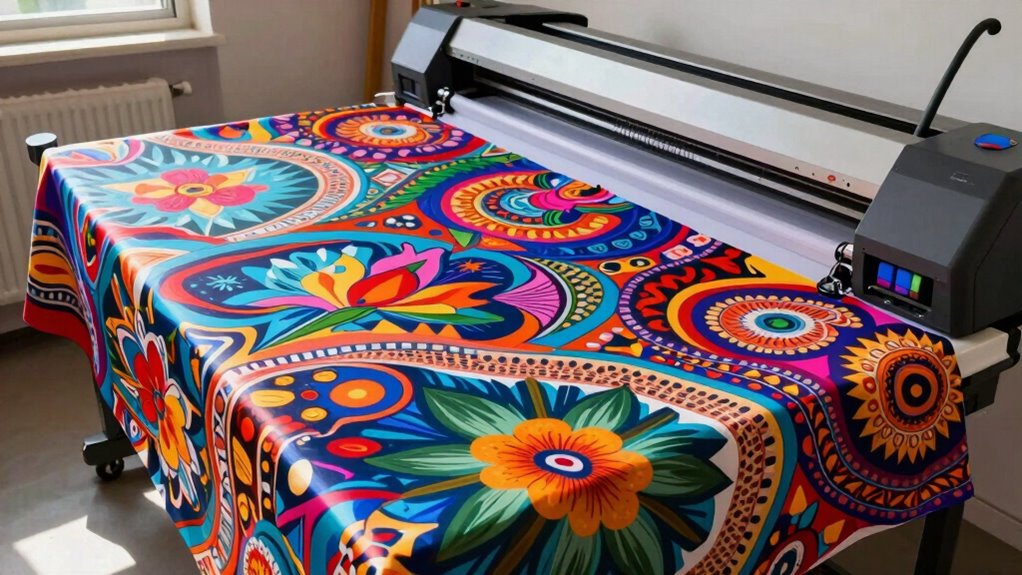

Digital printing is transforming your textile creativity by allowing you to experiment with nearly any color, pattern, or gradient easily. You can create intricate designs and blend motifs seamlessly, pushing artistic boundaries without high costs or long lead times. It also offers quick prototyping and personalized options, making small batches and custom pieces more accessible. Plus, it promotes sustainability by reducing waste, all while enabling innovative, vibrant textiles. Keep exploring to uncover how this technology empowers your unique design journey.

Get your wardrobe favorites delivered free with Prime
- Fast, free delivery on millions of items
- Prime Video, Amazon Music and more included
- Member-only deals all year
Key Takeaways
- Digital printing enables precise color matching and gradient creation, expanding creative possibilities in textile design.
- It allows for intricate patterns and complex visuals that were previously difficult or costly to produce.
- Rapid prototyping and on-demand printing foster personalized, small-batch, and trend-responsive textile innovations.
- The technology democratizes design, making advanced customization accessible to small brands and independent artists.
- Sustainable practices are supported through reduced waste, energy use, and longer-lasting, vibrant textile outputs.
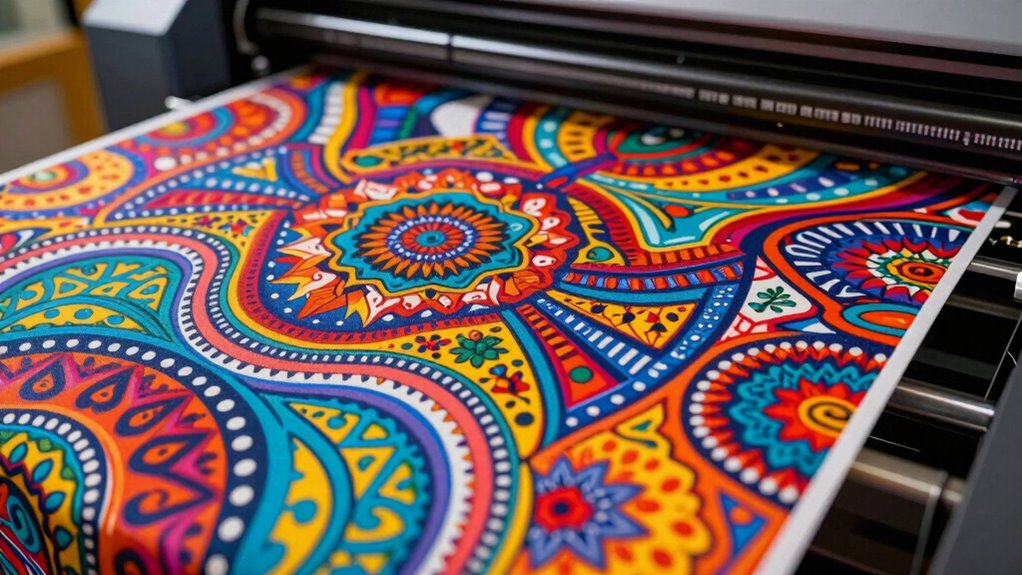
Digital printing has revolutionized textile design by offering endless possibilities for creativity and customization. With this technology, you no longer need to settle for pre-existing patterns or limited color palettes. Instead, you can create unique designs that reflect your vision, whether you’re a designer or an enthusiast. Color customization becomes effortless, allowing you to experiment with nearly any shade, hue, or gradient you desire. You can match specific color schemes, incorporate brand colors, or develop entirely new shades that stand out. This flexibility empowers you to tailor textiles precisely to your needs, making each piece truly one-of-a-kind.
Pattern innovation is another significant advantage digital printing brings to textile creativity. Traditional methods often restrict you to repeating patterns or designs that are costly and time-consuming to produce in small batches. Digital printing, however, enables you to craft intricate, detailed patterns that can vary across different sections of the fabric. You can seamlessly blend multiple motifs or generate complex visuals that would be impractical with conventional techniques. This opens up new avenues for artistic expression, encouraging you to push boundaries and explore more elaborate, sophisticated designs without the concern of high setup costs or lengthy production times. Additionally, the flexibility of digital printing allows for rapid adaptation to changing trends and consumer demands. Moreover, digital printing technology also enhances the color accuracy of printed textiles, which is essential for achieving the desired visual effects and maintaining brand consistency. This technology also supports more sustainable practices by reducing waste and energy consumption during production, aligning with the goals of sustainable textile care. Furthermore, advancements in digital printing technology continue to improve the resolution and durability of prints, ensuring long-lasting and vibrant textiles.
Moreover, digital printing allows for rapid prototyping and iterative design. If you’re experimenting with new patterns or color schemes, you can print small batches and make adjustments quickly. This agility means you can respond to trends, test different concepts, or personalize textiles on demand. For fashion designers, this means faster turnaround times and the ability to deliver custom, limited-edition collections that cater precisely to customer preferences. For home decor or upholstery, it translates into more diverse and personalized options, helping you stand out in a crowded market. The low-cost setup of digital printing further lowers barriers for emerging designers and small businesses looking to innovate without significant investment.
The ease of digital printing also democratizes textile design, putting advanced pattern and color customization within reach of smaller brands, artists, and hobbyists. You don’t need expensive equipment or large production runs to bring your ideas to life. Instead, you can create vibrant, complex textiles on a manageable scale, fostering innovation and experimentation. As a result, the landscape of textile creativity broadens, giving everyone the opportunity to develop distinctive, eye-catching designs that reflect their unique style and vision.
digital textile printing machine
As an affiliate, we earn on qualifying purchases.
As an affiliate, we earn on qualifying purchases.
Frequently Asked Questions
How Does Digital Printing Impact Traditional Textile Manufacturing Methods?
Digital printing impacts traditional textile manufacturing methods by reducing reliance on handmade techniques, enabling faster, more precise designs. You can experiment with complex patterns without lengthy processes, saving time and resources. While digital printing offers vibrant images, you might notice differences in fabric durability compared to traditional methods. Overall, it streamlines production and opens new creative possibilities, but some artisans worry about maintaining the authenticity of handmade techniques.
What Are the Environmental Benefits of Digital Textile Printing?
You’ll find digital textile printing is a real game-changer for the environment. It uses eco-friendly inks, reducing harmful chemicals, and minimizes water consumption through water conservation techniques. This approach cuts down waste and energy use, making your process more sustainable. By embracing digital printing, you’re not just creating vibrant designs but also taking a stand for a greener planet, proving that innovation and responsibility can go hand in hand.
How Does Digital Printing Influence Cost and Production Time?
Digital printing notably reduces your production time and costs. You experience cost savings because it minimizes waste and requires less setup compared to traditional methods. Additionally, digital printing speeds up your production process by allowing quick design changes and faster turnaround times. This means you can meet tight deadlines more easily, produce smaller batches economically, and adapt swiftly to market trends, ultimately enhancing your overall efficiency and profitability.
Can Digital Printing Be Used on All Types of Textiles?
You might think digital printing can be used on all textiles, but textile versatility varies. It works best on natural fibers like cotton and silk, yet some synthetic fabrics pose ink compatibility challenges. While advancements have expanded its reach, understanding each fabric’s properties guarantees ideal results. So, don’t assume every textile is suitable; testing compatibility is key to harnessing digital printing’s full creative potential.
What Are the Future Technological Advancements in Digital Textile Printing?
Future advancements in digital textile printing include innovative ink formulations that offer better color vibrancy and eco-friendliness, making prints more sustainable. Additionally, smart fabric integration will enable textiles to incorporate features like temperature regulation or health monitoring. You’ll see printers becoming faster and more precise, allowing for complex designs and customization. These innovations will revolutionize textile creativity, giving you more control and possibilities for creative expression in your projects.
Conclusion
So, here you are, embracing digital printing’s magic, thinking you’re revealing endless creativity. But don’t forget—while you’re marveling at vibrant designs and quick turnaround, the true irony is that sometimes, all this innovation can make your work feel just a little too perfect, too predictable. After all, in a world where mistakes are rare, isn’t it the imperfections that truly make your textile creations stand out? Embrace the flaws—digital or not.
Columbus Day / Indigenous Peoples' Day Picks
long weekend sales
As an affiliate, we earn on qualifying purchases.