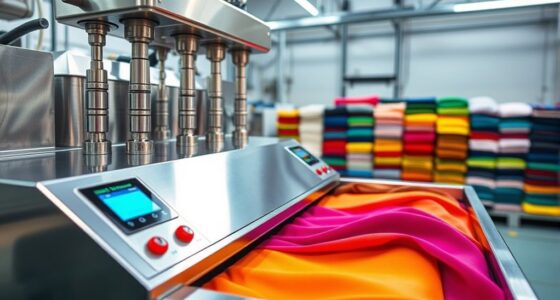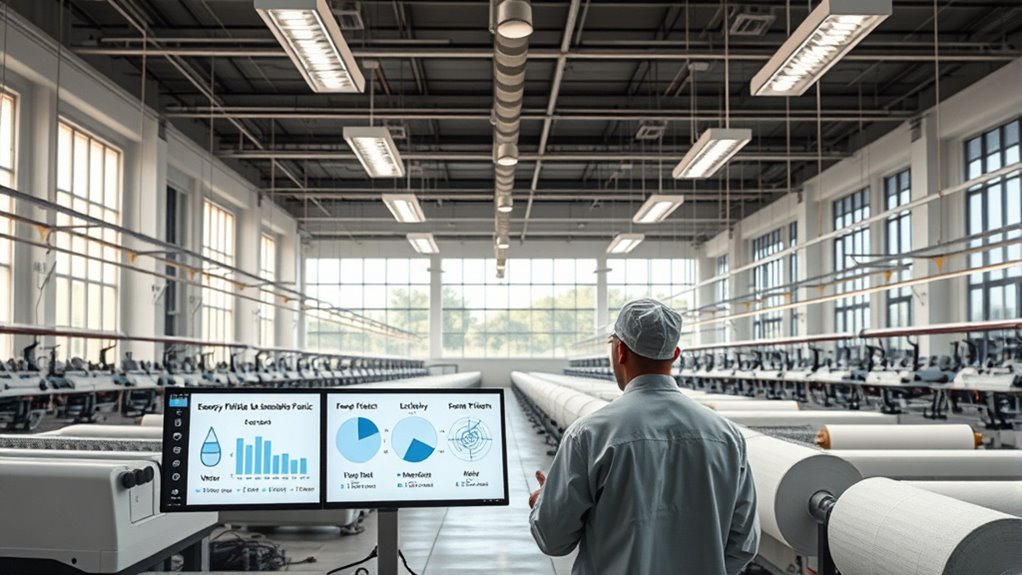

To improve energy efficiency in textile production and cut water and electricity use, adopt sustainable dyeing methods like digital printing and low-impact dyes that save resources. Conduct energy audits to identify areas for improvement, such as upgrading to energy-efficient equipment and implementing heat recovery systems. Optimize water use with better process controls and automation. These steps help lower operational costs and boost your eco-friendly reputation—discover more ways to make your facility greener and more efficient.
Key Takeaways
- Adopt sustainable dyeing practices like digital printing and low-impact dyes to reduce water, chemical, and energy consumption.
- Conduct comprehensive energy audits to identify inefficiencies and target machinery, lighting, and HVAC improvements.
- Implement heat recovery systems to reuse waste heat for preheating water and air, reducing energy needs.
- Upgrade to energy-efficient equipment and automate processes with sensors for real-time resource monitoring.
- Optimize water use during dyeing and finishing by adjusting process parameters and investing in efficient technology.
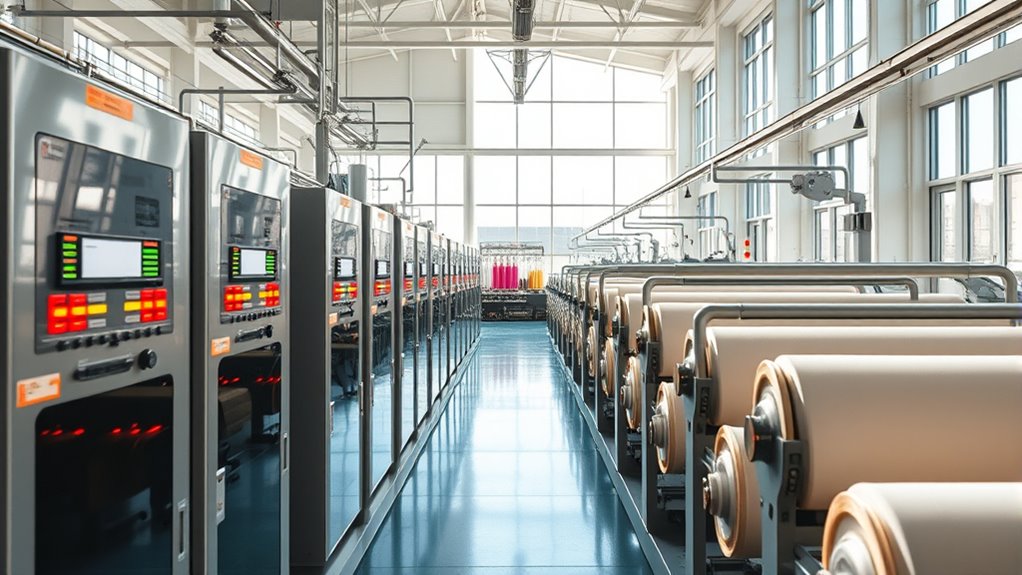
Are you looking for ways to reduce costs and minimize environmental impact in textile production? One effective approach is improving energy efficiency across your operations. This not only cuts expenses but also helps you meet sustainability goals. A good starting point is exploring sustainable dyeing practices. Traditional dyeing methods consume large amounts of water, energy, and chemicals, which increase costs and environmental footprint. Switching to sustainable dyeing techniques—such as digital printing, low-impact dyes, or closed-loop systems—can considerably reduce water and energy use. These methods use less water per batch, require less heating, and generate less waste, making your production more eco-friendly and cost-effective.
Improve sustainability and cut costs with eco-friendly dyeing techniques like digital printing and low-impact dyes.
Alongside adopting sustainable dyeing practices, conducting energy audits is essential. An energy audit helps you identify where your biggest energy drains are and pinpoints opportunities for improvement. It involves a thorough assessment of your machinery, lighting, HVAC systems, and production processes. By understanding how energy flows through your facility, you can target specific areas for optimization. For instance, upgrading to energy-efficient motors or installing sensors that turn off equipment when not in use can lead to immediate savings. Many energy audits also reveal inefficiencies in your lighting systems, which can often be remedied with LED upgrades or smarter controls.
Implementing findings from energy audits often results in substantial reductions in electricity consumption. These audits can also uncover opportunities to optimize water use, especially during dyeing and finishing processes. For example, adjusting process parameters or investing in equipment with higher efficiency ratings can cut water consumption without sacrificing quality. Additionally, integrating automation and real-time monitoring systems allows you to track energy and water usage continuously, giving you instant feedback and control over resource consumption.
Furthermore, embracing energy-efficient equipment and practices can contribute to long-term savings. For example, installing heat recovery systems can recycle waste heat from your processes to preheat water or air, reducing energy demand. Combining these investments with sustainable dyeing methods creates a thorough approach to reducing water and electricity use. Over time, these improvements not only lower your operational costs but also strengthen your brand’s sustainability credentials—appealing to environmentally conscious consumers and clients. Incorporating energy management strategies can further optimize your resource use and enhance sustainability efforts.
Frequently Asked Questions
What Are the Latest Innovations in Textile Energy-Saving Technologies?
You can explore the latest innovations like smart textiles that adapt to environmental conditions, reducing energy needs. Using renewable energy sources, such as solar or wind power, further cuts electricity consumption. Advanced dyeing and finishing techniques also minimize water use, while energy-efficient machinery speeds up production. These innovations help you save resources, lower costs, and promote sustainability, making your textile processes more eco-friendly and aligned with modern energy-saving standards.
How Can Small Textile Producers Implement Energy Efficiency Measures Cost-Effectively?
Implementing energy efficiency measures is like planting seeds for future savings. You can start with cost-effective upgrades like LED lighting, efficient motors, and insulation, which cut costs upfront. Additionally, adopt resource management strategies such as optimizing water and electricity use during production. These small changes can markedly reduce energy bills, making your operations more sustainable without breaking the bank. Focus on gradual improvements to maximize impact and affordability.
What Certifications Indicate a Textile Company’s Commitment to Sustainability?
You can look for sustainable certifications like GOTS (Global Organic Textile Standard) or OEKO-TEX Standard 100, which show your company’s commitment to eco-friendly practices. Eco label standards, such as the EU Ecolabel, also demonstrate your dedication to sustainability. These certifications assure customers that your textiles meet strict environmental and social criteria, helping you stand out as an eco-conscious producer and build trust in your brand.
How Does Water Recycling Impact Overall Textile Production Costs?
Water recycling can lower your overall production costs by promoting water conservation, which reduces the need for fresh water intake and minimizes wastewater treatment expenses. Although initial setup might be costly, you save in the long run through decreased water consumption and potential energy savings. This approach makes your operations more sustainable, helping you cut costs while being environmentally responsible, ultimately boosting your company’s reputation and profitability.
What Government Incentives Exist for Adopting Energy-Efficient Textile Practices?
Did you know that over 60% of countries offer government grants and tax incentives for adopting energy-efficient textile practices? These incentives aim to reduce environmental impact and cut costs. You can benefit from programs that provide financial support or tax breaks, making it easier to invest in sustainable technologies. By leveraging these incentives, you not only save money but also contribute to a greener future for the textile industry.
Conclusion
By adopting energy-efficient practices, you can markedly reduce water and electricity consumption in textile production. Did you know that improving efficiency can cut energy use by up to 30%? Not only does this save costs, but it also minimizes environmental impact. Embracing these strategies helps you stay competitive and responsible. So, take action now—small changes can lead to big savings and a greener future for your textile operations.