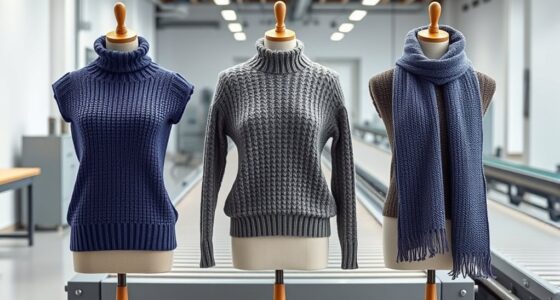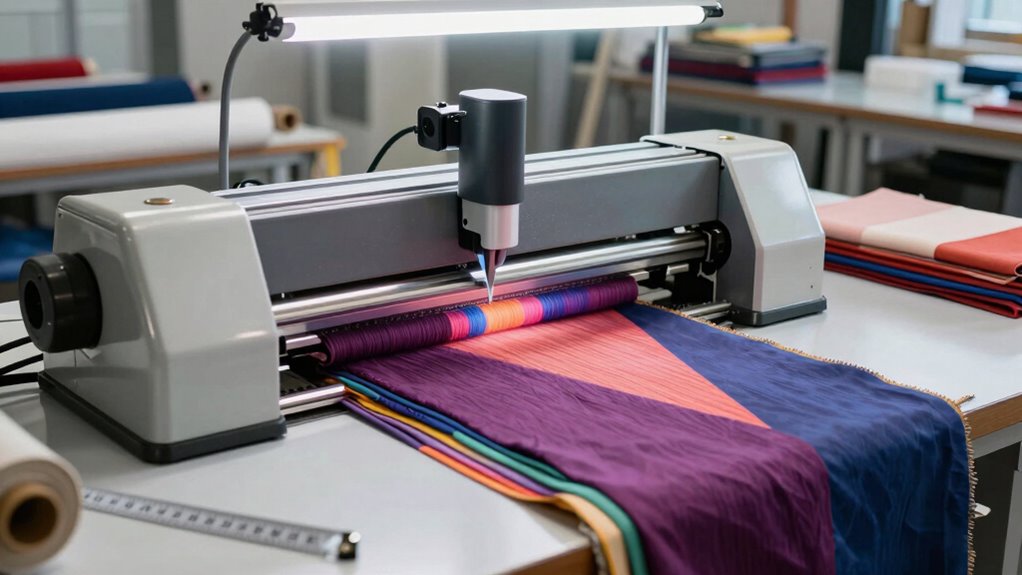
Fabric cutting machines use advanced technology like CAD systems, rotary, laser, and straight cutters to improve precision and speed in your workroom. These machines handle large fabric rolls, reduce waste, and allow automation for nonstop operation. Safety features like guards and sensors protect operators during use. Choosing the right method depends on your fabric type and project needs. Keep exploring to discover how these systems can elevate your textile production even further.
Key Takeaways
- Fabric cutting machines utilize advanced CAD systems for precise pattern input and fabric optimization.
- Different cutting methods (straight, rotary, laser) suit various fabric types and project requirements.
- Automation enhances productivity by enabling unattended operation and real-time adjustments.
- Built-in safety features like guards and sensors ensure operator protection during machine use.
- Integrating safety and technology improves accuracy, reduces waste, and streamlines textile workflow.
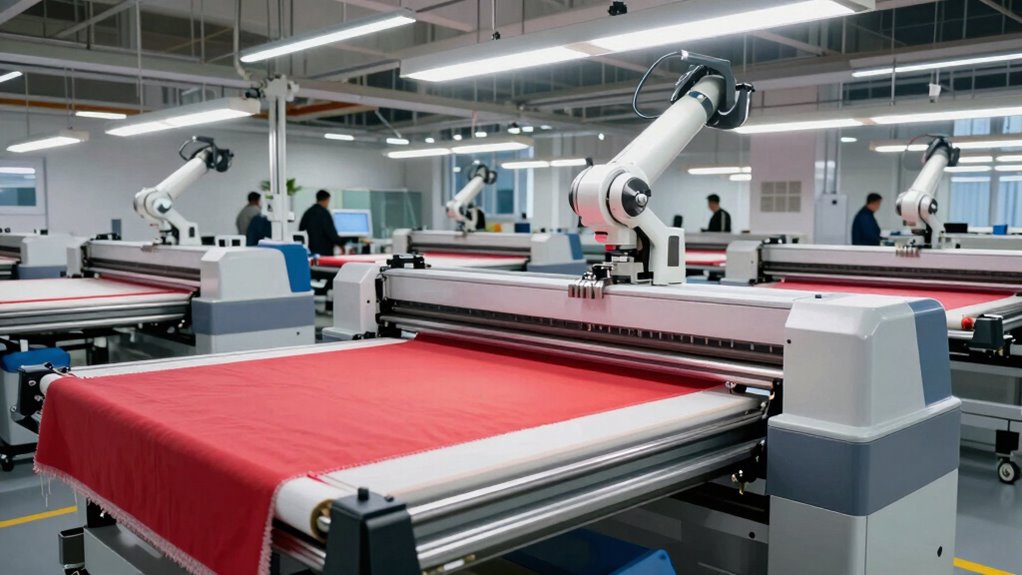
Have you ever wondered how fabric factories cut large rolls of material quickly and accurately? It’s all thanks to advanced fabric technology and specialized cutting machines designed for efficiency and precision. These machines have revolutionized textile workrooms by enabling workers to handle massive volumes of fabric without sacrificing accuracy, which is essential for maintaining quality standards. Modern fabric cutting machines incorporate sophisticated technology such as computer-aided design (CAD) systems, which allow you to input patterns and optimize fabric usage, reducing waste and saving costs.
Advanced fabric technology and CAD systems enable fast, precise cuts while minimizing waste and maintaining high quality standards.
When it comes to cutting safety, these machines are built with multiple safety features to protect operators during operation. Safety guards, emergency stop buttons, and automatic shut-offs are standard in most models, ensuring that you can work confidently without risking injury. Training is vital to understand how to operate these machines safely; once you’re familiar with protocols, you can minimize hazards and avoid accidents. Additionally, many fabric cutting machines now include sensors that detect abnormalities or misalignments, stopping the machine immediately if something isn’t right. This not only protects the operator but also maintains the integrity of the cut fabric.
Using fabric technology, these machines can perform various cutting methods, such as straight, rotary, or laser cutting, each suited for different types of fabric and project requirements. Rotary cutters, for example, are great for soft textiles and allow for smooth, continuous cuts, while laser cutters handle delicate or detailed designs with high precision. These options give you the flexibility to choose the best method for your specific needs, ensuring efficiency and quality in every project.
Advanced fabric technology also plays a crucial role in improving overall workflow and minimizing material waste, helping to reduce costs and increase sustainability. Automation plays a significant role in modern fabric cutting machines. You can set them up to run unattended for long periods, increasing productivity and freeing you to focus on other tasks. The integration of digital systems also means you can easily adjust settings, switch between different patterns, or make real-time modifications without disrupting workflow. This seamless operation minimizes errors, improves consistency, and helps meet tight deadlines.
In essence, fabric technology and cutting safety are the backbone of efficient textile workrooms. These machines combine innovative features, safety measures, and automation to create a workflow that’s fast, accurate, and safe. Whether you’re working with large fabric rolls or delicate materials, understanding how these machines operate empowers you to produce high-quality textiles while maintaining a safe work environment.

VEVOR Fabric Cutter, 750W High-Speed Straight Knife Cloth Cutting Machine, 9.8" Alloy Steel Blade, Industrial Fabric Cutting Machine with Automatic Knife Sharpen, for Multilayer Fabric Leather Cloth
Powerful 750W Fabric Cutting: This industrial-grade corded electric fabric cutter features a 750W series-excited pure copper motor for…
As an affiliate, we earn on qualifying purchases.
As an affiliate, we earn on qualifying purchases.
Frequently Asked Questions
What Safety Precautions Are Necessary When Operating Fabric Cutting Machines?
When operating fabric cutting machines, you need to prioritize safety by wearing the proper safety gear, like gloves and eye protection, to prevent injuries. Always follow emergency procedures, such as knowing how to quickly shut off the machine and access first aid. Stay alert and focused, keep hands clear of moving parts, and guarantee the workspace is clean and well-lit. These precautions help protect you and ensure safe, efficient operation.
How Do Fabric Cutting Machines Handle Different Fabric Weights?
You can handle different fabric weights with ease by adjusting the fabric weight adjustment settings on your machine. This guarantees the blade cuts smoothly through light or heavy materials. Using precise cutting techniques tailored to each fabric type keeps your cuts accurate and clean. Think of it as fine-tuning your tools to match the task, so your work remains excellent regardless of fabric weight, preventing mishaps and reducing waste.
Can Fabric Cutting Machines Be Customized for Specific Textile Types?
Yes, fabric cutting machines can be customized for specific textile types. You can adjust settings and blades to match different fabric materials, guaranteeing the best cutting accuracy. By selecting the right blade type and pressure, you improve accuracy and reduce fabric waste. Customization allows you to handle delicate or thick textiles effectively, making your work more efficient. This flexibility ensures that your cutting process is tailored to each fabric’s unique properties, enhancing overall quality.
What Is the Typical Lifespan of a Fabric Cutting Machine?
A fabric cutting machine typically lasts between 5 to 10 years, depending on usage and maintenance. You should regularly check the cutting accuracy and guarantee the blades are sharp to prolong its lifespan. Using high-quality fabric materials and proper calibration helps prevent unnecessary wear and tear. Proper upkeep and timely repairs keep your machine running smoothly, ensuring consistent cutting accuracy and extending its overall durability.
How Do Maintenance and Cleaning Impact Machine Performance?
Regular maintenance and cleaning greatly enhance your fabric cutting machine’s performance. You should regularly check and perform machine calibration to guarantee precision, avoiding miscuts. Lubricant maintenance is essential; it reduces friction and wear, keeping the machine running smoothly. Clean debris and fabric fibers after each shift to prevent buildup that can impair operation. Proper upkeep minimizes downtime, extends your machine’s lifespan, and maintains ideal cutting accuracy.
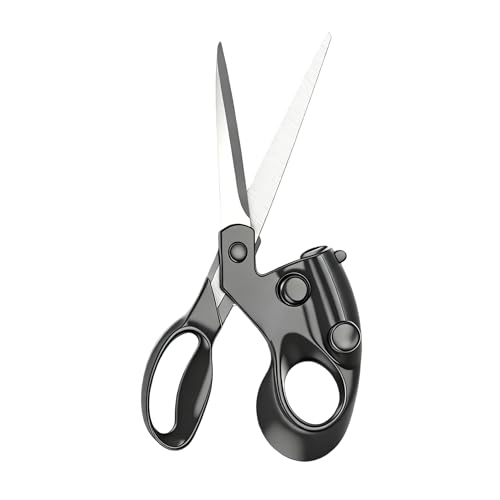
QPHYFXF Professional Laser Guided Fabric Scissors, Laser Line for Fast Direct Cutting, Ergonomic Handle for Fabric, Paper, and Crafts
【Laser Guide for Ultimate Straight Cuts】Equipped with a built-in red laser projection system, these scissors project a bright…
As an affiliate, we earn on qualifying purchases.
As an affiliate, we earn on qualifying purchases.
Conclusion
So, next time you’re battling fabric tears or endless cuts, remember—your trusty fabric cutting machine might just be the unsung hero of your workroom. Sure, it’s just a machine, but it’s also your silent partner, silently making your life easier. Ironically, with all the tech, it’s often the simplest tools that save the day. Embrace it — after all, what’s a workroom without a little cutting-edge help?

SINGER Momento 24" Smart Powerful Cutting Machine with WiFi Connectivity, Color LCD Touch Screen, Built in LED Light Display for Crafters and Sewists
EXCEPTIONAL FABRIC CUTTING PRECISION: The SINGER MOMENTO is specifically designed for fabric crafters and multi-material projects. With advanced…
As an affiliate, we earn on qualifying purchases.
As an affiliate, we earn on qualifying purchases.

Fiskars 45mm Rotary Cutter for Fabric with Ergonomic Loop Grip, Premium Steel Rotary Fabric Cutter Blade for Precise Cuts, Arts and Crafts, Sewing Supplies and Quilting Tools
SEWING, ARTS, AND CRAFTS STAPLE: This Fiskars Quick Change Rotary Cutter can cut multiple layers of fabric, felt,…
As an affiliate, we earn on qualifying purchases.
As an affiliate, we earn on qualifying purchases.