
TL;DR

Get your wardrobe favorites delivered free with Prime
- Fast, free delivery on millions of items
- Prime Video, Amazon Music and more included
- Member-only deals all year
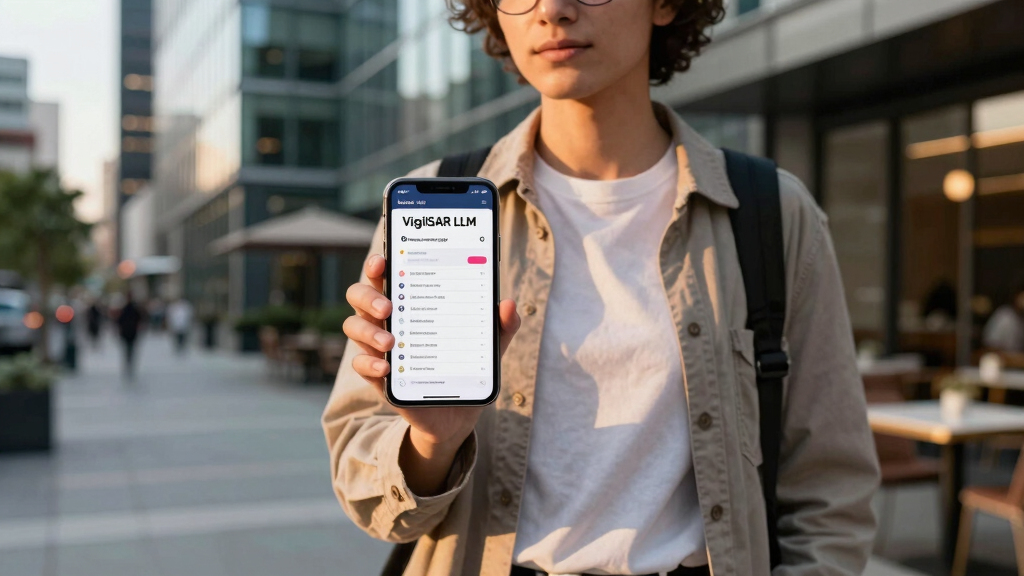
Moonshot’s Kimi K3 entered VigilSAR’s public LLM leaderboard at No. 3, scoring 64.65 and landing in Band B. The result places it above every GPT and Gemini entry tested, although VigilSAR says readers should compare confidence bands rather than treat rank numbers as exact capability differences.
Moonshot’s Kimi K3 debuted at No. 3 on VigilSAR’s public language-model leaderboard after scoring 64.65 in Band B in an evaluation of reasoning, reporting and restraint for defense intelligence, surveillance and reconnaissance work. The placement puts Kimi K3 above every GPT and Gemini entry listed on the board, giving technical teams a new comparison point for models intended for sensitive analytical tasks.
VigilSAR evaluated 14 language models across 300 private tasks, with the published standings dated July 17, 2026. Aggregate scores are public, but the underlying task set is withheld to reduce the chance that model developers can train directly on the test material.
The current leader is claude-fable-5, which scored 67.77 in Band A and appears as the leaderboard’s pinned reference row. Kimi K3 sits in Band B, while the GPT-5.x entries occupy Bands C and D and Gemini entries appear in Bands E and F. Those comparisons apply only to the models and test configuration shown by VigilSAR; they do not establish performance across every possible defense or intelligence workflow.
VigilSAR also uses a separate held-out task set and publishes the gap between public and held-out results for each model. The operators say that gap can help identify possible memorization or benchmark exposure. The board pairs capability scores with cost per correct answer, while one locally runnable open model receives a “sovereign-deployable” designation reflecting deployment control.
Kimi Challenges Closed-Model Leaders
Kimi K3’s result matters because it places a Moonshot model ahead of the tested GPT and Gemini entries on a benchmark built around specialized analyst behavior rather than general knowledge questions. For organizations comparing models for restricted or high-consequence environments, the result may broaden the field of candidates worth testing.
The ranking also highlights the difference between a headline score and a deployment decision. Defense-ISR systems may require accurate reasoning, concise reporting, restraint when evidence is weak, predictable costs and acceptable hosting arrangements. VigilSAR’s inclusion of held-out performance and answer economics gives buyers more information than a single aggregate score, though it cannot replace testing against their own operational requirements.
As an affiliate, we earn on qualifying purchases.
A Benchmark Built for ISR
VigilSAR is a defense-ISR software product that created the benchmark to evaluate models considered for use near its own systems. Its operators describe the central premise as “Vendor claims are not evidence.” They say no model vendor pays for placement and that the ranking reflects models they use or may evaluate themselves.
The leaderboard favors statistical bands over rank numbers because confidence intervals for models in the same band can overlap. That means a model shown one place above another may not have a reliable performance advantage. A pinned reference model, published confidence intervals and reported held-out gaps are intended to keep comparisons consistent and expose possible weaknesses hidden by a simple ordered list.
“Vendor claims are not evidence.”
— VigilSAR benchmark operators
Private Tasks Limit Outside Scrutiny
The 300-task evaluation set remains private, so outside researchers cannot inspect the individual prompts, expected answers or full mix of scenarios. That secrecy may reduce training contamination, but it also limits independent reproduction and external review of how well the tasks represent real intelligence work.
It is also unclear how Kimi K3 would perform under different prompts, tool access or deployment settings. The public result does not establish whether the model meets any government accreditation, security or procurement standard. No information provided with the ranking confirms operational adoption of Kimi K3 by VigilSAR or a defense organization.
Held-Out Results Face Further Review
Readers should watch for future leaderboard updates, changes in confidence bands and any movement between public and held-out scores as more models are evaluated. Independent testing by other organizations could clarify whether Kimi K3’s Band B performance carries across different ISR task sets and operational conditions.
VigilSAR may also add models or rerun entries as providers update their systems. Because the board is a dated comparison, Kimi K3’s No. 3 position should be treated as a July 17 snapshot, not a permanent standing.
Key Questions
What score did Kimi K3 receive?
Kimi K3 scored 64.65, placing it third overall and in Band B on the VigilSAR leaderboard dated July 17, 2026.
Did Kimi K3 beat GPT and Gemini models?
On this specific evaluation, yes. Kimi K3 ranked above every GPT and Gemini entry listed. The result applies to VigilSAR’s private defense-ISR tasks and should not be read as proof of superiority across all uses.
Why does VigilSAR use bands?
VigilSAR says confidence intervals can overlap, making adjacent rank numbers appear more exact than the evidence supports. Bands group models whose measured performance may be statistically close.
Can researchers inspect the benchmark tasks?
No. VigilSAR publishes aggregate results, confidence intervals and held-out gaps, but keeps the task set private to reduce the risk of models training on the evaluation material.
Does the ranking prove Kimi K3 is ready for defense use?
No. The result is comparative benchmark evidence, not a security certification or confirmation of field deployment. Organizations would still need to test reliability, data handling, hosting and operational fit under their own requirements.
Source: Thorsten Meyer AI
Source: Thorsten Meyer AI
Halloween Picks
halloween
As an affiliate, we earn on qualifying purchases.