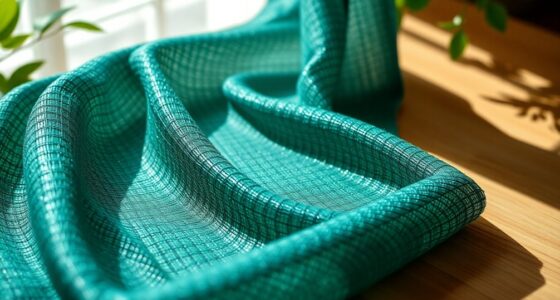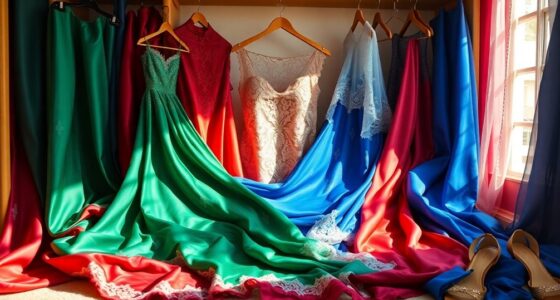

You can support circularity by choosing biomaterials like mycelium leather and mushroom fabrics, which promote biodegradability and reduce waste. These innovative materials grow on organic waste, minimizing environmental impact while mimicking traditional leather with durability and eco-friendliness. They help close the loop in production and disposal, encouraging sustainable practices. By embracing these options, you contribute to a regenerative economy that focuses on reuse and responsible resource management—you’ll discover more about their potential as you explore further.
Key Takeaways
- Mycelium leather and mushroom fabrics are biodegradable biomaterials that support circular economy principles by reducing waste and enabling reuse.
- These materials are produced from fungi grown on organic waste, transforming discarded resources into sustainable products.
- Mushroom-based biomaterials mimic traditional leather, offering durable, flexible, and eco-friendly alternatives for various industries.
- They require less water and energy, lowering environmental impact and promoting responsible consumption and production.
- Supporting mushroom biomaterials accelerates innovation, fostering regenerative practices and a shift toward sustainable, circular systems.
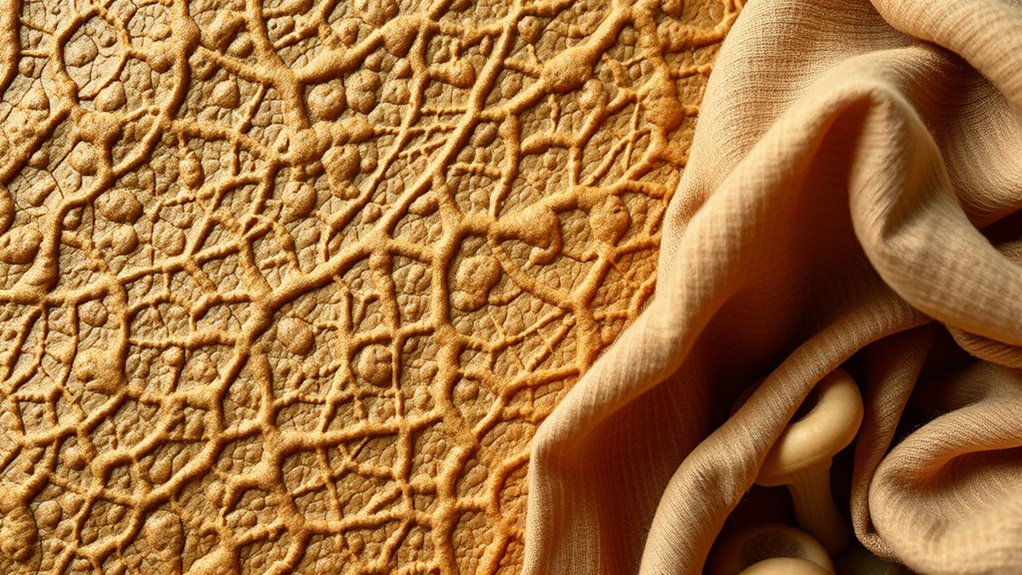
Biomaterials are transforming the way we approach sustainability by enabling circularity in various industries. When you explore innovative materials like mycelium leather and mushroom fabrics, you’ll see how they represent a notable shift toward eco-friendly alternatives. Mycelium sustainability, in particular, plays a vital role here. It involves harnessing the natural growth process of fungi to produce materials that are biodegradable, renewable, and require minimal resources. Unlike traditional leather or synthetic fabrics, these mushroom-based materials can be cultivated quickly and locally, reducing supply chain emissions and waste. As a result, they fit perfectly within the circular economy model, where waste is minimized, and materials are continuously reused or repurposed.
Biomaterials like mycelium leather promote sustainability through biodegradability and circular reuse, transforming industries with eco-friendly innovation.
Mushroom innovation doesn’t stop at just creating sustainable textiles; it extends to revolutionizing how industries think about waste and resource management. You can appreciate that fungi grow on organic waste, turning what would be discarded into valuable materials. This process not only reduces landfill waste but also decreases reliance on environmentally damaging extraction methods like mining or petroleum-based manufacturing. When you choose products made from mushroom fabrics or mycelium leather, you’re supporting a system that emphasizes regenerative practices. These materials are often produced using less water and energy compared to conventional counterparts, making them a more responsible choice for eco-conscious consumers and brands alike.
The beauty of mushroom innovation lies in its versatility. You can find mycelium-based products that mimic leather, offering durability, flexibility, and aesthetic appeal without the ethical and environmental concerns associated with animal farming. Likewise, mushroom fabrics can be crafted into various textures and finishes, suitable for fashion, furniture, and packaging. This adaptability demonstrates how biomaterials can seamlessly replace traditional materials while closing the loop in production and disposal. Since these materials are biodegradable, they decompose naturally at the end of their lifecycle, returning nutrients to the soil and avoiding long-term pollution.
Furthermore, the development of biodegradable materials like mushroom fabrics encourages a shift toward sustainable consumption, making environmentally friendly choices more accessible. As you become more aware of these advancements, you’ll realize that integrating mycelium sustainability and mushroom innovation into your choices can markedly impact the environment. Supporting brands that adopt these biomaterials encourages further research and development, accelerating the transition to a circular economy. Ultimately, embracing mushroom-based materials aligns your values with sustainable practices, proving that innovation in biomaterials isn’t just about new products but fostering a more regenerative and responsible way of living.
Frequently Asked Questions
How Does Mycelium Leather Compare in Durability to Traditional Leather?
You’ll find that mycelium leather is quite durable, though it may not match traditional leather’s longevity in heavy-use cases. Its cost comparison tends to be lower, making it a more affordable eco-friendly option. Aesthetic appeal varies, but many appreciate its unique, natural look. With proper care, mycelium leather can last well, offering a sustainable alternative that balances durability, cost, and style for your needs.
Are Mushroom Fabrics Suitable for All Types of Clothing?
Mushroom fabrics are quite versatile for different clothing types, thanks to their material flexibility and fashion versatility. You can use them for casual wear, accessories, or even more structured garments. However, they may not suit high-stress items like activewear or heavy-duty workwear as well as traditional fabrics. Overall, their adaptability makes them a sustainable choice for many fashion applications, but consider their specific properties for your needs.
What Is the Environmental Impact of Cultivating Mycelium and Mushrooms?
Cultivating mycelium and mushrooms has a surprisingly tiny environmental footprint, almost like it’s barely there! The biomaterial lifecycle involves low cultivation energy consumption, which means less carbon emissions and less strain on resources. This sustainable process reduces waste and minimizes pollution, making it a green choice for eco-conscious creators. You can embrace mushroom fabrics knowing you’re supporting a more sustainable future with minimal environmental impact.
Can These Biomaterials Be Recycled or Reused After Use?
Yes, these biomaterials have recycling potential and can often be reused. You can implement reuse strategies like composting or upcycling, as mycelium and mushroom fabrics are biodegradable and environmentally friendly. After use, you might consider breaking down the materials naturally or repurposing them into new products. Their sustainable nature supports a circular lifecycle, reducing waste and minimizing environmental impact, making them an excellent choice for eco-conscious applications.
How Scalable Are Mycelium and Mushroom-Based Materials for Mass Production?
You can scale mycelium and mushroom-based materials for mass production, but scaling challenges exist. You’ll need to address issues like consistent quality, cost-effective manufacturing, and supply chain logistics. Market adoption is growing, but it’s gradual as industries adapt to these innovative biomaterials. With technological advancements and increased demand, these materials are becoming more viable for large-scale use, making them a promising sustainable alternative.
Conclusion
By choosing materials like mycelium leather, you contribute to a circular economy that reduces waste and conserves resources. Imagine switching to mushroom-based fabrics for your fashion line—you’re not just making stylish choices, but also supporting sustainable practices. For instance, a startup using mycelium leather could demonstrate how innovative biomaterials can replace traditional leather, inspiring others to follow suit. Together, these choices create a more sustainable future where biomaterials play a crucial role.