Emerging plant-based fabrics like algae, mushroom (mycelium), and banana fibers offer eco-friendly options for your wardrobe. Algae fabrics are renewable, biodegradable, and absorb CO₂, while mushroom leather helps reduce resource use and animal impact. Banana fibers, made from agricultural waste, support the circular economy and need less water. By choosing these sustainable textiles, you contribute to lowering environmental harm—and there’s more to discover about their benefits and applications.
Key Takeaways
- Algae fabrics are sustainable, biodegradable, and absorb CO₂, reducing environmental impact compared to traditional textiles.
- Mushroom leather (mycelium) is a resource-efficient, animal-friendly alternative that minimizes greenhouse gas emissions.
- Banana fibers utilize agricultural waste, promoting circular economy practices and reducing water and chemical use.
- These plant-based fabrics lower reliance on conventional materials like cotton and polyester, supporting eco-conscious fashion.
- Overall, emerging plant-based textiles contribute to climate change mitigation and promote sustainable sourcing and manufacturing.
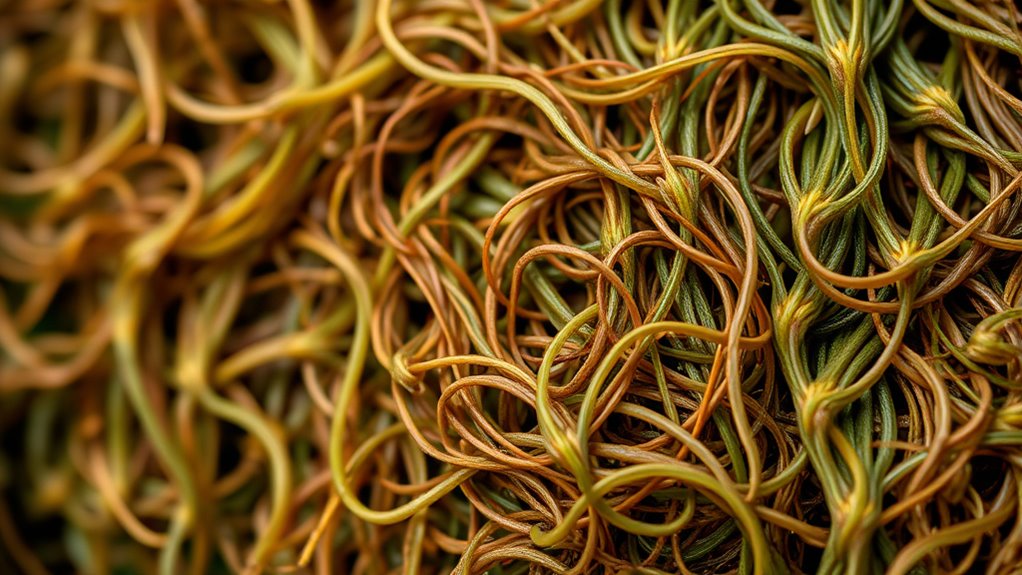
Have you ever wondered how sustainable fashion is evolving? One of the most exciting developments is the rise of plant-based fabrics made from algae, mushrooms, and bananas. These innovative materials are transforming the industry by offering eco-friendly alternatives that prioritize sustainable sourcing and deliver significant environmental benefits. As consumers become more conscious of their choices, designers and brands are turning to these natural fibers to reduce reliance on traditional textiles like cotton and polyester, which often have high environmental footprints.
Algae-based fabrics, for instance, are derived from seaweed, a fast-growing and renewable resource. Harvesting algae requires minimal land use and water, making it a highly sustainable sourcing option. Plus, algae cultivation absorbs carbon dioxide from the atmosphere, helping to mitigate climate change. The environmental benefits extend beyond just the sourcing process; algae fabrics are biodegradable and require less energy to produce than conventional textiles. This means lower carbon emissions and reduced waste in landfills, aligning perfectly with the goals of sustainable fashion.
Algae fabrics are sustainable, biodegradable, and energy-efficient, making them a eco-friendly choice for fashion’s future.
Mushroom leather, made from mycelium—the root structure of fungi—offers another promising alternative. It’s grown quickly and can be produced with a fraction of the resource inputs needed for traditional leather. The process involves cultivating mycelium in controlled environments, which minimizes water and land use. As a result, mushroom-based fabrics not only support sustainable sourcing but also reduce the environmental impact associated with animal agriculture and leather tanning. This eco-conscious approach benefits the planet by cutting down greenhouse gases and chemical runoff, common issues linked to conventional leather production.
Banana fibers are another innovative solution. They come from the waste of banana cultivation, utilizing parts of the plant that would otherwise be discarded. This repurposing turns agricultural waste into valuable fabric, promoting a circular economy. Using banana fibers reduces the need for synthetic fibers, which are typically derived from fossil fuels and contribute to pollution. The environmental benefits of banana-based textiles include lower water consumption during production and the elimination of harmful dyes and chemicals. They’re naturally biodegradable, further supporting eco-friendly disposal and reducing long-term waste.
Additionally, the development of these plant-based fabrics is driven by advancements in sustainable sourcing, which aim to minimize environmental impact while meeting consumer demand for eco-friendly products.
Frequently Asked Questions
What Are the Environmental Impacts of Cultivating Algae, Mushrooms, and Bananas for Textiles?
You might find that cultivating algae, mushrooms, and bananas for textiles impacts the environment by affecting biodiversity preservation and water footprint. Algae cultivation generally uses less land and water, helping conserve biodiversity, but large-scale farming can still disrupt ecosystems. Mushrooms and bananas require significant water and space, potentially stressing local resources. Proper practices can minimize these impacts, ensuring sustainable growth that balances textile needs with environmental health.
How Do These Fabrics Compare in Durability to Traditional Textiles?
You’ll find that these plant-based fabrics generally offer decent fabric longevity, but they often fall short of traditional textiles in textile resilience. Algae, mushroom, and banana fibers can be durable, but their longevity depends on processing methods and usage conditions. While some are surprisingly resilient, they may need extra care to maintain their strength over time. Overall, they’re promising eco-friendly options, but might not yet match the durability of conventional fabrics.
Are There Any Allergenic Concerns With Plant-Based Fabrics?
You might experience allergenic responses or fabric sensitivities with plant-based fabrics, but they are generally rare. Some individuals could react to specific fibers or processing chemicals used, so it’s wise to test a small patch first. If you have known sensitivities, check for hypoallergenic options or consult the manufacturer. Overall, plant-based fabrics tend to be well-tolerated, but staying aware of your unique sensitivities can help prevent any unwanted reactions.
What Is the Cost Difference Between Plant-Based Fabrics and Conventional Materials?
You’ll find that plant-based fabrics generally cost more than conventional materials due to a higher cost of production and limited market adoption. A thorough cost analysis shows these fabrics often require specialized processing, which raises expenses. As market adoption increases and production scales up, prices are expected to decrease, making them more competitive. So, while initially pricier, their eco-friendly benefits may justify the investment over time.
How Scalable Is the Production of Algae, Mushroom, and Banana Fibers?
Think of scaling algae, mushroom, and banana fibers as building a bridge over uncharted waters; it’s promising but faces scaling challenges. Production is still emerging, and supply chains need to grow more robust to meet demand. While innovations are underway, large-scale manufacturing requires overcoming hurdles like consistent quality, resource availability, and cost-efficiency. So, it’s promising, but you’ll see gradual progress before these fibers flood the market.
Conclusion
As you explore these emerging plant-based fabrics, imagine running your fingers through fields of lush algae, soft mushroom mycelium, and ripe banana fibers, each offering a new texture and color palette. These sustainable materials paint a vibrant picture of a greener future, where nature’s bounty transforms into stylish, eco-friendly textiles. Embrace the possibility of wearing a piece of the Earth’s garden—where innovation meets sustainability, and every fiber tells a story of renewal.