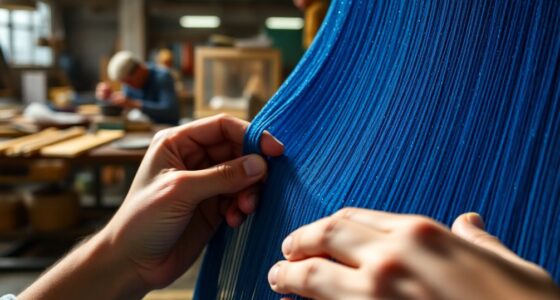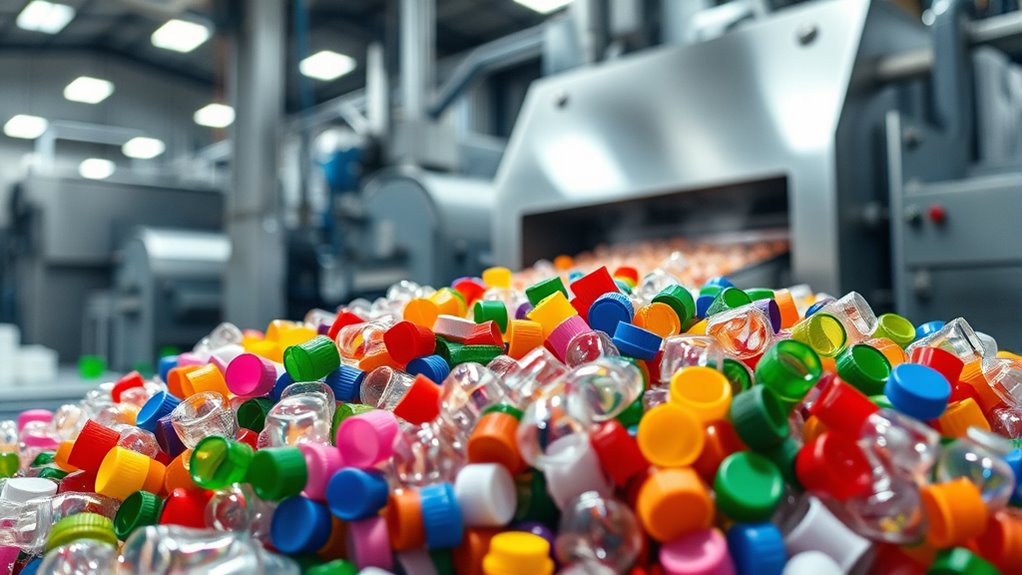

Recycled polyester is made by collecting, cleaning, and shredding plastic waste like bottles, then melting it into fibers. These fibers are spun into yarn, used to create fabrics for clothing, accessories, and home goods. This process reduces waste, lowers greenhouse emissions, and conserves resources compared to traditional polyester. With ongoing technological advances, recycled polyester continues to improve in quality and applications. Stay with us to discover how this innovative approach is transforming the textile industry.
Key Takeaways
- Recycled polyester is produced by collecting, cleaning, shredding, melting, and spinning plastic waste into fibers.
- The fibers are woven or knitted into fabrics used for clothing, accessories, and home furnishings.
- This process reduces plastic waste in landfills and oceans, lowering environmental impact and conserving resources.
- Technological advancements improve fiber quality, durability, and expand sustainable applications across industries.
- Using recycled polyester supports a circular economy and promotes eco-friendly consumer and manufacturing practices.
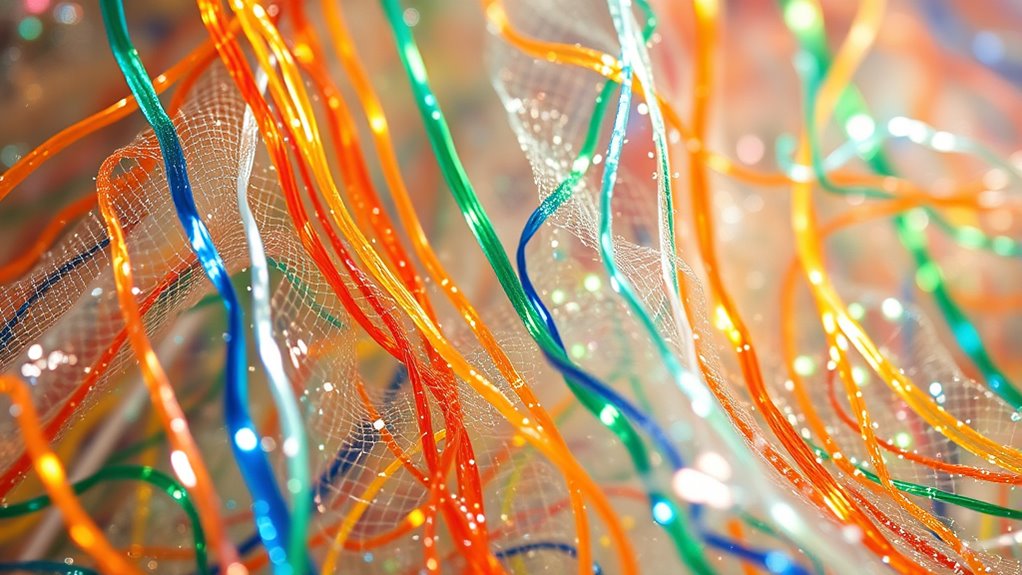
Have you ever wondered how sustainable fabrics are made? The process behind recycled polyester is a prime example of sustainable manufacturing that aims to reduce environmental impact while creating versatile textiles. Instead of relying on virgin petroleum-based fibers, recycled polyester transforms plastic waste—like used bottles and packaging—into new fabric. This approach helps divert tons of plastic from landfills and oceans, turning what would be pollution into a valuable resource. The journey begins with collecting and sorting plastic waste, which is then cleaned thoroughly to remove labels, adhesives, and contaminants. Once cleaned, the plastic is shredded into small flakes, making it easier to process. These flakes are then melted down at high temperatures into a thick liquid, which is spun into fibers through a process similar to traditional spinning methods. The resulting yarn can be woven or knitted into fabrics suitable for clothing, accessories, and even home furnishings. Additionally, the development of fiber technology has led to recycled polyester fibers that match or surpass the performance of virgin fibers, broadening their application scope.
The significance of recycled polyester lies in its ability to reduce the environmental impact associated with conventional textile production. Traditional polyester manufacturing consumes significant amounts of fossil fuels and releases greenhouse gases, contributing to climate change. By opting for recycled polyester, you’re helping to lower the demand for virgin resources, decreasing emissions and energy consumption. Additionally, since recycled polyester utilizes existing plastic waste, it helps combat the global plastic pollution crisis. This innovative material also requires less water and fewer chemicals during production compared to natural fibers like cotton, which often need intensive irrigation and chemical treatments. As a result, the overall ecological footprint of recycled polyester is considerably smaller.
Moreover, the manufacturing process of recycled polyester is continually improving to enhance sustainability. Advances in technology allow for higher-quality fibers with better durability and performance, making recycled polyester suitable for a wide range of applications. Many brands now prioritize recycled materials, recognizing that consumers are increasingly seeking eco-friendly alternatives. When you choose products made from recycled polyester, you’re supporting a circular economy—where waste is repurposed into new products instead of ending up in landfills or the ocean. This shift not only reduces waste but also encourages manufacturers to innovate and adopt greener practices. Overall, recycled polyester exemplifies how sustainable manufacturing can transform a problematic waste stream into a valuable, eco-conscious textile, helping you make more responsible choices in fashion and beyond.
Frequently Asked Questions
What Is the Environmental Impact of Recycling Polyester?
Recycling polyester helps reduce marine pollution by keeping plastic waste out of oceans, which protects marine life. It also conserves resources because it uses less energy compared to producing new polyester from raw materials. By choosing recycled polyester, you support sustainable practices and lessen environmental impact, making a positive difference in resource conservation and helping to keep our oceans cleaner.
How Does Recycled Polyester Compare in Durability to Virgin Polyester?
Like the legendary durability of Hercules, recycled polyester matches virgin polyester in fiber strength, ensuring your garments stay strong over time. You’ll find that fabric longevity remains consistent, whether made from recycled or virgin fibers. Modern recycling processes have advanced to produce fibers that resist wear and tear just as well, so you don’t have to compromise on quality when choosing eco-friendly options. Your clothing will last, and so will your commitment to sustainability.
Are There Any Health Concerns With Recycled Polyester Fibers?
You might wonder about synthetic fiber safety and chemical exposure with recycled polyester fibers. Generally, they’re safe for everyday wear, as manufacturing processes remove most harmful chemicals. However, some concerns exist about residual chemicals from the recycling process. To minimize risks, wash new garments thoroughly before wearing. Overall, recycled polyester is considered safe for most people, but sensitive individuals should stay informed about potential chemical residues.
Can Recycled Polyester Be Recycled Again After Use?
You can definitely recycle recycled polyester again, but it’s not always a walk in the park. The recycling process can sometimes impact fiber quality, making it less durable over time. While the fibers can be melted down and reprocessed, multiple cycles may degrade their strength. So, it’s a bit of a double-edged sword, but with advances in technology, recycling efforts keep getting better.
What Are the Main Challenges in Producing Recycled Polyester?
You face challenges in producing recycled polyester, mainly due to chemical contamination and maintaining fiber quality. Chemical contaminants from previous uses can complicate the recycling process, requiring extensive cleaning. Additionally, ensuring the recycled fibers meet the same durability and softness standards as virgin polyester demands advanced technology. These hurdles can affect the overall quality and sustainability of the recycled product, making it essential to improve recycling methods for better results.
Conclusion
By choosing recycled polyester, you’re weaving hope into the fabric of our planet. Every thread you wear becomes a symbol of transformation—turning discarded plastic into vibrant, life-affirming textiles. Like a phoenix rising from the ashes, this material embodies renewal and resilience. So next time you slip into your favorite outfit, remember you’re part of a powerful cycle—helping to clear the clutter and paint a brighter, greener future with every sustainable choice you make.