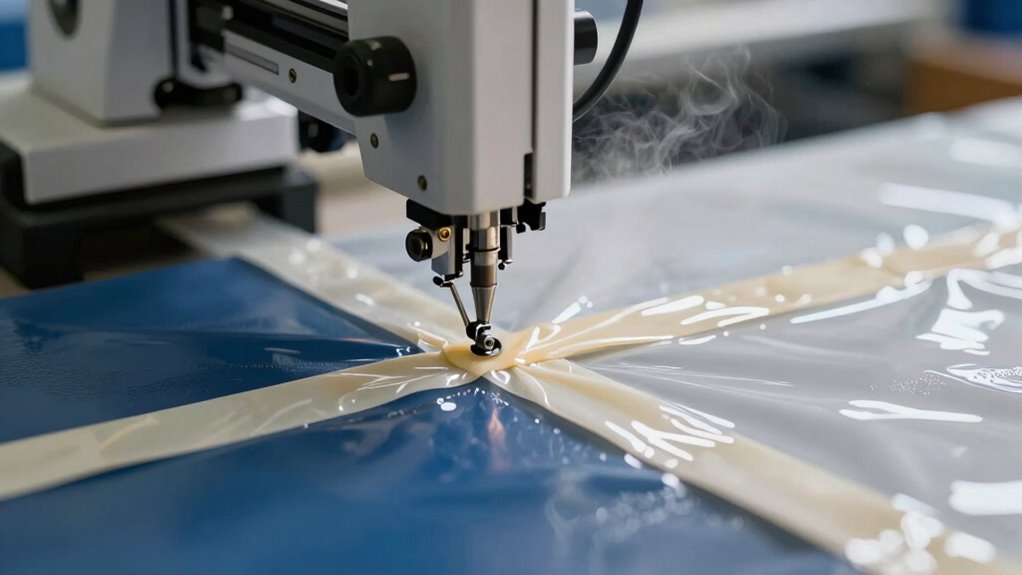

Seam sealing machines use heat or ultrasonic technology to bond layers of technical fabrics, creating waterproof and durable seams. You guide the fabric through heated or ultrasonic elements that activate sealing agents, ensuring strong, flexible joins. Proper maintenance, like regular cleaning and calibration, is essential to keep the machine performing well. Understanding the technology and materials helps you troubleshoot issues and produce high-quality results. Keep exploring, and you’ll discover even more about mastering these essential machines.
Key Takeaways
- Seam sealing machines bond fabric layers using heat or ultrasonic technology for waterproof, durable seams in technical fabrics.
- Proper maintenance and calibration ensure consistent, high-quality seals and prevent common defects.
- Understanding sealing materials and technology helps optimize process efficiency and seam durability.
- Regular inspection and adjustment address issues like fabric misalignment and equipment wear.
- Mastery of machine operation and upkeep guarantees waterproof, seamless products that meet quality standards.
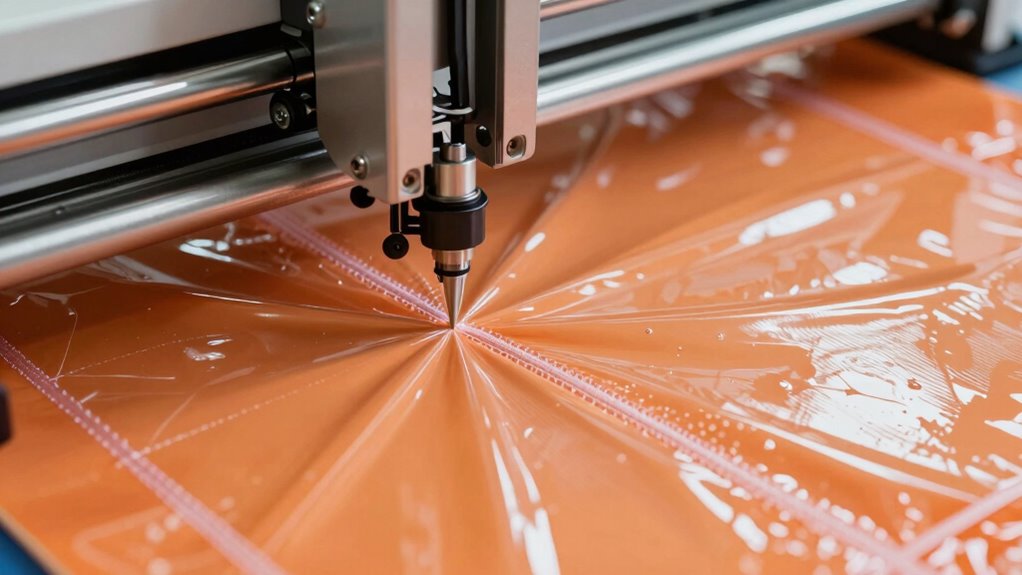
When you operate a seam sealing machine, you’re fundamentally guiding the fabric through a process where heated or ultrasonic elements activate the sealing agent, which bonds the fabric layers together. The precision of this technology guarantees that seams are both flexible and strong, which is essential for products subjected to outdoor conditions or heavy use. To maintain the integrity of your sealed seams, machine maintenance becomes indispensable. Regularly cleaning the sealing surfaces, checking for worn parts, and calibrating temperature controls help you avoid defects like incomplete sealing or weak bonds. Proper machine maintenance also extends the lifespan of your equipment, reducing downtime and repair costs. Incorporating sustainable practices into your maintenance routine can further enhance the longevity and eco-friendliness of your equipment.
Adopting a routine for machine maintenance isn’t complicated, but it’s necessary. You should routinely inspect for fabric buildup, oil leaks, or accumulated debris that could interfere with proper sealing. Ensuring the correct temperature settings are maintained is critical, especially since different fabrics or adhesives may require specific heat levels. Overheating can damage fabrics, while insufficient heat can lead to weak seals. Regular calibration of the machine’s controls guarantees consistent performance, which directly impacts the quality of the finished product. Additionally, understanding how seam sealing technology works can help you identify potential issues before they affect your production line. Learning about sealing process nuances can also help optimize your workflow and prevent common errors. Familiarity with the sealing process can also aid in troubleshooting and improving overall efficiency. Gaining knowledge about the sealing materials used can further improve the durability of your sealed seams and prevent issues like delamination or peeling.
Familiarity with seam sealing technology allows you to troubleshoot issues more effectively. For instance, if you notice inconsistent sealing, it might be due to misaligned fabric or worn sealing elements. Addressing these issues quickly through proper machine maintenance prevents defective products and guarantees each seam remains waterproof and durable. When you master both the technology and routine upkeep, you can produce seamless, high-quality products that meet rigorous standards.

GEAR AID Seam Grip FC Fast Cure Sealant for Sealing Seams on Tents, Rainflies, Shelters, Awnings, Tarps and Pop-ups Made of Nylon, Vinyl, Clear, 2 fl oz
- Seals up to 60 ft of seams: Water-based sealant for tents and tarps
- Fast curing time: Cures in 2 hours at room temperature
- Versatile fabric compatibility: Suitable for nylon, polyester, and canvas
As an affiliate, we earn on qualifying purchases.
As an affiliate, we earn on qualifying purchases.
Frequently Asked Questions
What Maintenance Is Required for Seam Sealing Machines?
You need to regularly maintain your seam sealing machine by checking and performing sealing machine calibration to guarantee consistent performance. Keep the machine clean and free of debris, especially around the sealing head. Regularly inspect and replace seam sealing adhesives to prevent clogs and ensure strong seals. Also, lubricate moving parts as recommended by the manufacturer. Proper maintenance guarantees peak sealing quality and extends your machine’s lifespan.
How Do Different Fabric Types Affect Sealing Process?
Different fabric types impact the sealing process because fabric elasticity influences how the seam bonds. For stretch fabrics, you need seam bonding techniques that allow flexibility without breaking the seal. Non-elastic fabrics typically require a stronger, more rigid seal. Adjust your machine settings accordingly, and choose the right sealing method—hot air, ultrasonic, or adhesive—to guarantee a durable, watertight bond tailored to each fabric’s properties.
What Safety Precautions Should Operators Follow?
You should prioritize safety by consistently following proper operator training and always wearing safety gear. Always keep your focus on the machine, avoid distractions, and understand emergency shut-off procedures. Be cautious of hot surfaces and moving parts, and guarantee the workspace is clear of hazards. Regularly inspect the equipment, maintain safety protocols, and remind yourself that proper safety measures protect both you and the quality of your work.
Can Machines Be Customized for Specific Fabric Thicknesses?
Yes, machines can be customized for specific fabric thicknesses. You should consider fabric compatibility when selecting or adjusting the machine. Proper machine calibration is essential to guarantee seamless sealing without damaging delicate fabrics or failing to seal thicker materials. By fine-tuning the settings based on fabric type and thickness, you can achieve ideal results, ensuring the seals are strong and consistent across various technical fabrics.
What Are Common Troubleshooting Issues During Sealing?
You might face troubleshooting issues like sealing accuracy problems or inconsistent seals. Make certain your machine is properly calibrated, as incorrect calibration can cause weak or uneven seals. Check the sealing temperature, pressure, and speed settings regularly, and clean the sealing bars to prevent debris buildup. If issues persist, inspect for worn parts or misaligned components, and perform routine maintenance to keep your seam sealing machine functioning at its best.
Conclusion
By mastering seam sealing machines, you unleash the power to create waterproof, durable, and virtually indestructible technical fabrics. Imagine your gear being so resilient that no rain, wind, or wear can ever compromise it—your creations become legendary. With this knowledge, you hold the key to revolutionizing outdoor gear, turning simple fabrics into unstoppable shields against the elements. Get ready to elevate your craft and leave a lasting mark on the world of technical textiles!