Smart textiles that monitor your heart rate without gadgets are designed to seamlessly integrate sensors into your clothing, offering discreet, real-time health tracking. These fabrics use durable, conductive fibers that withstand daily wear and washing, ensuring reliable performance over time. Advanced manufacturing techniques embed sensors during production, making the garments comfortable and stylish. As technology advances, these smart textiles are becoming more affordable and scalable, giving you long-term, hands-free heart monitoring—if you want to discover how they work, keep exploring.
Key Takeaways
- Embedded sensors in fabrics enable continuous, discreet heart rate monitoring without external devices.
- Durable textile materials ensure sensors withstand daily wear, washing, and stretching over time.
- Advanced manufacturing techniques seamlessly integrate sensing elements during production for reliability.
- Cost-effective mass production makes smart, health-monitoring clothing accessible for everyday use.
- Long-lasting designs provide consistent, real-time cardiovascular data, supporting ongoing health management.
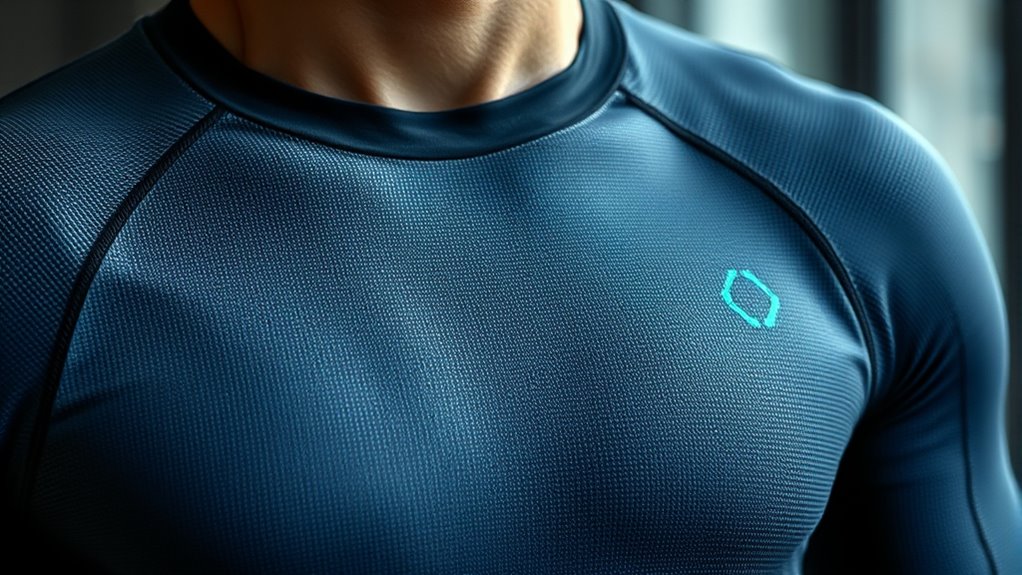
Imagine wearing clothing that not only feels comfortable but also keeps a close eye on your heart health. That’s the promise of smart textiles designed to monitor your heart rate seamlessly. These innovative garments integrate sensors directly into the fabric, eliminating the need for bulky gadgets or external devices. Instead, your clothes become a continuous health tracker, discreetly providing real-time data about your cardiovascular status.
One of the key factors behind these smart textiles is fabric durability. When you’re wearing clothing meant to monitor your heart, it needs to withstand daily wear and tear, washing, and stretching without losing its sensing capabilities. Manufacturers focus heavily on selecting high-quality fibers that can endure repeated laundering while maintaining the integrity of embedded sensors. Advanced textile technologies incorporate materials like conductive fibers or coated fabrics that preserve their electronic properties over time. This durability ensures that your smart clothing remains reliable, comfortable, and functional for the long haul.
Fabric durability is key to smart textiles lasting through wear, washing, and stretching without losing sensing capabilities.
The manufacturing processes behind these garments are equally critical. Creating smart textiles involves sophisticated techniques that embed sensors, conductive threads, or nanomaterials directly into the fabric during production. These processes often use specialized weaving or knitting methods to integrate electronic components seamlessly, so they don’t compromise the garment’s softness or flexibility. Manufacturers meticulously control temperature, pressure, and material placement to ensure that sensors stay in position and continue to operate accurately through countless washes and wears. This precision in manufacturing not only guarantees durability but also ensures consistent performance, giving you peace of mind that your clothing is as dependable as a dedicated health device.
What makes these textiles even more appealing is that their production has become more scalable and cost-effective over recent years. Advances in manufacturing processes allow for mass production, making smart clothing more accessible. Furthermore, ongoing research aims to enhance sensor sensitivity and reduce manufacturing costs further, making these health-monitoring garments an increasingly practical choice for everyday use.
When you choose smart textiles, you’re opting for a sleek, integrated way to monitor your heart rate without the hassle of carrying extra gadgets. Thanks to improvements in fabric durability and innovative manufacturing techniques, these clothes are built to last, provide consistent data, and fit comfortably into your daily routine. They’re designed not just to keep you stylish and comfortable but also to support your health seamlessly. With each wash and wear, you can trust that your smart clothing continues to serve as a reliable partner in tracking your heart health, all while feeling just like regular, high-quality apparel. Advances in textile durability continue to drive innovation, ensuring these garments remain effective over time.
Frequently Asked Questions
How Durable Are These Smart Textiles During Regular Washing?
Worried about fabric durability and wash resistance? These smart textiles are designed to withstand regular washing, but their longevity depends on the materials used. Typically, manufacturers test for durability, guaranteeing they hold up through multiple cycles. You should follow specific care instructions, like gentle cycles and avoiding harsh detergents, to maintain their functionality. Proper care ensures your smart textiles stay durable and wash-resistant over time, keeping your monitoring seamless.
Can Smart Textiles Be Customized for Specific Health Conditions?
You can customize smart textiles for specific health conditions by exploring various personalization options. Manufacturers are working to tailor these fabrics to individual needs, but regulatory challenges might slow down widespread adoption. You should stay informed about evolving standards and safety requirements, as these can impact how quickly personalized smart textiles become available. Ultimately, customization is promising, but steering through regulatory hurdles remains a key factor in their development and use.
What Is the Lifespan of the Embedded Sensors in the Textiles?
You wonder about the sensor longevity in smart textiles. Typically, these embedded sensors last between 6 months to 2 years, depending on usage and care. Replacement frequency varies, but with proper maintenance, you can prolong their lifespan. Regular washing and avoiding harsh chemicals help preserve sensor functionality. Keep an eye on performance, and plan for replacements as needed to ensure your smart textiles stay accurate and reliable over time.
Are There Any Risks of Skin Irritation From Prolonged Wear?
You might worry about skin sensitivity, allergic reactions, or irritation from wearing these smart textiles long-term. While most fabrics are designed to be hypoallergenic, some individuals with sensitive skin may experience discomfort or reactions over time. To minimize risks, check for materials that suit your skin, wash textiles regularly, and remove them if you notice irritation. Staying attentive helps prevent potential skin issues and ensures comfortable wear.
How Accurate Are These Textiles Compared to Traditional Heart Rate Monitors?
You’ll find that these textiles are quite accurate, often matching traditional heart rate monitors after proper sensor calibration. They continuously collect data directly from your skin, reducing lag and increasing reliability. However, you should consider data privacy, as sensitive health info is transmitted and stored. While they’re convenient, ensuring secure data handling is essential to protect your personal health details. Overall, their accuracy can rival conventional devices with proper setup.
Conclusion
Imagine running your fingers over a soft, woven fabric that tracks your heartbeat, blending seamlessly into your daily life. No bulky gadgets or clunky screens—just comfort and connection in one. These smart textiles turn everyday clothing into health monitors, making traditional devices seem bulky and disconnected. As you wear them, it’s like having a silent partner watching over your wellness, turning the clothing you love into a personal, unobtrusive health assistant.