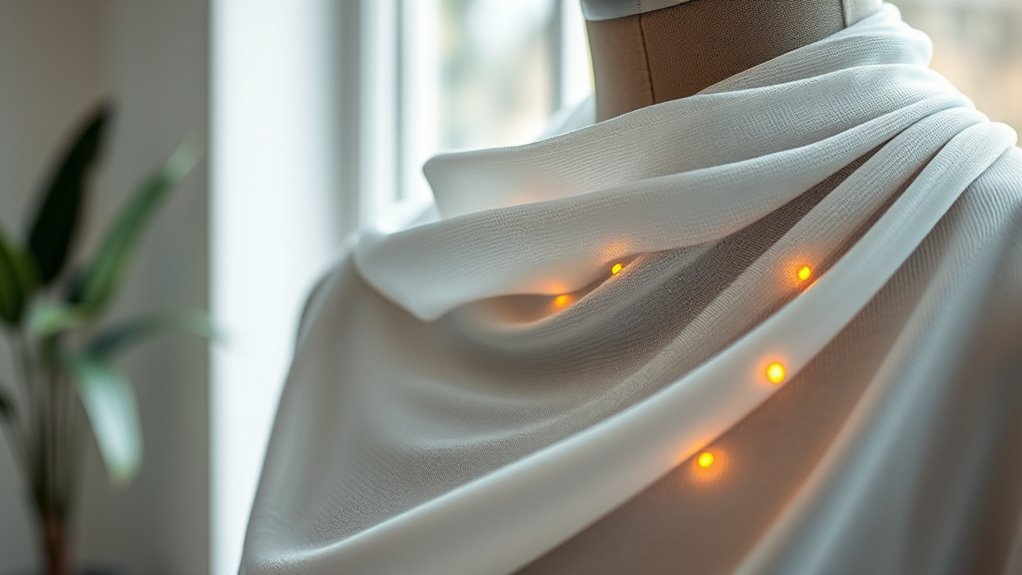

Smart textiles incorporate embedded sensors and energy-harvesting tech into fabrics, allowing you to monitor your health and generate power on the go. These fabrics can detect things like temperature, hydration, and movement, sending real-time data to your devices without sacrificing comfort or durability. With advancements making them more affordable and washable, smart textiles are transforming everyday clothing into proactive health tools and energy sources. Keep exploring to see how these innovations could fit into your daily life.
Prime for Young Adults — start your free trial
Fast free delivery, streaming and member deals for eligible 18–24 year olds.
As an affiliate, we earn on qualifying purchases.
Key Takeaways
- Smart textiles embed wearable sensors that monitor physiological signals like temperature, hydration, and movement for real-time health insights.
- These fabrics are durable, washable, and comfortable, suitable for everyday use in various environments.
- Energy harvesting in smart textiles utilizes solar cells or piezoelectric materials to power sensors and devices directly from clothing.
- They enhance convenience by eliminating external batteries and supporting self-charging, eco-friendly apparel.
- Smart fabrics are transforming clothing into proactive health and energy management tools, merging fashion with advanced technology.
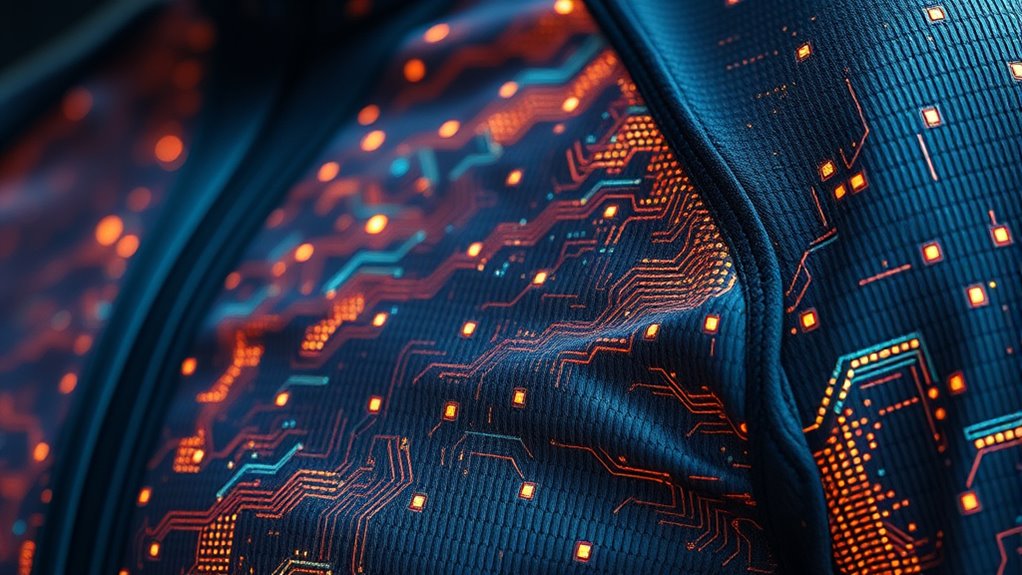
Have you ever wondered how fabrics can do more than just cover your body? Today’s textile innovation has transformed ordinary fabrics into smart textiles—materials embedded with technology that can monitor your health and even harvest energy. These smart textiles integrate wearable sensors directly into the fabric, allowing your clothing to become a proactive partner in your well-being. Imagine shirts that track your heart rate during a run or socks that monitor your muscle activity—all without adding bulky devices or uncomfortable straps. This seamless integration is made possible through advances in textile innovation, which embed sensors and circuitry within the fabric itself, maintaining flexibility, breathability, and comfort.
Textile innovation transforms fabrics into smart, health-monitoring, energy-harvesting garments seamlessly embedded with sensors and circuitry.
Wearable sensors are at the core of these smart textiles. They are tiny, flexible devices woven into the fabric, capable of detecting a variety of physiological signals. Whether it’s your skin temperature, hydration levels, or movement patterns, these sensors relay real-time data to your smartphone or healthcare provider. This constant stream of information enables early detection of health issues, personalized fitness coaching, and even injury prevention. Because these sensors are woven into the fabric, they don’t interfere with your daily activities or require you to remember to wear extra devices. Instead, your clothing becomes an extension of your health monitoring system, always on and always ready.
The beauty of textile innovation lies in its ability to keep these sensors unobtrusive and durable. Unlike traditional wearables, smart textiles are designed to withstand washing, stretching, and daily wear without losing functionality. This durability ensures you can wear them in all kinds of environments—whether you’re working out, commuting, or relaxing at home. Moreover, textile innovation is making these smart fabrics more accessible and affordable, opening the door for widespread adoption beyond just athletic or medical use. Now, even everyday clothing can serve a purpose beyond fashion, turning into a tool for better health management.
Beyond health monitoring, smart textiles are also pioneering energy harvesting. Some fabrics contain embedded solar cells or piezoelectric materials that convert motion and ambient light into electrical energy. This energy can power the wearable sensors or even small devices, reducing the need for external batteries. Imagine your jacket charging your wearable device as you walk or run—this self-sustaining feature makes these textiles even more practical and eco-friendly. Additionally, advancements in textile technology have led to the development of durable and flexible sensors, which are essential for maintaining performance during active use and washing.
In short, smart textiles are revolutionizing what fabrics can do. Through innovative integration of wearable sensors and energy harvesting capabilities, textiles are transforming your everyday clothing into smart, functional tools that enhance health, convenience, and sustainability. This textile innovation is shaping a future where your clothing actively contributes to your well-being, merging fashion with cutting-edge technology seamlessly.
Frequently Asked Questions
How Durable Are Smart Textiles During Regular Washing?
Smart textiles generally have good fabric durability, but washing effects can vary. You should follow the manufacturer’s instructions carefully, as frequent washing or harsh detergents might degrade the embedded sensors or conductive fibers over time. Using gentle cycles and avoiding high heat helps preserve their functionality. With proper care, your smart textiles can remain durable and functional through many regular washes, ensuring long-lasting performance.
Are Smart Textiles Safe for Long-Term Skin Contact?
You can generally wear smart textiles safely for long-term skin contact, but skin sensitivity varies. Manufacturers design these fabrics with biocompatible materials to minimize irritation, yet prolonged exposure might cause issues for sensitive skin. It’s wise to monitor how your skin reacts over time and follow care instructions. If you notice discomfort, remove the garment and consult a dermatologist. Overall, with proper use, smart textiles are safe for extended skin contact.
What Is the Cost Range of Smart Textile Products?
Smart textile products cost between $50 and $500, depending on features and quality. You’ll find affordability spanning a spectrum from simple, basic fabrics to sophisticated, sensor-equipped styles. Cost factors include technology integration, durability, and brand reputation. While some options are budget-friendly, premium products offer advanced monitoring and energy-harvesting capabilities. Keep an eye on your budget, and choose smart textiles that deliver the best balance of benefits and affordability.
Can Smart Textiles Be Customized for Individual Health Needs?
Yes, smart textiles can be customized for your individual health needs. You can choose personalization options that include specific sensors integrated into the fabric to monitor health metrics relevant to you. This allows the textile to track your heart rate, hydration, or other essential signs accurately. By tailoring sensor integration, manufacturers create products that meet your unique health requirements, providing more precise data and improved comfort.
How Do Smart Textiles Compare Environmentally to Traditional Fabrics?
Smart textiles often have a higher environmental impact during production due to complex manufacturing processes, but they offer sustainability benefits like reducing waste through durable, multifunctional fabrics. Unlike traditional textiles, they can monitor health and harvest energy, which may decrease reliance on electronic devices and batteries. While they pose some ecological concerns, their potential to promote eco-friendly practices makes them a greener choice over time.
Conclusion
You can see how smart textiles are revolutionizing healthcare and energy harvesting. Imagine wearing fabrics that monitor your health in real-time or generate power from your movements. Did you know that the smart textile market is expected to grow at a compound annual growth rate of over 25% through 2028? This rapid expansion shows just how impactful these innovations are becoming. Embrace the future of clothing, where technology seamlessly integrates into your daily life for better health and sustainability.
Fall yard work Picks
leaf blowers
As an affiliate, we earn on qualifying purchases.