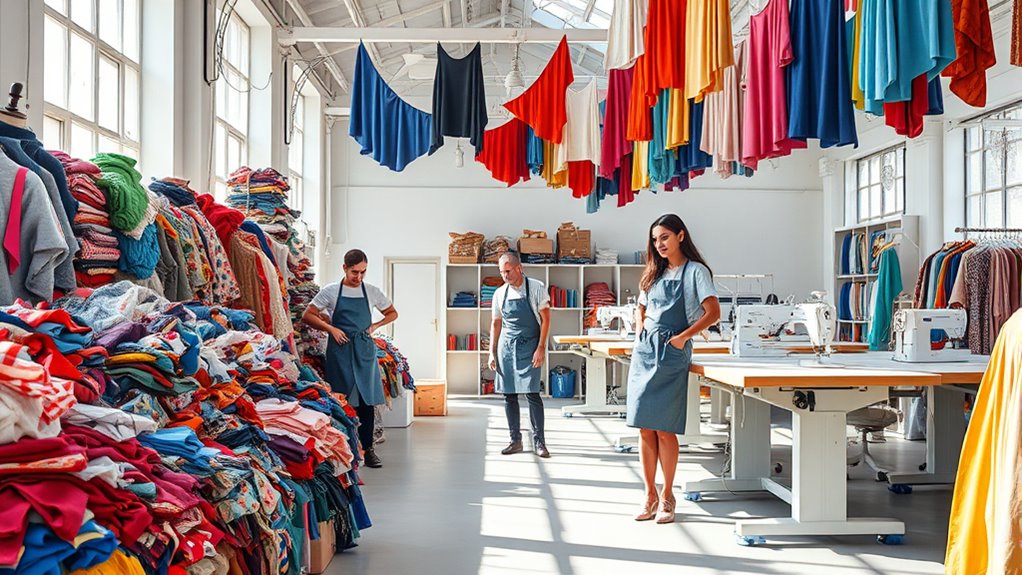

Innovative textile recycling and upcycling methods are revolutionizing the fashion industry by turning waste into high-quality, sustainable fibers, helping you support a circular economy. These advancements include creating fibers from recycled plastics and agricultural waste, while new dyeing processes reduce water and chemical use. By adopting these solutions, companies minimize environmental impact and conserve resources. Continuing to explore these innovations will show you how sustainability and style can go hand in hand for a greener future.
Key Takeaways
- Innovative recycling techniques transform waste textiles into high-quality fibers, promoting circular economy practices.
- Upcycling methods repurpose discarded textiles into new fashion items, reducing waste and resource consumption.
- Advanced dyeing innovations lower water and chemical use, making textile coloration more sustainable.
- Use of recycled materials like plastic bottles and agricultural waste minimizes reliance on virgin resources.
- Industry shifts toward circular models integrate sustainable fibers and processes, enhancing environmental benefits.
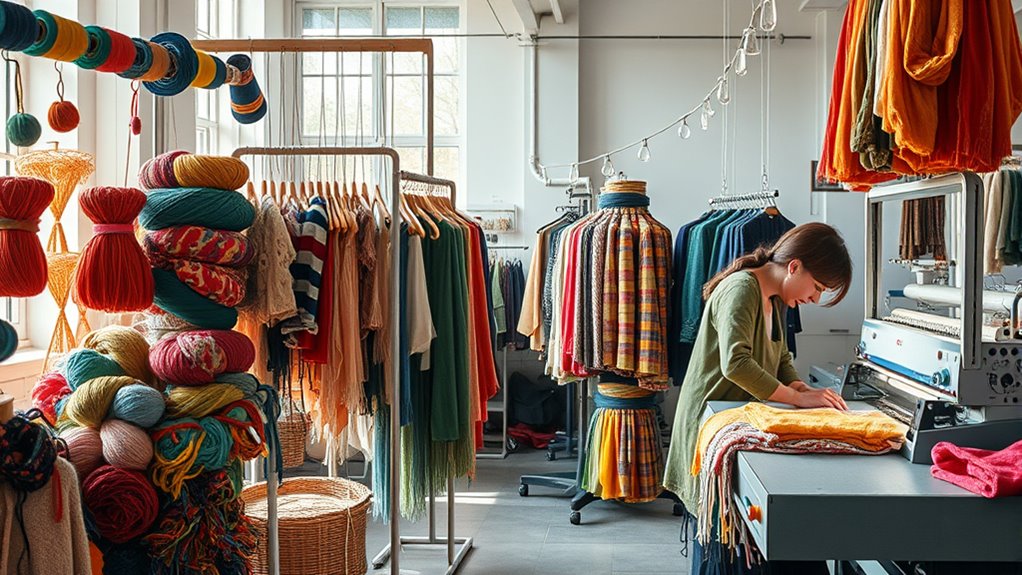
Have you ever wondered how fashion waste is transforming into something new and sustainable? It’s a fascinating process that’s reshaping the entire textile industry. One of the most promising developments is sustainable fiber development, where researchers and manufacturers are creating fibers from recycled materials, such as plastic bottles, old garments, or agricultural waste. These fibers serve as eco-friendly alternatives to traditional textiles, reducing reliance on virgin resources and decreasing environmental impact. By utilizing innovative technologies, companies are able to turn discarded textiles into high-quality fibers, giving waste a second life and pushing the industry toward a circular economy. This shift not only minimizes waste but also encourages a more responsible approach to fashion production and consumption.
Alongside sustainable fiber development, dyeing process improvements are playing a *vital* role in reducing the industry’s environmental footprint. Traditional dyeing methods are water-intensive, often involving toxic chemicals that pollute waterways and harm ecosystems. Now, new techniques are emerging that drastically cut water and energy use, making the process more sustainable. For example, digital printing and cold dyeing methods allow colors to be applied more efficiently, with less waste and fewer harmful chemicals. Some companies are even exploring natural dyes derived from plants, minerals, and bacteria, which are biodegradable and less polluting. These dyeing innovations make it possible to achieve vibrant, durable colors while *considerably* reducing environmental harm, aligning fashion production with sustainability goals.
Dyeing innovations cut water, energy, and chemicals, making fashion more sustainable and environmentally friendly.
You might also be surprised to learn how these advancements are making textiles more eco-friendly from start to finish. Sustainable fibers are often produced using fewer chemicals and less water, while improved dyeing processes mean less pollution and waste. This synergy helps conserve precious resources and lowers the overall carbon footprint of textile manufacturing. *Additionally*, these innovations are not limited to large corporations; smaller brands and startups are adopting these methods, making sustainable fashion more accessible and scalable. As a consumer, you can support this movement by choosing brands that prioritize eco-conscious materials and processes, encouraging further investment in sustainable fiber development and dyeing innovations.
In essence, these technological advancements are revolutionizing the way textiles are produced, recycled, and upcycled. They demonstrate that sustainability doesn’t have to compromise quality or style—it can enhance both. By embracing sustainable fibers and refining dyeing techniques, the fashion industry is taking meaningful steps toward a more circular economy, where waste is minimized, resources are reused, and environmental impact is greatly reduced. The future of fashion is moving in a direction where waste becomes a resource, and innovation leads the way toward a cleaner, greener planet. Notably, incorporating advanced recycling techniques can further amplify these positive impacts and accelerate the shift to sustainability in textiles.
Frequently Asked Questions
What Are the Main Challenges in Scaling Textile Recycling Technologies?
You face significant challenges in scaling textile recycling technologies due to technological barriers and supply chain complexities. Technological barriers include developing efficient, cost-effective methods for sorting and processing diverse fabrics. Supply chain complexities involve coordinating collection, sorting, and distribution at large scales. Overcoming these hurdles requires innovation, collaboration, and investment to create a seamless, sustainable system that can handle the volume and variety of textiles efficiently.
How Can Consumers Contribute to Textile Upcycling Efforts?
You can hit two birds with one stone by actively participating in community programs and trying DIY hacks to upcycle textiles. Your efforts not only reduce waste but also inspire others to follow suit. By repurposing old clothes or donating them to local initiatives, you help build a sustainable cycle. Embrace creativity and community spirit to make a real difference in the textile industry’s future.
What Policies Support Circular Economy Initiatives in Textiles?
You can support circular economy initiatives in textiles by advocating for and adhering to recycling policy frameworks that promote textile waste reduction. These policies often include incentives for brands to use recycled materials, encourage sustainable manufacturing practices, and establish collection programs. By staying informed and pushing for stronger regulations, you help drive industry accountability and innovation, making it easier to recycle and upcycle textiles, ultimately fostering a more sustainable and circular textile economy.
Are There Specific Fibers More Suitable for Recycling and Upcycling?
You may be surprised, but some fibers stand out for recycling and upcycling due to fiber compatibility and recycling efficiency. Natural fibers like cotton and wool are easier to process, yet synthetic fibers such as polyester often yield better results because of their uniformity and durability. Choosing the right fiber depends on balancing these factors, ensuring the recycling process is effective and sustainable, ultimately advancing the circular economy in textiles.
How Do Economic Factors Influence Textile Recycling Investments?
Economic factors heavily influence your textile recycling investments through market valuation and investment incentives. When the market sees high valuation potential, you’re more likely to invest, expecting strong returns. Incentives like government grants or tax breaks make projects more attractive, reducing financial risk. These factors motivate you to prioritize textile recycling, fostering innovation and supporting a circular economy. Ultimately, favorable economic conditions drive growth and sustainability in your recycling efforts.
Conclusion
As you explore textile recycling and upcycling innovations, you’ll see how they drive us toward a circular economy. Did you know that over 92 million tons of textile waste end up in landfills each year? By embracing these new technologies, you can play a part in reducing waste and conserving resources. Every small effort counts, and together, we can create a more sustainable future where fashion and waste coexist responsibly.