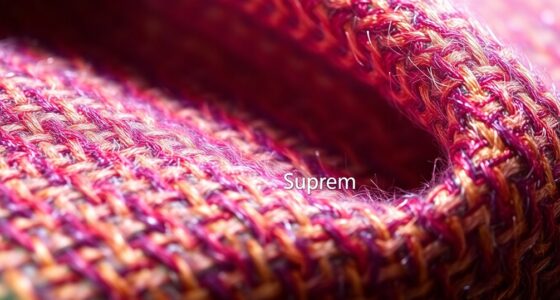
Wool varieties range from the ultra-fine, soft fibers of Merino sheep to the coarser wool of alpacas, each offering distinct qualities. Merino wool is prized for its smoothness and comfort, ideal for next-to-skin garments, while alpaca wool provides warmth and durability with a slightly glossy finish. Sheep breeds like Border Leicester and Romney produce coarser fibers for heavy-duty textiles. Exploring these differences helps you choose the right fiber for any project—there’s more to discover about each variety below.

Get your wardrobe favorites delivered free — and shop member deals
- Fast, free delivery on millions of items
- Access to Prime Big Deal Days deals on October 6–7
- Prime Video, Amazon Music and more included
Key Takeaways
- Wool varieties differ in fiber fineness, crimp, and softness, influencing their ideal uses in clothing and textiles.
- Merino wool is exceptionally fine, soft, and insulating, perfect for luxury garments.
- Coarser wool breeds like Romney and Border Leicester are durable, suited for carpets and outerwear.
- Alternative fibers like alpaca and llamas offer unique qualities such as silky texture and warmth.
- Sheep breed characteristics and fiber processing methods shape the final fiber qualities and product applications.

Wool, a natural fiber harvested from sheep, has been valued for centuries for its warmth and durability. When you think about wool, you’re considering a versatile material with unique fiber characteristics that make it ideal for clothing and textiles. These fiber characteristics include crimp, elasticity, and fine diameter, which all contribute to wool’s insulating properties and resilience. The crimp, or natural waviness of the fibers, traps air and provides insulation, keeping you warm in cold weather. Its elasticity allows garments to stretch without losing shape, ensuring longevity and comfort. The fine diameter of certain wool types, like Merino, results in softer, more luxurious fabrics that feel gentle against your skin.
Understanding the wool harvesting processes sheds light on how this fiber reaches you in its best form. Wool harvesting begins with shearing, a process that usually happens once a year and is performed carefully to minimize stress on the sheep. Skilled shearers use specialized clippers to remove the fleece efficiently, ensuring the sheep’s safety and comfort. Once sheared, the fleece is sorted based on quality, with finer fibers set aside for premium products. The fleece then undergoes cleaning, known as scouring, to remove dirt, grease, and impurities. This step is pivotal because it directly impacts the fiber’s final quality and how well it will process into yarn.
Wool harvesting involves careful shearing, sorting, and cleaning to ensure fiber quality and comfort.
After cleaning, the wool is carded—combed to align the fibers in parallel, which results in a smooth, consistent fiber bundle called a sliver. Carding not only prepares the fiber for spinning but also influences the texture of the finished product. The spinning process twists the fibers into yarn, which can then be woven or knitted into fabrics. The entire harvesting process profoundly impacts the fiber characteristics; for example, the fineness of the wool determines whether it will be used for lightweight, breathable garments or for heavier, insulating layers.
Different sheep breeds produce wool with distinct fiber characteristics. Merino sheep, for instance, produce extremely fine wool, prized for softness and comfort. In contrast, breeds like Border Leicester or Romney yield coarser fibers, often used in carpets or sturdy outerwear. Beyond sheep, other animals like alpacas, llamas, and cashmere goats contribute to the diversity of wool-like fibers, each with unique qualities shaped by their fiber characteristics and harvesting methods. By understanding these processes and fiber qualities, you gain a greater appreciation for the craftsmanship behind wool products and the natural diversity that makes wool such a remarkable fiber.
As an affiliate, we earn on qualifying purchases.
Frequently Asked Questions
How Is Wool Processed Into Finished Textiles?
You start by cleaning the raw wool through carding and scouring, removing dirt and grease. Then, you can dye the fiber using fiber dyeing techniques to achieve vibrant colors. Next, you spin the wool into yarn, often blending different fibers for texture or strength. The yarn is woven or knit into fabric, which you can further treat or finish. This process transforms raw wool into beautiful, durable textiles ready for use.
What Environmental Impacts Are Associated With Wool Production?
You should know that wool production impacts the environment through water use, land degradation, and pollution. Sustainable farming practices help reduce these effects by managing water and land responsibly. Pollution control measures, like waste treatment and limiting chemical use, also lessen environmental harm. By supporting wool producers committed to sustainability, you contribute to minimizing pollution and promoting eco-friendly methods in the wool industry.
How Does Wool Compare to Synthetic Fibers in Durability?
You’ll find wool generally outperforms synthetic fibers in durability, with wool fiber strength allowing garments to last 30% longer. While synthetic fibers often boast higher longevity regarding resistance to wear and tear, they tend to degrade faster over time. Wool’s natural resilience and ability to recover from stretching make it a smarter choice for long-lasting clothing, especially if you want durability combined with eco-friendly benefits.
Are There Hypoallergenic Wool Options Available?
Yes, there are hypoallergenic wool options available. You might consider fibers like alpaca or llama, which offer allergy-friendly benefits because they contain fewer allergens than traditional sheep wool. These allergy-friendly fibers are naturally resistant to dust mites and mold, making them a great choice if you have sensitivities. Always look for wool labeled hypoallergenic to guarantee it’s processed to minimize potential irritants, giving you a comfortable, allergy-conscious option.
What Are the Best Care Instructions for Different Wool Types?
Imagine you own a Merino wool sweater; proper wool maintenance guarantees it stays soft. Always follow washing techniques like hand washing or using a gentle cycle with cold water. Avoid wringing or high heat, which can cause felting. For alpaca, lay flat to dry, while Merino can be tumble-dried on low. These care tips help maintain wool quality and longevity, keeping your garments beautiful.
Conclusion
Now that you know about the different wool varieties, you can choose the perfect one for your needs. From the softness of Merino to the warmth of alpaca, each type offers unique qualities. Isn’t it worth exploring these options to find your ideal fiber? Whether for fashion or function, understanding wool helps you make smarter choices. So, next time you shop, will you pick a fiber that truly suits your style and comfort?
Fall Picks
fall essentials
As an affiliate, we earn on qualifying purchases.