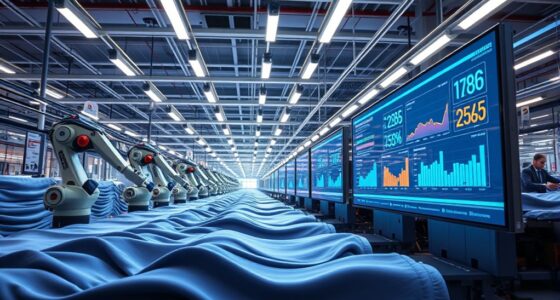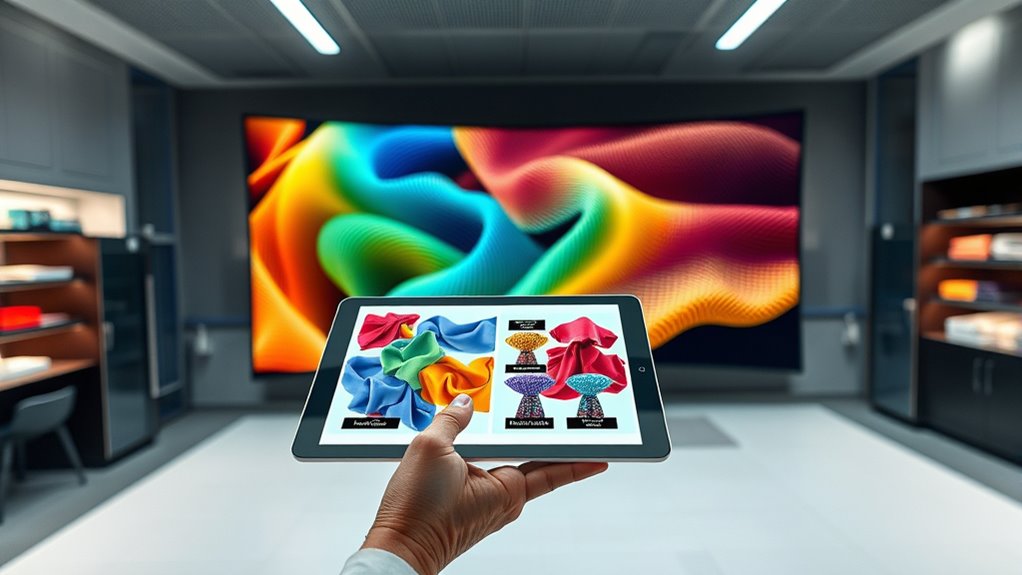

Virtual sampling and digital twins help you cut waste in fabric development by creating precise digital models that replace many physical prototypes. This approach lets you visualize, analyze, and modify designs easily, reducing material use and environmental impact. You can test fabric properties virtually, speeding up processes while promoting sustainability. Keep exploring how these innovative tools can revolutionize your workflow and make your process more eco-friendly.
Key Takeaways
- Virtual sampling creates accurate digital fabric models, reducing the need for physical prototypes and minimizing material waste.
- Digital twins enable virtual testing of fabric properties, decreasing reliance on physical samples and lowering resource consumption.
- Integrating digital tools streamlines design workflows, accelerating development and reducing environmental impact.
- Virtual environments allow for real-time collaboration, catching issues early and avoiding unnecessary physical sample iterations.
- Embracing digital twins promotes sustainable practices by reducing water, chemical, and energy use in fabric development processes.
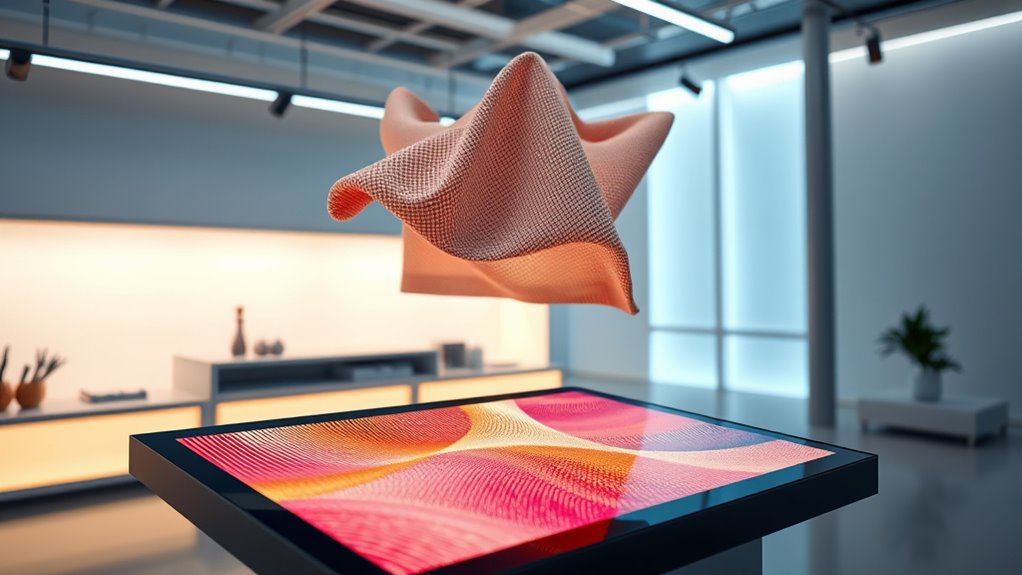
Have you ever wondered how industries simulate and test products without physical prototypes? It’s a game-changer, especially when it comes to addressing sustainability challenges in fabric development. Traditional methods often involve creating multiple physical samples, which can generate significant waste, consume vast amounts of water, chemicals, and energy, and ultimately harm the environment. Virtual sampling and digital twins offer a smarter alternative by allowing designers and manufacturers to create precise digital models of fabrics and garments. These models enable you to visualize, analyze, and modify designs in a virtual environment before producing a single physical sample. This shift drastically cuts down on material waste, reducing the environmental footprint of the development process.
Virtual sampling reduces waste and environmental impact by enabling digital fabric testing before physical prototypes.
The core strength of virtual sampling lies in technological integration. Advanced software tools integrate seamlessly with other digital systems—such as CAD, CAM, and AI-driven analytics—forming a cohesive ecosystem that streamlines the entire product lifecycle. This integration means you can simulate how a fabric will behave under different conditions, tweak the design, and instantly see the results—all without using actual material. As a result, you make more informed decisions, minimize errors, and avoid costly physical prototypes. Digital twins, in particular, serve as dynamic replicas of real-world fabrics, capturing their physical properties, textures, and performance traits. With these, you can conduct virtual testing for durability, stretch, breathability, and colorfastness, ensuring your final product meets specifications without the need for multiple physical samples.
Moreover, technological integration enhances collaboration across teams and supply chains. Designers, engineers, and manufacturers can work on the same digital model in real time, making edits, sharing insights, and catching potential issues early. This interconnected approach not only accelerates development cycles but also fosters a culture of sustainability. By reducing the number of physical prototypes needed, you lower energy consumption associated with manufacturing and transportation, lessen waste, and promote a circular approach to product design. Additionally, leveraging digital modeling reduces the reliance on traditional physical testing methods, further minimizing environmental impact.
In essence, virtual sampling and digital twins empower you to innovate responsibly. They provide a clear pathway to overcoming sustainability challenges by minimizing resource use and waste. By embracing these digital tools, you’re not just streamlining your workflow—you’re actively contributing to a more sustainable future in fabric development. This technological integration helps you stay ahead in a competitive market, all while respecting the planet’s finite resources, making every step of your process smarter, cleaner, and more sustainable.
Top picks for "virtual sampl digital"
Open Amazon search results for this keyword.
As an affiliate, we earn on qualifying purchases.
Frequently Asked Questions
How Do Virtual Sampling Tools Integrate With Existing Fabric Development Processes?
You integrate virtual sampling tools into your fabric development processes through seamless digital integration, allowing you to create virtual fabric samples quickly. These tools enable you to visualize, modify, and test fabric designs before physical production, reducing waste. By incorporating virtual fabric models into your workflow, you streamline design iterations, improve accuracy, and make faster decisions, ultimately saving time and resources while enhancing creativity and innovation.
What Are the Costs Associated With Implementing Digital Twin Technology?
Implementing digital twin technology typically requires a significant investment, with costs ranging from thousands to millions depending on scale. A recent cost analysis shows that early adoption can reduce fabric waste by up to 30%, offsetting expenses over time. However, investment challenges include high initial setup costs, integrating with existing systems, and staff training. You should carefully evaluate these factors to make certain long-term benefits outweigh upfront costs.
How Accurate Are Digital Twins in Predicting Fabric Behavior?
Digital twins offer high fabric property accuracy, allowing you to predict fabric behavior effectively. Their simulation reliability is continually improving as advanced algorithms refine data models. While not perfect, digital twins can forecast outcomes with significant precision, helping you identify issues early. You can trust these virtual models to reduce waste and streamline development, making them a valuable tool in fabric development processes.
What Skills Are Required for Teams to Adopt Virtual Sampling Solutions?
To adopt virtual sampling solutions, you need strong digital literacy skills to navigate and interpret digital models effectively. A collaborative mindset is essential, enabling your team to work seamlessly across disciplines, share insights, and troubleshoot issues collaboratively. You should also be open to learning new technologies and adapting workflows, which helps integrate virtual sampling smoothly into your fabric development process and maximizes its waste-reducing benefits.
How Do Digital Twins Support Sustainability Initiatives in Textile Manufacturing?
Digital twins support your sustainability initiatives by minimizing environmental impact and conserving resources. They enable you to simulate fabric development processes virtually, reducing the need for physical samples and waste. By optimizing designs early, you cut down on material use and energy consumption. This proactive approach helps you meet eco-friendly goals efficiently, making your manufacturing more sustainable, cost-effective, and aligned with environmental standards.
Conclusion
By embracing virtual sampling and digital twins, you reduce waste, save time, and boost creativity. You embrace innovation, drive sustainability, and inspire progress. You transform challenges into opportunities, inefficiencies into efficiencies, and doubts into confidence. You lead the way toward a more sustainable future, where technology and responsibility go hand in hand. Together, you create a world where waste is minimized, resources are maximized, and your vision becomes reality.