Fabric book covers and protectors let you personalize your library while keeping your books safe. Choosing durable fabrics like canvas or denim guarantees long-lasting protection against wear, scratches, and stains. You can customize covers with vibrant patterns, pockets, or straps for both style and function. Making your own covers is easy and more affordable than buying pre-made ones. Keep exploring to discover tips on selecting materials and crafting covers that suit your style and needs.

Get your wardrobe favorites delivered free with Prime
- Fast, free delivery on millions of items
- Prime Video, Amazon Music and more included
- Member-only deals all year
Key Takeaways
- Use durable fabrics like canvas or denim to create long-lasting, personalized book covers that protect against wear and tear.
- Customize covers with vibrant patterns, solid colors, or patchwork to match your personal style and library aesthetic.
- Add practical features such as pockets or elastic straps for enhanced usability and a unique, functional design.
- Reinforce edges with bias tape or double stitching to ensure durability during daily handling.
- Crafting your own covers is cost-effective, allowing for tailored sizes and creative expression to personalize your library.

Fabric book covers and protectors offer a practical and stylish way to keep your books safe from wear and tear. When you choose to create your own, you not only extend the lifespan of your favorite books but also add a personalized touch to your library. DIY crafts make it easy to craft covers that fit perfectly and reflect your unique style. The key to a successful project lies in selecting the right materials that guarantee durability. Durable fabrics like canvas, denim, or heavy-duty cotton stand up well to daily use, preventing rips, scratches, and stains. These sturdy materials are essential because they withstand the rigors of regular handling and provide long-term protection, making your DIY covers both functional and sustainable.
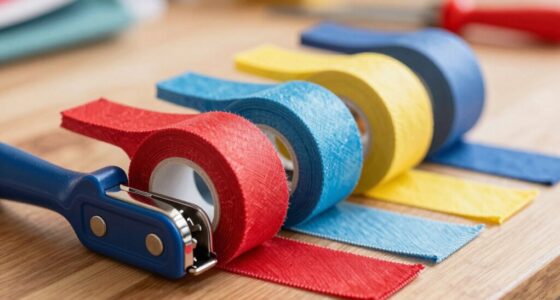
When you’re designing your fabric book covers, think about the material’s durability. Opt for fabrics that are tightly woven and thick enough to offer impact resistance without adding unnecessary bulk. This way, your covers won’t easily fray or tear over time, which is especially important if you handle your books frequently. You can also reinforce edges with bias tape or double-stitch seams for extra strength. Using high-quality fabrics gives your covers a professional finish and assures they hold up through countless readings. The beauty of DIY crafts is that you can customize the design — choose vibrant patterns, elegant solids, or even patchwork to match your personality or home decor. Incorporating material testing into your process can help ensure the fabrics you select are truly durable and suitable for daily use.
Choose tightly woven, thick fabrics and reinforce edges for durable, long-lasting DIY book covers.
Creating your own fabric covers is straightforward, and with the right materials, you can produce a protective accessory that’s both functional and aesthetically pleasing. It’s a rewarding process that allows you to experiment with different textures, colors, and patterns. Plus, making your own covers is cost-effective compared to buying pre-made ones, and you get the satisfaction of knowing it’s tailored to your preferences. When working on your project, consider adding features like pockets for bookmarks or elastic straps to keep the cover snug. These small details enhance both usability and style.
In the end, investing in high-quality, durable materials for your fabric book covers assures they’ll serve you well over time. Whether you’re protecting a beloved hardcover or a paperback, your DIY crafts can be both practical and personal. By focusing on material durability, you guarantee your covers will withstand daily use, keeping your library looking fresh and well-maintained. So, pick your fabrics wisely, get creative, and enjoy crafting covers that reflect your personality while safeguarding your cherished books.
Frequently Asked Questions
Are Fabric Book Covers Suitable for All Book Sizes?
Yes, fabric book covers are suitable for most book sizes thanks to their flexible stretchability. You can choose or customize covers that fit different book sizes, from small paperbacks to larger hardcover editions. The fabric’s stretchability allows it to conform snugly around various dimensions, providing a personalized and protective fit. Just guarantee you select the right size or adjustable options to ensure compatibility with your specific books.
How Do I Clean and Maintain Fabric Book Covers?
You can clean fabric book covers easily by gently hand washing them with mild soap and cold water, ensuring you avoid harsh chemicals that could damage the material. For quick maintenance, spot-clean stains with a damp cloth. To preserve material durability, air-dry your covers and avoid machine washing or excessive exposure to sunlight. Regular cleaning and careful handling keep your fabric covers looking fresh and protect your books effectively.
Can Fabric Covers Be Customized With Artwork or Embroidery?
Your fabric covers can absolutely be customized with artwork or embroidery—it’s like turning your book into a work of art! You can choose vibrant artwork customization to showcase your personality or opt for intricate embroidery options for a classy touch. Whether you want colorful designs or elegant stitching, these personalized touches make your library uniquely yours. So go ahead, add your flair and make every book cover a masterpiece!
Do Fabric Covers Affect the Reading Experience?
No, fabric covers typically don’t affect your reading comfort or tactile experience negatively. In fact, they can enhance your experience by providing a soft, warm feel that makes holding your book more pleasant. Plus, they protect your book’s surface, keeping pages in good shape. You might even find that a textured fabric cover offers a unique tactile experience, adding to the enjoyment of your reading sessions.
Are Fabric Book Covers Environmentally Friendly?
Yes, fabric book covers are environmentally friendly because they often feature biodegradability features, breaking down naturally over time. Plus, you can extend their life by recycling or repurposing them, reducing waste. Look for covers made from sustainable or recycled materials, and consider recycling options available in your community. By choosing eco-conscious fabric covers, you help minimize your environmental impact while protecting your books stylishly.
Conclusion
By customizing fabric book covers, you not only protect your favorite books but also add a personal touch to your library. Did you know that over 60% of readers admit to feeling more connected to their books when they’re uniquely covered? So, go ahead—personalize your library with stylish, durable covers. It’s a simple way to preserve your cherished collection and make every reading experience truly special.
Halloween Picks
halloween
As an affiliate, we earn on qualifying purchases.