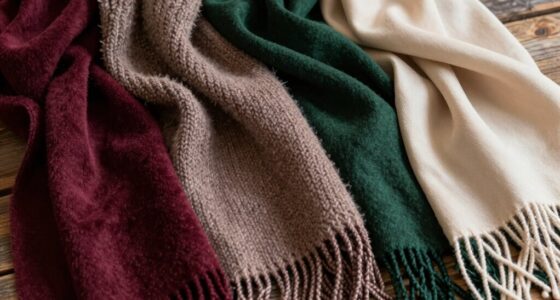
For workwear that needs to last, choose fabrics like tightly woven cotton, durable blends with polyester or nylon, or high-tech performance materials. These fabrics resist abrasion, fading, wrinkles, and shrinking, even after frequent washes. Eco-friendly options with natural fibers such as organic cotton or hemp also offer strength and breathability. Innovative textiles with moisture-wicking and stain-resistant features boost comfort and longevity. Keep going to discover more about selecting the best fabrics that stand up to tough conditions.
Key Takeaways
- Tightly woven fabrics like ripstop and canvas offer superior resistance to abrasion and frequent washing.
- Blended fabrics with polyester or nylon enhance durability while resisting wrinkles, stains, and shrinking.
- Natural fibers such as organic cotton and hemp provide breathable, eco-friendly options that withstand heavy use.
- Performance fabrics with technological finishes resist fading, staining, and environmental damage for long-lasting appearance.
- Moisture-wicking and stain-resistant technical textiles improve comfort and durability in demanding work environments.
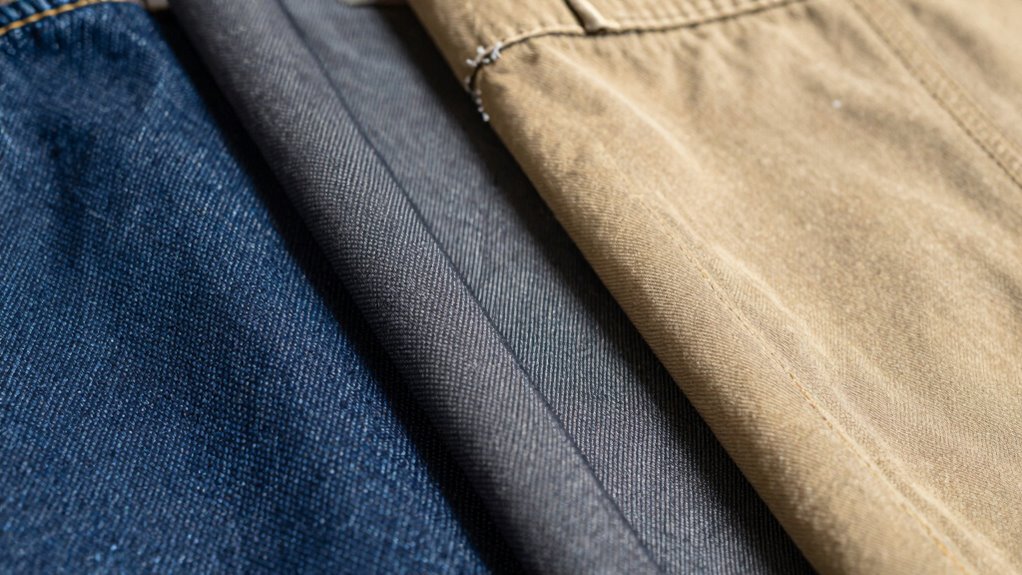
Have you ever wondered what fabrics are best suited for workwear? When you’re choosing clothes that need to last through daily wear and tear, durability is key. But it’s not just about how tough a fabric is; you also want options that are eco-friendly and comfortable. That’s where sustainable fabric options come into play. These fabrics are made with environmentally responsible methods and often feature natural fibers like organic cotton, hemp, or recycled materials. They’re designed to withstand repeated washing and heavy use, making them a smart choice if you want workwear that lasts while reducing your environmental footprint. Along with sustainability, moisture wicking materials are vital for workwear, especially if your job involves physical activity or long hours. These fabrics draw sweat away from your skin and help it evaporate quickly, keeping you dry and comfortable throughout the day. This not only enhances comfort but also prevents chafing and irritation that can come from damp clothing. Additionally, choosing fabrics with natural fibers can improve breathability and overall comfort, making them even better suited for demanding work environments. Incorporating fabric durability into your selection process ensures your workwear maintains its integrity over time, even under tough conditions.
When selecting fabrics for workwear that needs to last, you should prioritize those that combine strength with functionality. For example, blended fabrics that incorporate polyester or nylon with natural fibers often deliver increased durability and resilience. These blends resist wrinkles, stains, and shrinking better than pure natural fibers. Additionally, look for fabrics that are tightly woven, as this enhances their ability to withstand abrasion and frequent washing without losing their shape or color. Some innovations in performance fabrics have also contributed to increased fabric longevity and resistance to environmental factors. Technological advancements have also introduced performance fabrics that include moisture wicking properties, making them ideal for active work environments or those with fluctuating temperatures. Innovative textile technologies continue to improve fabric longevity and performance, ensuring your workwear remains functional over time.
Another important consideration is how well the fabric maintains its appearance over time. High-quality workwear should hold its color, shape, and texture after multiple washes. Fabrics with wrinkle-resistant finishes or treatments can save you time and effort, keeping your work clothes looking sharp without constant ironing. Furthermore, choosing breathable fabrics ensures you stay comfortable throughout the day, especially if you work indoors or in warm conditions. Natural fibers like organic cotton or bamboo are excellent for breathability, while technical fabrics with moisture wicking capabilities add an extra layer of comfort.

LRYXXX Men's Tactical Pants Stretch Waterproof Fabric Durable Cargo Pants for Hiking Casual Work Multi Pockets (No Belt),Dark Gray
- Material Composition: 65% Polyester, 35% Elastane stretch fabric
- Waterproof Technology: Resists rain, oil, and dirt
- Multiple Functional Pockets: Reinforced edges and high-quality zippers
As an affiliate, we earn on qualifying purchases.
As an affiliate, we earn on qualifying purchases.
Frequently Asked Questions
How Do Different Fabrics Affect Workwear Comfort?
Different fabrics greatly impact your workwear comfort by influencing breathability and flexibility. Breathable fabrics like cotton keep you cool and dry during long hours, while synthetic blends might trap heat. Fabric flexibility ensures your clothes move with you, preventing discomfort. Selecting fabrics with good breathability and flexibility means you’ll stay comfortable, focused, and able to perform your tasks effectively throughout the day.
Are Synthetic Fabrics Suitable for Heavy-Duty Workwear?
Yes, synthetic fabrics are suitable for heavy-duty workwear because they offer synthetic durability, resistance to tears, and quick-drying properties. However, their fabric breathability can be limited, making them less comfortable over long periods. You’ll find that synthetic fabrics excel in durability and moisture management, but you might need to balance them with breathable materials or features to guarantee comfort during intense work tasks.
How Should I Care for Durable Work Fabrics?
To care for durable work fabrics, you should follow proper fabric maintenance by washing them according to the care label, usually in cold or warm water. Avoid overloading the washer to reduce wear and tear, and use gentle cycles when possible. Air dry when you can, as high heat can weaken fibers. Regular inspections and mending small damages promptly help prolong the lifespan of your workwear, keeping it in top condition.
Do Certain Fabrics Resist Stains Better?
Yes, certain fabrics resist stains better. Look for workwear with stain resistant finishes or stain repellent treatments, which create a protective barrier against spills and dirt. Fabrics like nylon, polyester, and treated cotton often feature these treatments, making them easier to clean and maintain. Choosing workwear with these features helps guarantee your clothing stays professional-looking and durable, even in tough work environments.
Which Fabrics Are Eco-Friendly for Workwear?
Think of eco-friendly fabrics as the roots of a strong tree, supporting your workwear with sustainability. You’ll want materials like organic cotton, hemp, and bamboo, which come from sustainable sourcing and eco-conscious manufacturing. These fabrics grow with minimal environmental impact, helping you stay committed to eco values. They’re durable, comfortable, and kind to the planet, making your workwear both resilient and responsible—rooted in a greener future.
Conclusion
So, next time you pick out workwear, remember: choosing the right fabric isn’t just about comfort—it’s about surviving the daily grind without wearing out your clothes faster than you can say “wear and tear.” Think of your workwear as your armor—crafted from durable fabrics that laugh in the face of stains, rips, and repeated washes. After all, who knew that the secret to lasting workwear was simply choosing the fabric that’s as tough as you are?