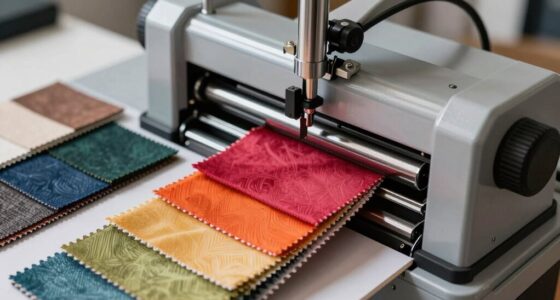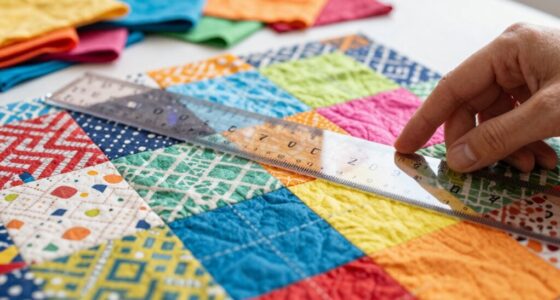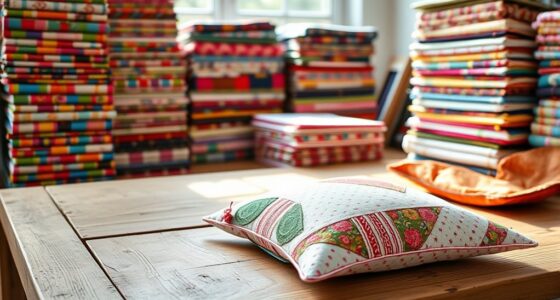

Start by selecting quality fabrics in a complementary color palette with soft pastels and jewel tones for contrast. Mix different patterns like stripes, florals, and geometric shapes, varying their scale for visual interest. Balance busy patterns with calmer designs to create harmony. Define your desired mood—cozy or energetic—and choose fabrics accordingly. Test combinations side-by-side to make certain of cohesion. Keep experimenting with colors and patterns, and you’ll develop a unique, balanced quilt that reflects your style.
Key Takeaways
- Start by choosing high-quality fabrics in a cohesive color palette with a mix of shades and tones for visual interest.
- Experiment with fabric combinations by testing swatches side-by-side to ensure harmony before sewing.
- Mix different patterns, varying scale and complexity, to add texture while maintaining overall balance.
- Define your quilt’s mood and select colors and patterns that reflect the desired cozy, vibrant, or calming atmosphere.
- Focus on creating visual rhythm and harmony through strategic fabric and pattern pairing, enhancing the quilt’s overall design.
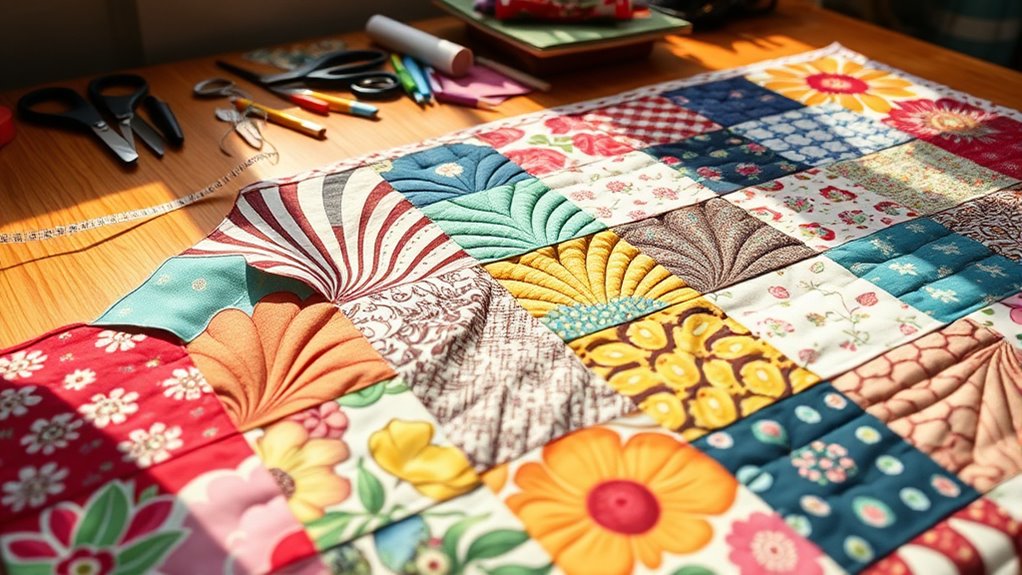
Have you ever wondered how a simple collection of fabric pieces transforms into a beautiful quilt? It all begins with thoughtful fabric selection and an eye for design. When you’re starting out, understanding color coordination is essential. You want your quilt to look harmonious, so consider choosing fabrics within a color palette that complements each other. This doesn’t mean everything has to match perfectly; instead, aim for a balanced mix of shades and tones. For example, pairing soft pastels with deeper jewel tones can create a pleasing contrast that’s visually appealing. You can also experiment with analogous colors—those next to each other on the color wheel—to produce a subtle, cohesive look. To add vibrancy, incorporate pops of contrasting hues sparingly, but make sure they don’t overpower the overall scheme. This strategic use of color coordination helps your quilt feel unified and intentional.
Additionally, understanding the impact of fabric quality can influence the durability and appearance of your finished quilt, making it an important consideration during selection.
Next, pattern mixing plays a *vital* role in elevating your quilt’s design. Don’t shy away from combining different patterns—stripes, florals, geometric shapes, or polka dots—if you keep a few principles in mind. The key is to vary the scale and complexity of patterns to prevent visual clutter. For instance, pair a large floral print with smaller, subtle patterns to create a sense of balance. Mixing patterns also involves considering the background colors and shapes; ensuring that patterns share similar tones or themes can tie the design together. If one fabric features a busy pattern, balance it with a calmer, more subdued design elsewhere. When you thoughtfully mix patterns, you add depth and texture to your quilt, making it far more interesting to look at. Remember, the goal isn’t to match perfectly but to create visual rhythm and harmony.
As you select fabrics, keep in mind the overall mood you want to convey with your quilt. Are you aiming for a cozy, warm feel or something bright and energetic? Your choice of colors and patterns should reflect this intention. Don’t be afraid to test combinations by laying fabrics side-by-side before sewing; this gives you a clearer sense of how they work together. Trust your instincts but also seek inspiration from other quilts, fabric swatches, or color palettes online. The process of choosing fabrics and designing your quilt is a creative journey—so have fun experimenting with color coordination and pattern mixing. With a little patience and an eye for detail, you’ll craft a quilt that’s not just functional but also a true reflection of your style.

AOOSA 7pcs Fabric Bundles Squares, 20" x 20" 100% Cotton, Brown
- Material: 100% high-quality cotton fabric
- Set Includes: 7 unique fabric prints
- Designs: Floral, plaid, polka dot, geometric
As an affiliate, we earn on qualifying purchases.
As an affiliate, we earn on qualifying purchases.
Frequently Asked Questions
What Are the Best Fabrics for Beginners?
For beginners, cotton fabrics are your best choice because they’re easy to sew and care for. Look for quilting cotton with a tight weave, which helps your sewing techniques stay neat. These fabrics are durable and maintain their shape after washing. Plus, they’re widely available and affordable. Using cotton makes your quilting experience smoother, so you can focus on learning new techniques and creating beautiful designs without worrying about fabric care issues.
How Do I Choose Colors That Complement Each Other?
Choosing colors that complement each other is like mixing a perfect cocktail—you want balance and harmony. Focus on color coordination by selecting shades that contrast or match well, such as blues with warm oranges or neutrals with bold accents. Pay attention to pattern harmony too; combining solids with subtle prints creates visual interest without overwhelming. Trust your instincts, and don’t be afraid to experiment until your quilt feels just right.
Can I Use Recycled or Unconventional Fabric Materials?
Absolutely, you can use recycled and unconventional fabric materials for your quilt. Sustainable fabrics like repurposed clothing, old sheets, or vintage textiles add uniqueness and eco-friendliness. Unconventional textiles, such as denim or burlap, bring texture and character. Just make sure they’re clean and durable enough for quilting. Experimenting with these materials not only creates a one-of-a-kind piece but also helps reduce waste and promotes sustainability in your craft.
How Do Fabric Types Affect Quilt Durability?
They say “you are what you wear,” and that applies to your quilt, too. The fabric weave and type directly impact its durability. Natural fibers like cotton hold up well with proper fabric care, while synthetic fabrics might resist wear but can pill over time. Choosing tightly woven fabrics enhances longevity, ensuring your quilt stays beautiful longer. Proper fabric care and mindful selection are key to a lasting, durable quilt.
What Are Some Tips for Matching Patterns and Prints?
To match patterns and prints effectively, start by choosing a unifying color palette to create harmony. Mix small and large prints thoughtfully, balancing busy designs with calmer fabrics. Use print coordination by pairing complementary patterns that share similar motifs or colors. Keep your layout flexible, stepping back frequently to see how patterns work together. Trust your eye, and don’t be afraid to experiment with different combinations until you find a pleasing arrangement.
Conclusion
Now that you’ve mastered fabric choices and design tricks, you’re all set to create a stunning quilt. Or so you think—because after all, what’s more unpredictable than a quilt? One wrong stitch, a fabric mismatch, or a sneaky spill, and your masterpiece might turn into a “unique” disaster. But hey, isn’t that part of the fun? Embrace the chaos—you’re just one poorly sewn seam away from a true work of art!