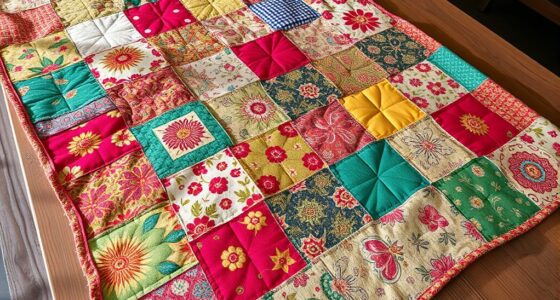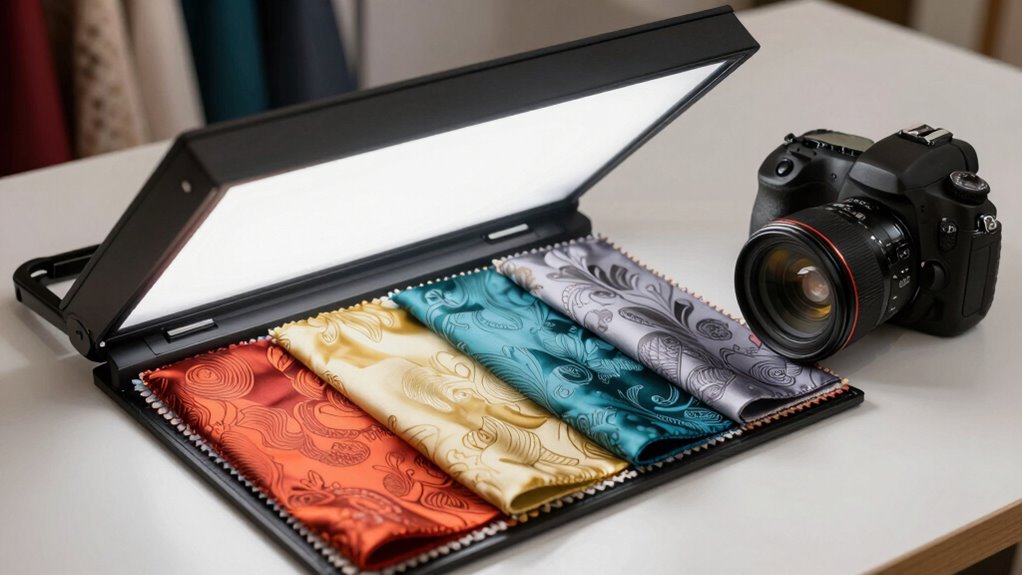

Product photography tools help you capture true colors and textures of your fabrics, making your online listings more appealing and trustworthy. They guarantee consistent lighting and accurate images, reducing returns and increasing customer confidence. Using tools like color correction monitors, softboxes, and editing software allows you to showcase your fabrics beautifully and professionally. When you optimize your setup with these tools, your images stand out. Keep exploring to discover how to perfect your fabric photography even further.

Get your wardrobe favorites delivered free — and shop member deals
- Fast, free delivery on millions of items
- Access to Prime Big Deal Days deals on October 6–7
- Prime Video, Amazon Music and more included
Key Takeaways
- Ensure true colors and textures are accurately represented, boosting customer trust and satisfaction.
- Control lighting conditions to eliminate shadows and highlight fabric details effectively.
- Use color correction tools to maintain consistency across product images.
- Streamline workflow with portable kits and editing software for professional-quality images.
- Enhance online credibility and sales by showcasing high-quality, clear fabric visuals.
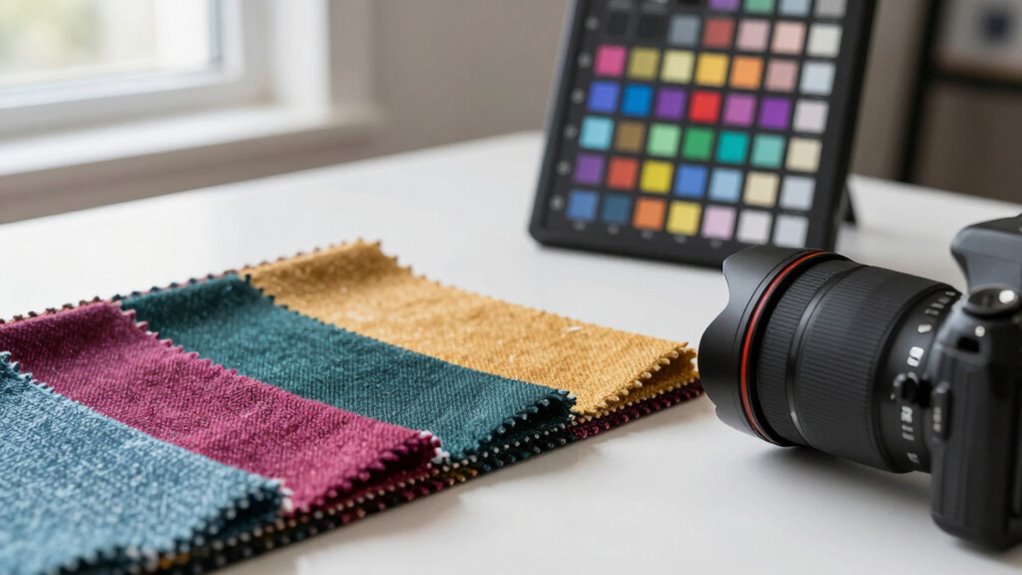
Capturing high-quality images of your fabrics is crucial to attract customers and showcase their true colors and textures. When you use the right product photography tools, achieving this becomes much easier. One of the most critical aspects is guaranteeing color accuracy. Customers rely on your images to understand what they’re purchasing, and inaccurate colors can lead to dissatisfaction and returns. Investing in tools like color correction monitors, calibrated cameras, and editing software helps you capture the true hues of your fabrics. These tools allow you to fine-tune your images so that what your customers see online matches the physical product as closely as possible.
Lighting techniques play an important role in fabric photography, and with the right tools, you can master them easily. Proper lighting eliminates shadows, highlights the texture, and reveals the fabric’s true appearance. Using light diffusers, softboxes, or LED panels helps you control the light and reduce glare or harsh shadows that can distort the fabric’s look. Many photographers swear by continuous lighting setups because they give you immediate feedback and consistency, especially when photographing multiple fabrics in a session. Reflectors also come in handy, bouncing light onto the fabric to fill in shadows and produce a balanced, natural appearance. Additionally, understanding color calibration ensures that your camera setup consistently captures accurate hues across different lighting conditions. Incorporating lighting accessories can further enhance your control over the environment and improve the overall quality of your images. Utilizing lighting control tools can help you achieve professional results more efficiently.
Product photography tools don’t just improve your images—they also streamline your workflow. For example, portable light kits and easy-to-use tripods ensure stability and consistency across shots, so your fabric images look uniform. Advanced camera settings, like aperture and white balance controls, allow you to fine-tune each shot for maximum results. When paired with editing tools, such as photo software with color correction features, you can quickly perfect your images, guaranteeing the colors look vibrant yet true to life. This consistency builds trust with your customers, who appreciate seeing exactly what they will receive.
Moreover, these tools help you create a professional look that elevates your online presence. High-quality, well-lit images with accurate colors make your listings more appealing and trustworthy. When your photos clearly show the fabric’s texture, weave, and subtle color variations, buyers feel more confident in their purchase decisions. This confidence translates into higher sales and fewer returns, saving you time and money. Overall, the right product photography tools empower you to showcase your fabrics in their best light, making your online store stand out in a competitive market.
As an affiliate, we earn on qualifying purchases.
Frequently Asked Questions
Can I Use Smartphone Apps for Professional Fabric Photos?
Yes, you can use smartphone apps for professional fabric photos. To enhance your results, consider smartphone accessories like clip-on lenses, tripods, and lighting. These tools improve image quality and detail. When choosing an app, do an app comparison to find one with manual controls, editing features, and high-resolution output. With the right accessories and app, you can capture vibrant, crisp fabric images that attract customers and boost sales online.
How Do I Choose the Right Lighting for Fabric Photography?
You should aim for a lighting setup that highlights your fabric’s true beauty, avoiding harsh shadows or dull tones. Focus on adjusting the color temperature to match daylight or a neutral tone, ensuring the fabric’s colors pop naturally. Use soft, diffused light sources, like umbrellas or lightboxes, to create an even, flattering glow. This approach helps your fabrics look appealing and authentic, enticing customers to click “buy.”
What Editing Tools Are Best for Fabric Color Accuracy?
For fabric color accuracy, you should use editing tools that excel in color correction and white balance adjustment. Programs like Adobe Lightroom and Photoshop allow you to fine-tune white balance, ensuring your fabric’s true colors are represented. These tools help you correct any color shifts caused by lighting conditions, giving your online listings authentic, vibrant images. Prioritizing precise color correction makes your fabrics more appealing and trustworthy to buyers.
How Can I Photograph Shiny or Reflective Fabrics Effectively?
Did you know that over 70% of buyers rely on online images for fabric choices? To photograph shiny or reflective fabrics effectively, you should focus on reflective surface handling and light diffusion techniques. Use diffused lighting to soften reflections and avoid harsh glare. Position your light sources at angles that minimize reflections, and consider using a light tent or white backdrop to diffuse light evenly, ensuring your fabric’s shine enhances its appeal without overwhelming the image.
Are There Affordable Photography Tools for Small Fabric Businesses?
Yes, you can find affordable photography tools for your small fabric business. A simple smartphone with a good camera, paired with a tripod, helps stabilize shots. Use natural light and experiment with background choices like plain paper or cloth to highlight fabric texture. Reflectors or white boards can improve lighting, making your fabrics look their best. These tools are budget-friendly and enhance your product images effectively.
Conclusion
In today’s digital marketplace, using the right product photography tools can make all the difference for fabric sellers like you. They help you showcase your fabrics vividly, attracting more buyers and boosting your sales. Think of it as your secret weapon—like a trusty quill in Shakespeare’s time—that elevates your business. So, embrace these tools, and watch your online shop flourish, turning browsers into loyal customers faster than you can say “Eureka!”
Fall Picks
fall essentials
As an affiliate, we earn on qualifying purchases.