TL;DR

Get your wardrobe favorites delivered free with Prime
- Fast, free delivery on millions of items
- Prime Video, Amazon Music and more included
- Member-only deals all year
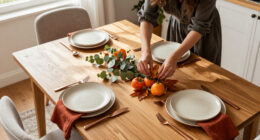
The best Thanksgiving table decor pairs a simple color palette and personal seasonal touches with clear sightlines and room for serving dishes. Start with your guests and table size, then add reusable layers, a low centerpiece, and practical details such as stable candle holders or washable settings.
A Thanksgiving table can look beautiful and still leave nowhere to put the mashed potatoes. The trick is to decorate around the meal: make room for your guests first, then add color, texture, and a few personal details.
This guide will help you plan Thanksgiving table decor for the space you have, whether you’re setting a long dining table or squeezing dinner onto a small apartment table. You’ll find practical ways to choose colors, build a centerpiece, set places, and use what you already own.
Think of the table as a stage for good food and easy conversation. A few warm touches go a long way when everyone can reach the rolls and see across the table.
Plan the seating and serving layout before you add decorations.
Repeat two or three colors across the table for a cohesive look.
Choose a low centerpiece that leaves clear sightlines and flexible serving space.
Use place-setting layers only when guests will need them.
Reuse washable basics and add a few seasonal or personal details.
Start with your guest count to keep dinner comfortable
Thanksgiving table decor works best when you plan for the people and serving dishes first. Count the seats, decide whether platters will sit on the table, and leave enough elbow room for each person. A centerpiece can add atmosphere, but it shouldn’t block faces or make guests pass a casserole over a candle. This first decision shapes everything else: the space left after plates and serving dishes tells you how much decoration the table can comfortably hold.
Try a quick layout before you decorate: put down the plates you plan to use, then set out the serving bowls and platters. If the table feels crowded already, move some food to a nearby counter or buffet. For example, a family of six at a small round table might serve turkey and sides from the kitchen counter, keeping only gravy, rolls, and drinks close at hand. This trades the convenience of everything being within reach for more room to eat; it works best when the serving station is close enough that guests can get up without disrupting conversation. Planning where food will go also helps avoid last-minute decisions that can leave a centerpiece stranded or a guest without room for a plate.
Accessibility belongs in the layout, too. Leave clear paths to seats, keep a wider place setting for anyone who needs more space, and choose sturdy pieces for young children. If one guest uses a mobility aid or needs an unobstructed view, arrange chairs and decor with that in mind before adding extra accents. These choices affect more than appearance: comfortable access lets guests participate without having to ask others to move things throughout the meal. A layout that works for the person who needs the most space is often easier for everyone to navigate.
A welcoming table gives each guest a clear place to eat, reach, and join the conversation.
Popular right now

De'Longhi Rivelia Automatic Espresso Machine with Grinder and Milk Frother, Beige

Dyson V15 Detect Cordless Vacuum

Ninja Crispi Microwave & Air Fryer with FusionCrisp Technology, 14-in-1, Black (MW101BK1)
As an affiliate, we earn on qualifying purchases.
Pick two or three colors for an easy, pulled-together look
A small color palette makes Thanksgiving table decor feel coordinated without requiring matching dishes. Choose two or three colors, then repeat them across linens, napkins, flowers, fruit, or place cards. Classic rust, gold, burgundy, and brown bring a familiar autumn warmth; cream, olive, navy, or muted pink create a quieter mood. Limiting the palette gives different objects a visual connection, so collected or everyday pieces can still feel intentional. It also gives the eye a place to rest: when every item introduces a new color, the meal and the people around it have to compete with the decor.
Imagine a cream tablecloth with olive napkins and a few red pears down the center. The colors echo one another, but the arrangement still feels relaxed. You could use your everyday white plates and different glasses collected over the years. Repetition gives the table a sense of rhythm even when every piece doesn’t match. The tradeoff is that too much repetition can feel overly formal, so vary materials or shapes while keeping the colors consistent. A mix of glass shapes or a woven runner adds character without making the palette harder to follow.
Natural textures can soften a formal-looking palette. A linen runner, a wooden serving board, and leafy branches add contrast without introducing more colors. For instance, if your plates have a floral pattern, keep the napkins plain and pick one color from the pattern for candles or place cards. This keeps the pattern from competing with every other detail and makes the table easier to read at a glance. The simpler surroundings let a patterned plate stand out as a deliberate feature instead of one of several competing focal points.
There’s no need to copy the trend of the moment. Personal pieces—your grandmother’s brass candlesticks, a favorite blue bowl, or children’s handmade cards—can make the table feel more like your home. Use the colors you enjoy looking at while you eat. A beloved piece may sit outside the palette, and that can be part of its charm; repeating just one of its colors elsewhere helps it feel included without forcing every item to match. A personal object can carry more meaning than a perfectly coordinated accessory, so let the palette support the pieces you care about rather than dictate what belongs.
Build a centerpiece that leaves room for the food
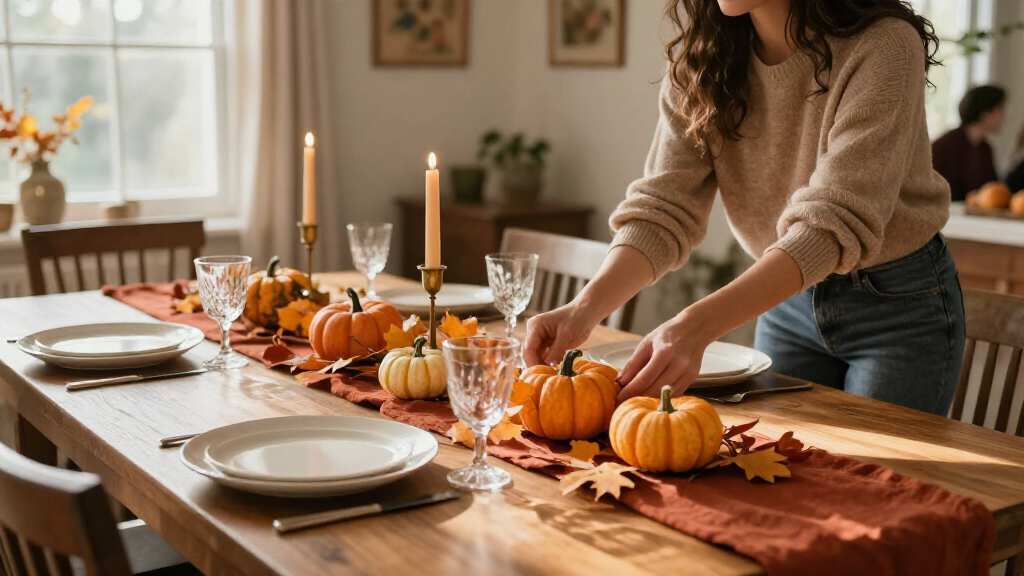
A practical Thanksgiving centerpiece stays low, compact, and easy to move. Use a narrow runner with a few small arrangements, fruit, or votive holders instead of one oversized display. Guests should be able to see one another, and the centerpiece should leave enough space for serving dishes to land. Height and footprint both matter: tall pieces can interrupt conversation even when they take little room, while a broad arrangement can squeeze plates and platters toward the table edge. A centerpiece is doing its job when it adds a seasonal frame to the meal without becoming something guests have to work around.
For a simple version, line up three bud vases with clipped greenery and add pears or small gourds between them. When the turkey platter arrives, you can lift the vases in one move. On a small table, even a folded runner and two apples may be plenty. Decoration can be a quiet frame for dinner rather than a second meal’s worth of objects. Several small pieces offer flexibility as the meal unfolds, though they may need a little more care to move than one compact bowl; grouping them on a tray can make that adjustment easier. A tray also lets you reclaim the center quickly, while a single large arrangement may be simpler to lift but can be harder to place around once serving begins.
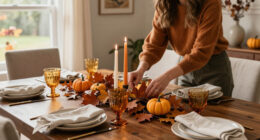
Keep scent in mind near food. Strongly scented flowers and candles can compete with the aroma of roasted vegetables, warm bread, and pie. If you want candlelight, choose stable holders and keep flames well away from loose greenery, sleeves, and fabric. Flameless candles are a helpful option if young children will be at the table. The choice is a balance between the atmosphere of a real flame and the lower worry and maintenance of a battery-powered one. Either way, keeping the light low and the holders stable protects the food and the serving space from becoming part of the display.
For a home with a busy kitchen, use decor that won’t mind a last-minute rearrangement. A low bowl of apples or a small cluster of gourds can shift to the side quickly. That flexibility matters when someone brings an extra dish just as dinner starts. If the centerpiece takes several minutes to dismantle, it may become an obstacle when serving begins, so favor pieces that can move together or be set aside without fuss. Thinking through that moment in advance can keep the table feeling welcoming after the meal arrives, not just before guests sit down.
Set each place with layers you can actually use
Layered place settings look finished when every piece has a job. A placemat or charger can frame the dinner plate; a cloth napkin adds texture; a small name card helps guests find their seats. Keep the forks to the left, knives and spoons to the right, and the water glass above the knife for a familiar arrangement. The point of a clear layout is ease: guests can find what they need, and decorative layers don’t take space away from the meal. Familiar placement also reduces small questions during a busy dinner, especially when guests are reaching for food and settling in at once.
Here’s a straightforward setup you can follow:
- Place a placemat or charger at each seat, leaving comfortable elbow room.
- Set the dinner plate in the center and add only the dishes guests will use.
- Arrange forks on the left and knives and spoons on the right.
- Place the water glass above the knife, then add a napkin and name card.
- Check that the settings don’t overlap and guests can reach shared dishes.
Keep the layers useful. If you aren’t serving soup, skip the soup bowl. If your everyday dishes are already sturdy and attractive, you don’t need to buy a matching set just for the holiday. A handwritten card tucked under a napkin can feel more personal than a pile of decorative extras. Each additional piece needs room and cleanup, so adding only what guests will use keeps the table comfortable before dinner and simpler to clear afterward. A charger can make the setting feel dressed up, but if it leaves too little space for a glass or side plate, it has become an obstacle instead of a useful frame.
For children, washable napkins, durable plates, and a small activity card can make the place setting feel special without adding fragile pieces. Give crafts their own space so crayons and glue don’t crowd the plate. A little activity can help children settle in, but keeping it separate from the eating area makes cleanup easier and leaves the meal itself as the focus. Choosing durable materials may look less formal than delicate china, but it gives children more independence and lets adults focus on serving and conversation.
Use a simple mix of reusable and natural details
Reusable basics and seasonal finds make a table feel personal without filling your cupboards with single-use decor. Cloth napkins, a washable runner, and dishes you already own can return to the table year after year. Add natural accents such as leaves, branches, pinecones, apples, pears, or small gourds for color and texture. Reusable pieces take more storage and washing, but they can serve many meals; natural finds add variety with little expense, though they may need cleaning and won’t last as long. Thinking about what happens after dinner can guide the choice: a washable runner earns its storage space if you use it often, while a bowl of fruit can add seasonal color and then be eaten.
For example, you might gather a few fallen leaves on a dry walk, wipe them clean, and tuck them beside handwritten place cards. Grocery-store pears can bring a soft green or golden tone to the runner, then become part of dessert or snacks later. Use only natural materials that are clean and appropriate for your table, and compost suitable scraps afterward. Choosing details that can be eaten, reused, or composted reduces what’s left to store or throw away once the holiday is over. The practical payoff is a table that feels festive during dinner without creating a box of decorations you need to find room for all year.
Budget-friendly decorating often comes down to editing. Borrow glassware from a friend, use paper for name cards, or set out a bowl you already love. Three repeated details—say, olive napkins, pears, and small brass candle holders—can look more intentional than a table crowded with unrelated purchases. Editing also helps you spend where it shows: a few repeated accents draw the eye together, while extra objects can add cost and make serving harder without adding much atmosphere. If you are deciding whether to buy something, consider whether it will be useful beyond one dinner or meaningfully improve the table; that makes the difference between a lasting addition and clutter.
A table doesn’t need to look untouched to feel special. Mixed vintage plates, different glass shapes, or a child’s handmade turkey can tell a story about the people gathering around it. Let a few useful, familiar pieces do the work. A little variation adds warmth, while too many competing objects can make the table feel busy, so leave open space around the pieces that matter most. Open space gives both the food and the personal details room to be noticed, and it makes the table easier to use as dinner unfolds.
Make small tables feel festive without squeezing the plates
On a small table, decorate the center lightly and move extra serving dishes elsewhere. A narrow runner, two bud vases, or a few pieces of fruit can add a seasonal note without taking over. If a buffet, kitchen counter, or side table is available, use it for larger platters and drinks. This gives up some convenience—guests may need to stand to serve themselves—but preserves the elbow room and clear place settings that make a small table usable. Relocating the bulky items first is often more effective than trying to make a miniature version of a crowded layout.
Picture four people sharing a round kitchen table. A wide wreath might crowd the plates, while a slim runner with one low bowl of pears leaves the center open. Keep taller accents to the edges, where they won’t block anyone’s view or make the table feel smaller. The wreath may make a stronger visual statement, but on a compact surface the space it occupies can matter more than its impact. A simple centerpiece can still feel intentional if its colors repeat at the place settings, where they add interest without consuming shared space.
Details can do more than a centerpiece. Fold napkins in a favorite color, tie them with a short piece of twine, or write each guest’s name on a small card. These touches use little space but still help each person feel expected. Even a single branch in a narrow vase can make the setting feel seasonal. Place-setting details are especially useful when there is no room down the center, though they won’t provide the same shared focal point as a centerpiece. The choice comes down to what the table needs more: a common visual anchor or clear room for plates and serving.
Before guests arrive, sit in each chair and reach toward the center. Can you see the person across from you? Can everyone reach the water? A quick test catches awkward layouts while there’s still time to move the decor or relocate the serving bowls. It also reveals tradeoffs you might miss while standing: a centerpiece can look balanced from the doorway yet make conversation or passing food difficult from a seat. This seated check is a useful final test because the table is meant to work from the chairs, where the meal actually happens.
Frequently Asked Questions
What should a Thanksgiving table centerpiece include?
Try a low mix of greenery, seasonal flowers, fruit, or small gourds. Keep it compact so guests can see one another and serving dishes still have room.
How can I decorate a Thanksgiving table on a budget?
Start with pieces you own, then add a washable runner or cloth napkins if you need a fresh layer. Grocery-store fruit, borrowed glassware, and handwritten place cards can make the table feel thoughtful without a big shopping trip.
What colors work well for Thanksgiving?
Rust, gold, burgundy, and brown are familiar autumn choices. Cream, olive, navy, and muted pink also work well, especially when you repeat a small selection across linens and place settings.
How do I set a Thanksgiving table?
Center the dinner plate at each place, set forks on the left, and put knives and spoons on the right. Place the water glass above the knife, then add only the extra dishes guests will use.
Are candles safe on a dining table?
Use stable holders and keep lit candles away from greenery, loose fabric, and sleeves that might reach across the table. Never leave flames unattended; flameless candles can give you a similar glow around children or busy serving traffic.
How can I make Thanksgiving decor work on a small table?
Choose a narrow runner, small arrangements, or individual place-setting details. Serve large platters from a nearby counter or buffet to keep the eating surface clear.
Conclusion
Start with the seats, plates, and serving dishes, then add a few colors and textures you love. A low centerpiece, useful place settings, and one personal touch can make the table feel ready without crowding the meal.
When the candles glow and the first platter arrives, the best decoration is the space that lets everyone settle in, pass the bread, and stay awhile.