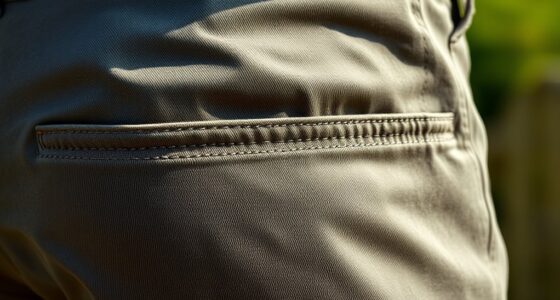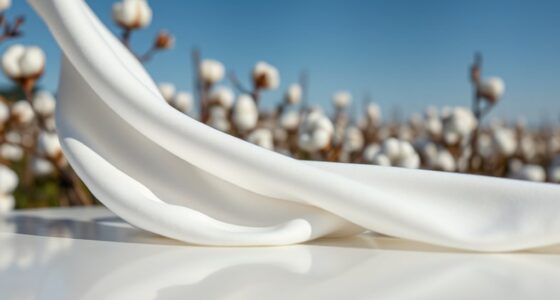

Jersey is a soft, stretchy knitted fabric made from fibers like cotton, rayon, and synthetics. Cotton jersey feels breathable and comfy, perfect for everyday wear, while rayon adds a silky sheen and elegant drape. Synthetic jerseys, such as polyester or nylon, are durable and easier to care for, resisting shrinking and wrinkling. Each type has its unique qualities, and exploring their differences can help you choose the right fabric for your needs. Keep going to discover more about jersey fabrics.
Key Takeaways
- Jersey is a knit fabric made from looping yarns, offering stretch and flexibility for casual and activewear.
- It is commonly produced from natural fibers like cotton and rayon, or synthetic fibers such as polyester and nylon.
- Cotton jersey is soft and breathable, ideal for daily wear, while rayon jersey has a silk-like sheen and elegant drape.
- Synthetic jerseys are durable, resistant to shrinking and wrinkling, and maintain color vibrancy through many washes.
- The choice of fiber affects jersey’s durability, feel, environmental impact, and suitability for different clothing applications.
Have you ever wondered what makes jersey fabrics so popular for comfortable clothing? It’s their unique blend of softness, stretch, and versatility that attracts many. But beyond comfort, jersey fabrics stand out because of their durability and the impact they have on the environment. When you choose jersey, you’re not just opting for a cozy feel; you’re also considering how the fabric holds up over time and what it means for the planet.
Jersey is a knit fabric, which means it’s created by looping yarns together rather than weaving them. This knitting process gives jersey its characteristic stretch and flexibility, making it ideal for casual wear, activewear, and even undergarments. You’ll find jersey made from various fibers like cotton, rayon, and synthetics, each contributing different qualities. Cotton jersey, for instance, is known for its breathability and softness, making it a popular choice for everyday clothes. Rayon jersey offers a silk-like sheen and drapes beautifully, adding a touch of elegance. Synthetic knits, such as polyester or nylon, tend to be more durable and resistant to shrinking and wrinkling, which enhances their longevity.
Jersey is a stretchy, comfortable knit fabric made from various fibers like cotton, rayon, and synthetics.
Fabric durability is a key factor when you’re considering jersey fabrics. Cotton jerseys are generally sturdy but can wear out faster if not cared for properly, especially with frequent washing. Rayon, while luxurious, may not be as durable as cotton or synthetics and can weaken over time with exposure to moisture or harsh detergents. Synthetic jerseys tend to excel in durability because they resist stretching, shrinking, and wrinkling better than natural fibers. This means they can withstand repeated washing and wearing without losing their shape or feel, making them a practical choice for everyday use. Additionally, the color retention of synthetic jerseys often remains vibrant through many washes, further extending their useful life.
However, the environmental impact of jersey fabrics varies depending on the fiber content. Natural fibers like cotton are biodegradable, which reduces their long-term environmental footprint. Still, conventional cotton farming can involve heavy water use and pesticides, raising sustainability concerns. Rayon, made from regenerated cellulose, is considered more sustainable than some synthetic fibers but still involves chemical processing that can harm ecosystems if not managed responsibly. Synthetic jerseys, while durable and low-maintenance, are derived from petrochemicals, which contribute to pollution and are less eco-friendly. Their production and disposal pose environmental challenges, as they can take hundreds of years to decompose.

Gildan Adult Softstyle Cotton T-Shirt, Style G64000, Multipack, Heather Military (2-Pack), Medium
Modern classic fit
As an affiliate, we earn on qualifying purchases.
As an affiliate, we earn on qualifying purchases.
Frequently Asked Questions
How Do I Care for Jersey Fabric to Prevent Stretching?
To prevent stretching in jersey fabric, you should follow proper washing tips. Always wash in cold water and use a gentle cycle to protect the fibers. Avoid wringing or twisting the fabric, as this can cause stretching. Lay your jersey flat to dry rather than hanging it, which helps maintain its shape. These steps will keep your jersey looking great and prevent unwanted stretching over time.
Are There Eco-Friendly Jersey Fabric Options Available?
Yes, you can find eco-friendly jersey fabric options that let you wear your values. Imagine soft, sustainable alternatives woven with organic cotton or bamboo, dyed with vibrant, eco-friendly dyes that won’t harm the planet. These fabrics reduce environmental impact while offering the comfort and stretch you love. Look for brands committed to sustainable practices—your wardrobe can be stylish and eco-conscious, making a positive difference with every wear.
Can Jersey Be Used for Outdoor or Activewear?
Yes, you can definitely use jersey for outdoor or activewear. Its stretchy, breathable, and soft qualities make it ideal for athletic wear and outdoor apparel. Jersey fabric moves with you, providing comfort during physical activities. Many brands now incorporate eco-friendly jersey options to make your outdoor and athletic clothing more sustainable. Just choose a moisture-wicking or performance jersey to guarantee you stay dry and comfortable during your workouts or outdoor adventures.
What Are the Differences Between Jersey and Other Knit Fabrics?
Did you know jersey accounts for over 60% of knit fabric production worldwide? Compared to other knit fabrics, jersey offers superior stretchability and a smooth, soft feel. It’s lighter and more flexible than rib or interlock knits, making it ideal for comfortable clothing. In a knit fabric comparison, jersey stands out for its drape and breathability, but it’s less structured than heavier knits like ponte or double knits.
Is Jersey Fabric Suitable for Making Formal Clothing?
Jersey fabric isn’t typically suitable for formal wear or business attire because of its casual, stretchy nature. Its soft, comfortable feel makes it perfect for casual outfits, but it lacks the structure and polish needed for formal clothing. If you’re aiming for a polished, professional look, opt for fabrics like wool, silk, or tailored blends. Jersey works better for relaxed or casual pieces rather than formal or business-focused apparel.

Amazon Essentials Women's Stretchy Jersey V-Neck Short Sleeve Midi Length Dress, Black, Large
REGULAR FIT: Close but comfortable fit through chest, waist, and hips.
As an affiliate, we earn on qualifying purchases.
As an affiliate, we earn on qualifying purchases.
Conclusion
So, next time you wear a jersey, remember it’s more than just a soft fabric. Many believe jersey’s stretchy comfort comes from its knit structure, but it’s actually the way the fibers are woven that makes it so flexible. Whether cotton, rayon, or synthetic, jersey fabrics owe their versatility to this clever knitting technique. Now, you can appreciate how this ancient method still shapes your wardrobe in modern, comfy styles.

Nikwax Sports Refresh, Deodorizing Liquid Laundry Detergent for Activewear. Eliminates and Prevents Odor & Stain Build Up On Activewear, Gym Clothes & Sports Gear. Jersey Laundry Detergent
Nikwax Sports Refresh is a high-powered deodorizing cleaner designed to eliminate odors and prevent odor build-up in athletic…
As an affiliate, we earn on qualifying purchases.
As an affiliate, we earn on qualifying purchases.

60" Wide Rayon Spandex Jersey Knit Fabric by The Yard – 4-Way Stretch, 200GSM, Medium Weight -Soft & Breathable – Apparel, Accessories, Maternity & Decorations
A 95% rayon and 5% spandex jersey knit fabric is a blend that combines the softness and breathability…
As an affiliate, we earn on qualifying purchases.
As an affiliate, we earn on qualifying purchases.